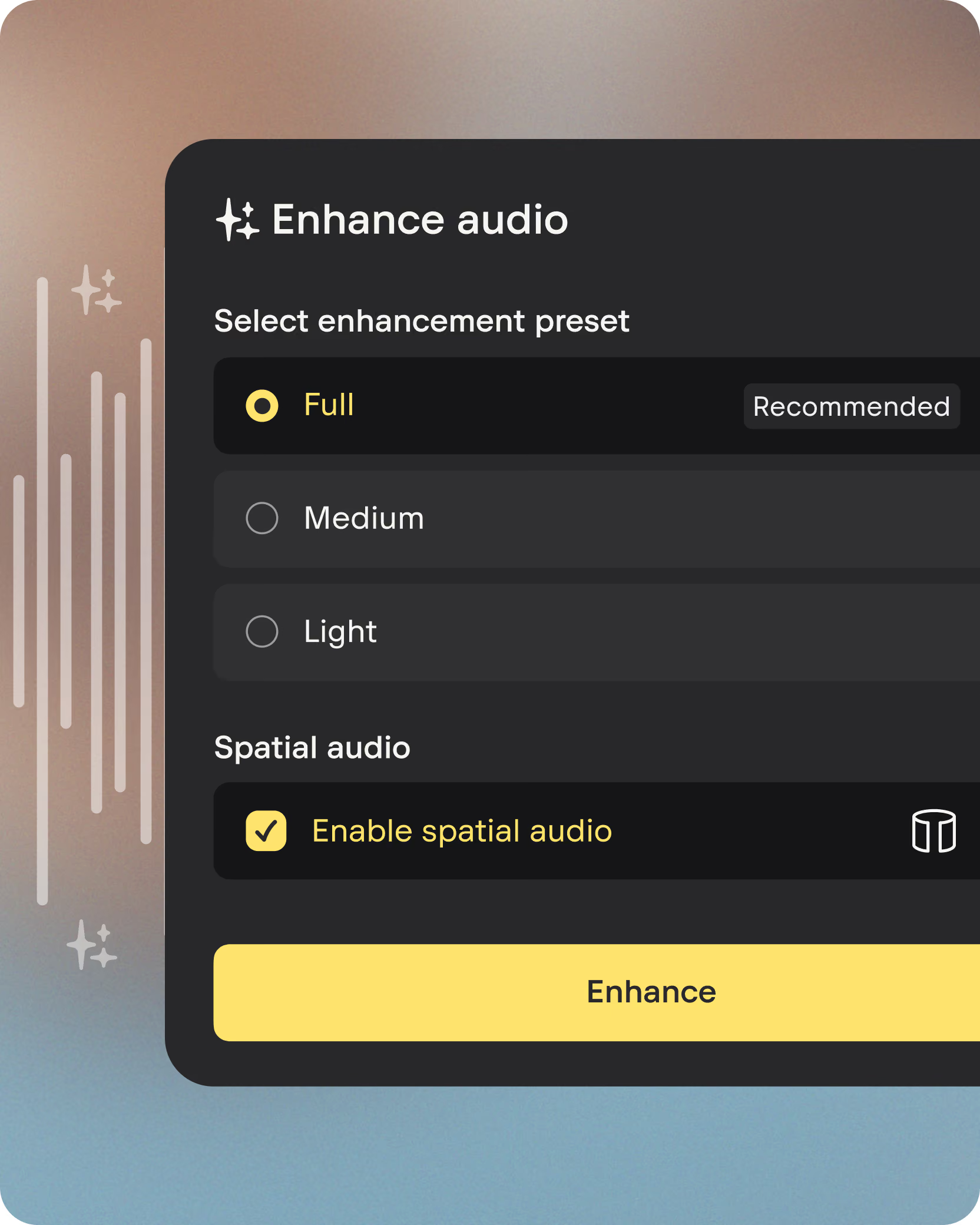
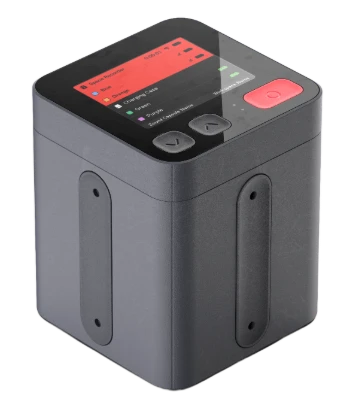
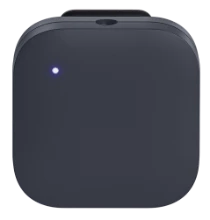
Every voice arrives as its own object with position metadata, wrapped in an ambisonic bed of the real space. Press record; deliver Atmos, broadcast ADM or Eclipsa Audio from the same take.
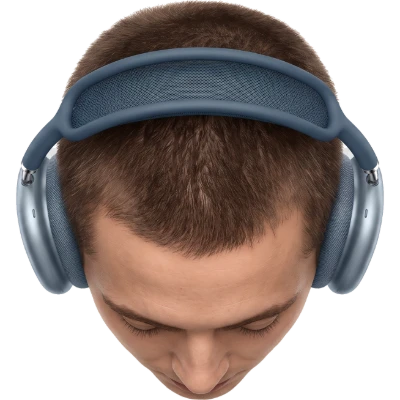
The same 38 seconds, switched between a stereo mixdown, the binaural render and the Atmos bed. Position is kept when you switch, so you can A/B the same phrase.
Per-mic stems for editing, objects for the spatial mix. Take both.
Positions travel inside the file, so the renderer reads what we recorded.
Standard files in, standard files out. Nothing to install in the studio.

Upload a first-order recording from a third-party array and use it as the room bed in place of the Capsule's own capture. Our objects, your array — enhancement, tracking and export run the same either way.

Tested against a growing list of first-order arrays — ask us about yours and we'll confirm before you buy.
Everything a spoken-audio creator needs,
in a single connected workflow.
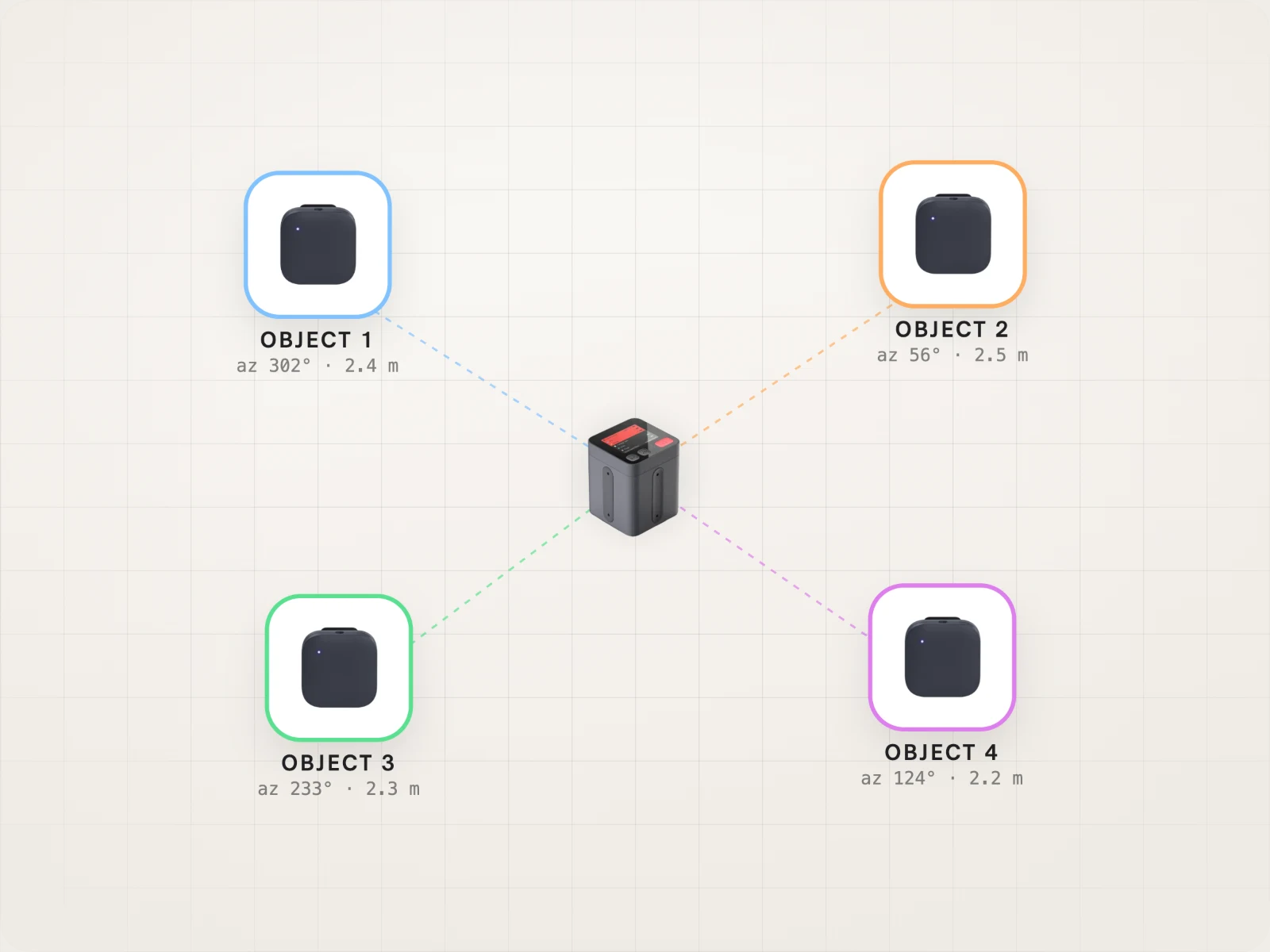
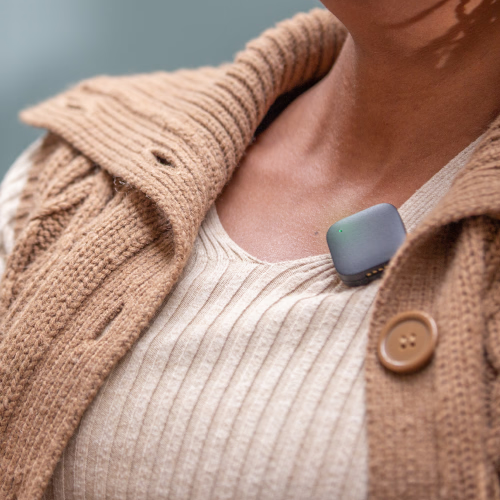
Each Stellar mic becomes its own object with position metadata attached — pan it, ride it, or move it in your session without touching the others.

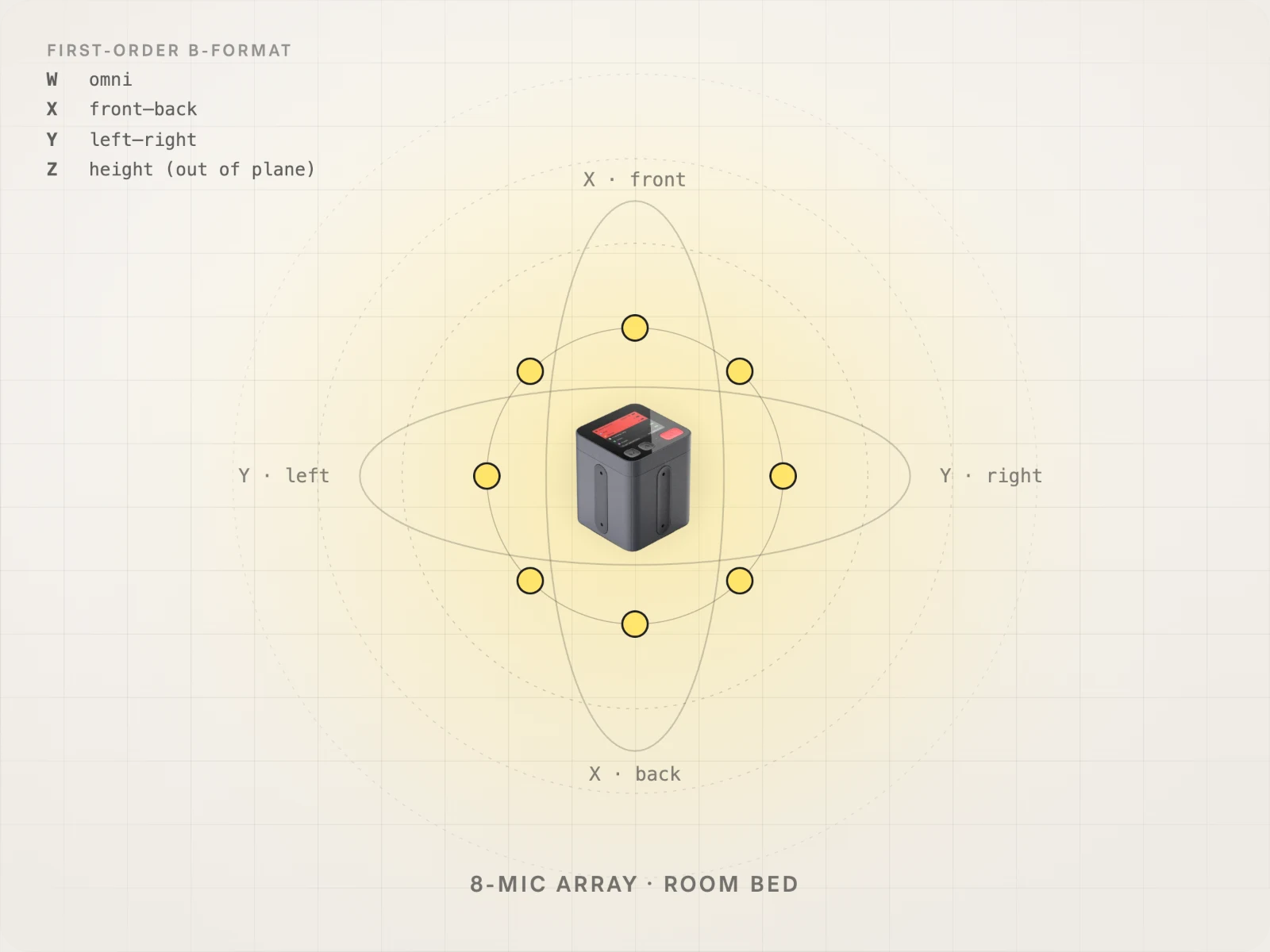
The 8-mic array captures the space itself. Keep it for a sense of place, or pull it down when the dialogue has to sit dry.

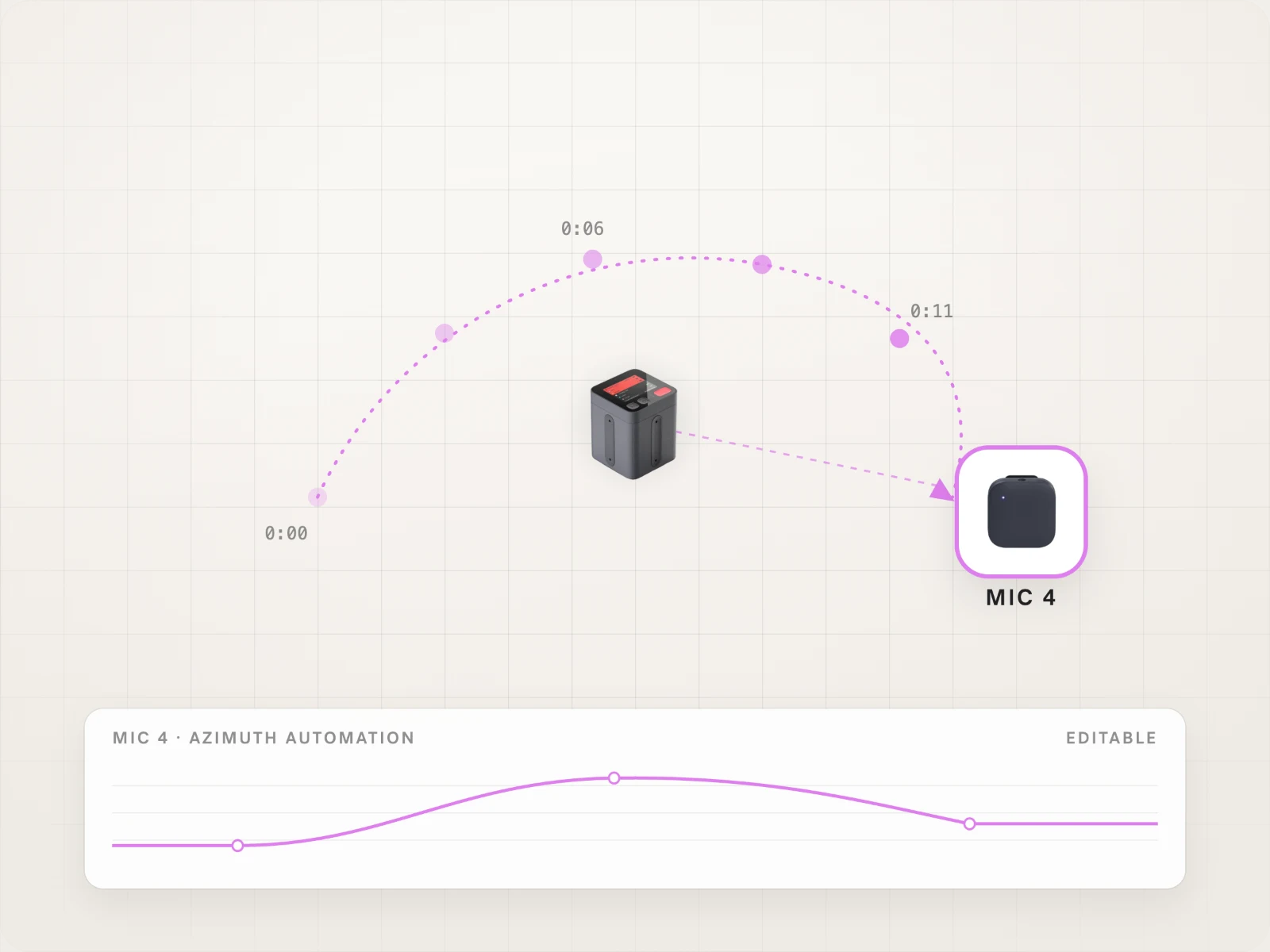
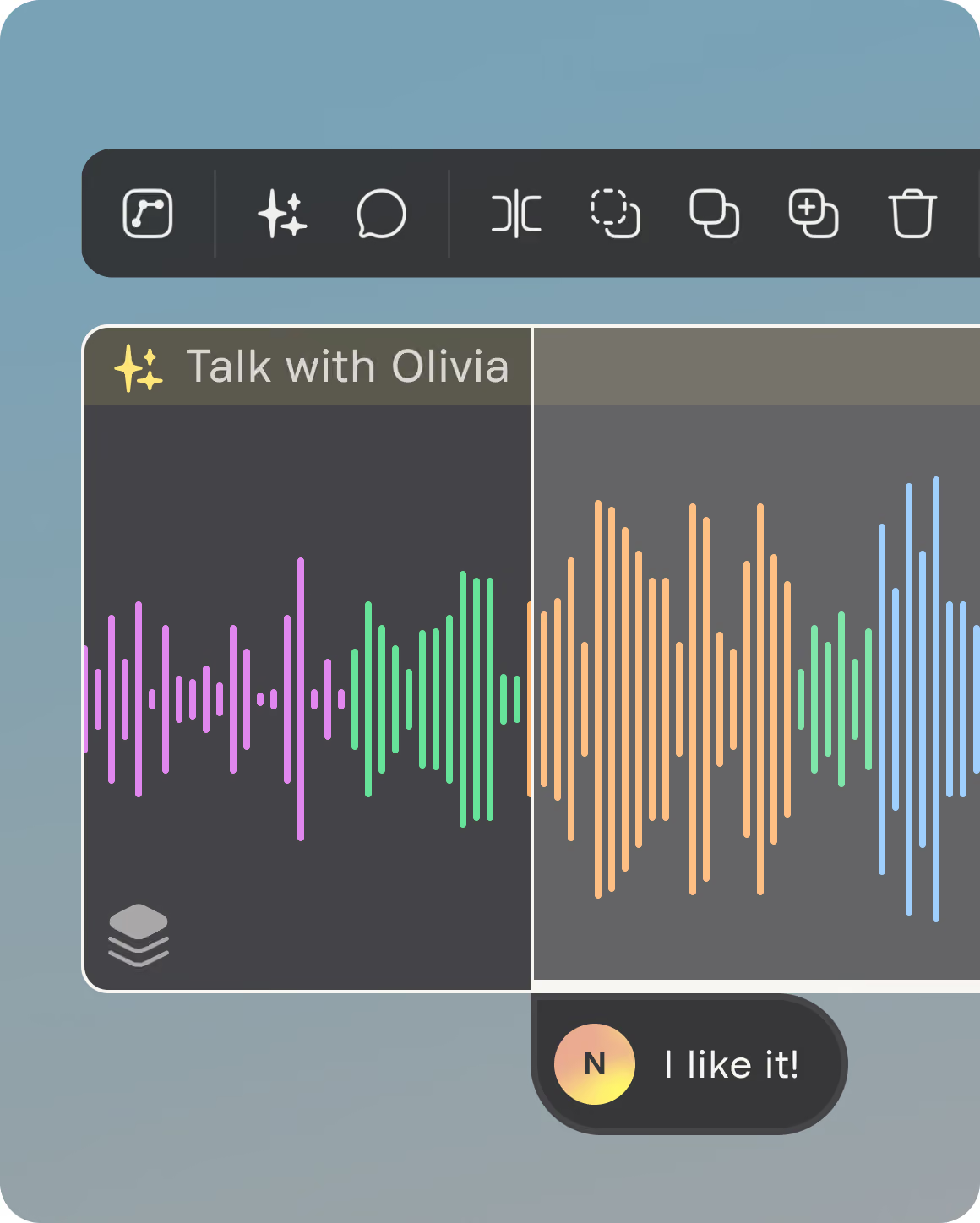
If someone stands up and walks, the movement survives into the mix as automation you can edit — not as a fixed pan you have to guess at.

Each Stellar mic becomes its own object with position metadata attached — pan it, ride it, or move it in your session without touching the others.

The 8-mic array captures the space itself. Keep it for a sense of place, or pull it down when the dialogue has to sit dry.

If someone stands up and walks, the movement survives into the mix as automation you can edit — not as a fixed pan you have to guess at.

.avif)


All four come out of the same session. No re-record, no separate spatial pass.


Download the sample session — objects, bed and metadata — and open it in your DAW before you talk to anyone.
Enjoy free express shipping to the listed locations within 2–5 business days.