Comparisons
October 23, 2026


The best podcast starter kit for a beginner is the smallest one that covers everyone who speaks on the show. A solo host can start with one mic for about $170 to $300. A duo needs two mics and a way to record both, from about $170 wireless or $380 wired. A group of three or four needs a four-input system, from about $480. Add free editing software and you are ready to record.
Three questions decide almost everything, and none of them is about audio quality:
Answer those, then pick from the section below that matches your show.

| Kit | Price (US, Sep 2026) | Why pick it | Watch out for |
|---|---|---|---|
| RØDE Wireless GO (Gen 3) | $169.99 street ($199 list) | Two clip-on transmitters with 32-bit float backup, so a second guest costs nothing extra | Records to a phone, camera or computer, so you still need one of those |
| RØDE PodMic USB | $190 street ($209 list) | Broadcast-style dynamic mic, USB-C or XLR, plugs straight into a computer | USB and XLR outputs can't be used at the same time |
| Shure MV7+ | $299 ($319 with desk stand) | USB-C and XLR, built-in real-time denoiser, MOTIV Mix app | You still need a stand or arm if you don't buy the bundle |
| DJI Mic Mini | $45 at B&H for one transmitter ($59 list) | The cheapest way to put a clip-on mic on a phone | DJI's own US store is out of stock; check availability |
Pair any of these with closed-back headphones, such as the Audio-Technica ATH-M20x at $59 from Sweetwater, and record in a small, furnished room. Soft furniture does more for a beginner than foam panels, as our guide to four steps to a better-sounding podcast explains.
| Kit | Price (US, Sep 2026) | Why pick it | Watch out for |
|---|---|---|---|
| RØDE Wireless GO (Gen 3) | $169.99 street | Two wireless mics, two separate tracks, 32-bit float backup | Editing and cleanup are up to you |
| Zoom PodTrak P4next + 2 Zoom ZDM-1 mic packs | About $380 | Complete desk kit: recorder, two mics, two headphones, stands and cables | Wired, so you set it up and pack it away every time |
| Nomono Stellar Kit | $348 | Two wireless mics that set their own level, with the first year of Studio Cloud Professional included for AI audio enhancement and transcription | Clip-on mics, not a desk-style mic |
The difference between these is less about sound and more about what happens after you press stop. With the wired Zoom kit or the RØDE wireless kit you get files to edit yourself. With the Stellar Kit, recordings sync to Studio Cloud, where one click removes background noise and balances levels, and transcripts are ready without extra software.

| Kit | Price (US, Sep 2026) | Why pick it | Watch out for |
|---|---|---|---|
| Zoom PodTrak P4next + 3 or 4 Zoom ZDM-1 mic packs | About $480 for three, $580 for four | The cheapest complete group setup, four headphone outputs, runs on AA batteries | Cables and stands for every person, rebuilt each session |
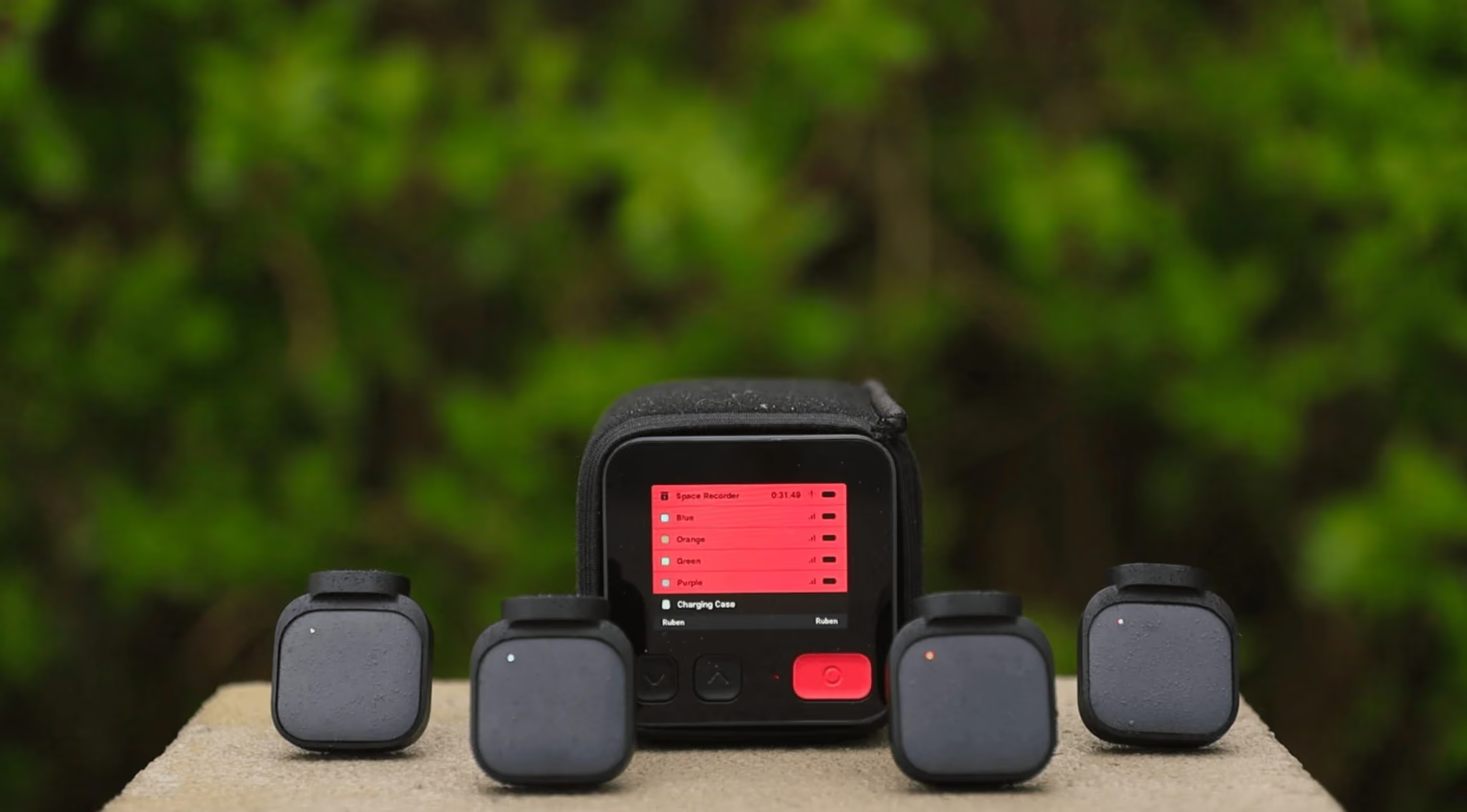
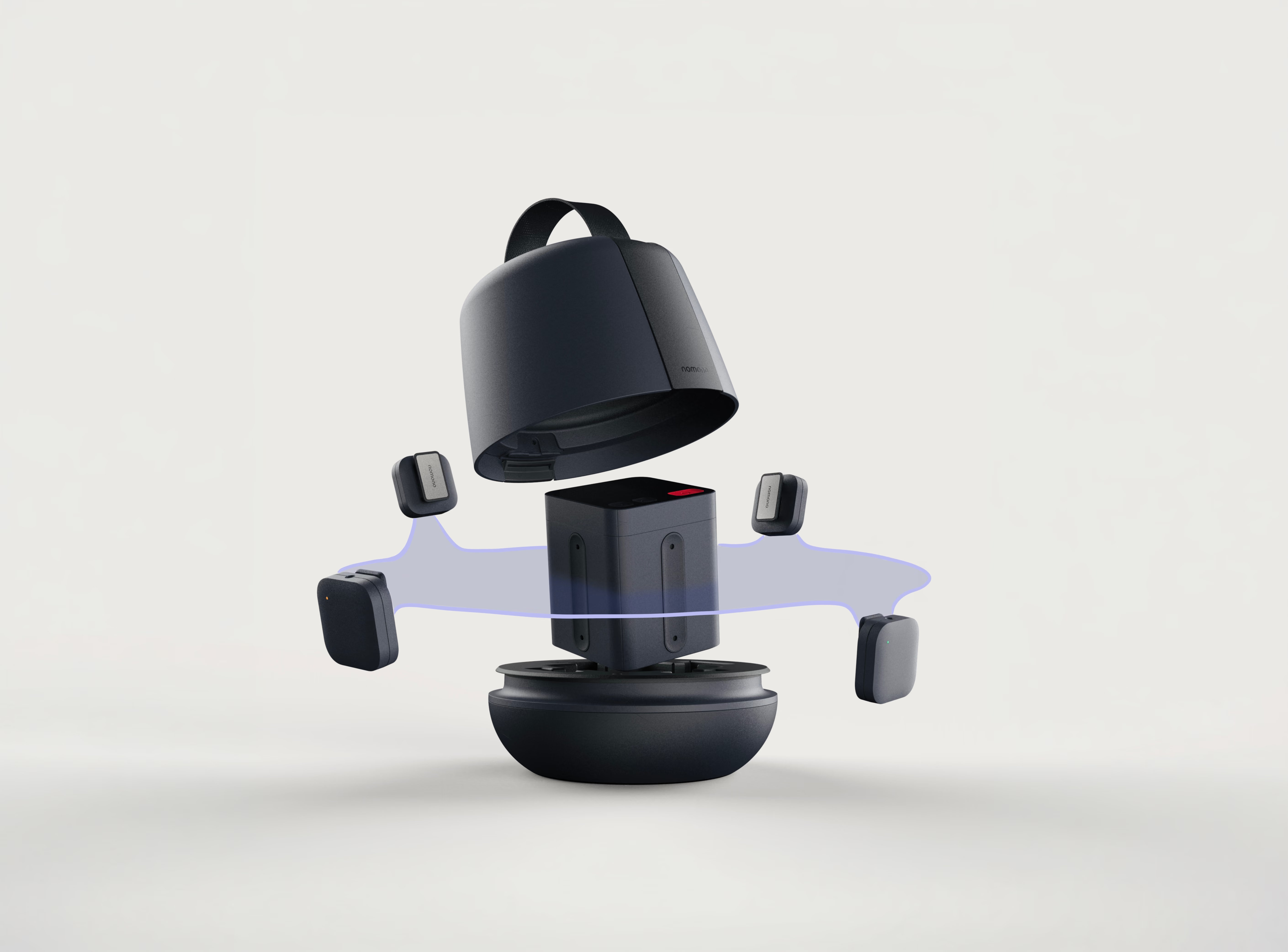
| Nomono Sound Capsule | $1,188 | Four wireless self-levelling mics in one 2.9 lb case, ready to record in under 10 seconds, Dolby Atmos-ready spatial capture, first year of Studio Cloud included | No 32-bit float, and costs more than a wired kit |
Group shows are where beginners most often underbuy. Two people sharing one mic, or four people around a single phone, is the most common reason a first episode sounds rough. If you regularly record three people, buy a four-input system so there is room for a guest. If your group records in different places, a wireless podcast kit for 4 people records everyone on separate tracks with no cables or mixer. Our guide to podcast equipment bundles for 2, 3 and 4 people compares the ready-made options in detail.

You do not need to pay for editing to put out your first few episodes. Studio Cloud has a Free plan with browser-based editing, basic AI audio enhancement and cloud storage, and it works with recordings from any device. Descript's free tier includes 60 minutes of media a month. When you outgrow those, Descript Hobbyist is $24 a month ($16 billed annually), and Studio Cloud Professional and Premium are included for a year with the Stellar Kit and Sound Capsule.

| Your show | Start with | Rough budget |
|---|---|---|
| Solo, at a desk | RØDE PodMic USB or Shure MV7+ plus headphones | $250 to $380 |
| Solo, on a phone or on the move | RØDE Wireless GO (Gen 3) or DJI Mic Mini | $45 to $170 |
| Two people, one desk | Zoom PodTrak P4next + 2 ZDM-1 packs | About $380 |
| Two people, anywhere | Nomono Stellar Kit | $348 |
| Three or four people, one room | Zoom PodTrak P4next + ZDM-1 packs | $480 to $580 |
| Three or four people, anywhere | Nomono Sound Capsule | $1,188 |
For the full cost picture, including software and a first-year total, see our podcast equipment cost guide.
Starting a show with two or more people?
The Stellar Kit and Sound Capsule include the mics, the recorder and a year of Studio Cloud editing.
For a solo beginner, one good mic and headphones: the RØDE PodMic USB ($190 street) or Shure MV7+ ($299) at a desk, or the RØDE Wireless GO (Gen 3) ($169.99 street) on the move. For two people, the Wireless GO or the Nomono Stellar Kit. For three or four, a Zoom PodTrak P4next with a mic pack per person, or the Nomono Sound Capsule if you record in different places.
A solo beginner can start well for $170 to $300, plus about $60 for headphones. A two-person show costs about $170 to $380. A group of three or four starts at about $480 for a wired setup. Editing can be free to begin with, using the Studio Cloud Free plan or Descript's free tier.
Yes, for a solo show. A clip-on wireless mic fixes the phone's biggest weakness, distance from your mouth: the DJI Mic Mini is $45 at B&H for one transmitter, and the RØDE Wireless GO (Gen 3) records two people for $169.99. A single phone stops working once three or four people share a room.
No. A mixer or console helps if you want live sound effects, music beds or phone callers during recording. Beginners who edit afterward are better served by a USB mic, a wireless kit or a simple multitrack recorder such as the Zoom PodTrak P4next.
USB is simpler: it plugs into a computer with nothing in between. XLR needs an interface or recorder but lets you upgrade later. Mics such as the Shure MV7+ and RØDE PodMic USB do both, which makes them a safe first buy.
A setup that sets levels for you and cleans up afterward. Wireless mics that level themselves, such as the Nomono Stellar Mics, remove the gain check before recording, and Studio Cloud removes background noise and balances voices in one click. That combination suits teams where nobody wants to learn an audio editor.
Written by Ruben Åeng, Lead Audio Engineer at Nomono
Audio engineer and Product Manager for spatial audio products at Nomono, with 15 years of experience in film and television sound. Before joining in 2021 he worked as a production sound mixer, dialogue editor and sound designer, with credits including the Oscar-nominated short “Night Ride”.
Enjoy free express shipping to the listed locations within 2–5 business days.
 Austria
 Belgium
 Bulgaria
 Croatia
 Cyprus
 Czech Republic
.svg) Denmark
Denmark Estonia
 Finland
 France
 Germany
 Greece
 Hungary
 Ireland
 Italy
Italy Latvia
 Lithuania
 Luxembourg
 Malta
Malta Netherlands
 Norway
 Poland
 Portugal
 Romania
 Slovakia
 Slovenia
 Spain
Spain Sweden
 United Kingdom
 United States
.avif)