Podcasting guides
October 20, 2026



Immersive audio content is sound produced so the listener hears it in three dimensions, with voices and ambience coming from the directions they belong. Nomono spent 2025 producing a 360 documentary with spatial audio and learned that recording is now the easy part. Editing, muxing, and publishing still take patience and workarounds.
Ruben Åeng, Lead Audio Engineer at Nomono.
Immersive audio content is any recording produced with spatial information intact: a listener wearing headphones or a VR headset hears each voice, footstep, and gust of wind from the direction it actually came from. The common capture format is ambisonics, a full-sphere surround technique, often paired with a headlocked stereo track for narration and music that should stay fixed regardless of where the viewer looks. Formats like Dolby Atmos carry the same idea to music and film. Nomono's spatial audio page covers how our own capture system works, and our piece on spatial audio for podcasts makes the case for using it in audio-only shows.
At Nomono we have been chasing this since 2019, when we set out to make spatial audio capture as simple as pressing a button. In 2025 we finally put our own gear through a full production: The Goatboat, a 360 documentary about an ancient boatbuilding tradition from Nordmøre, Norway, that dates back to the Viking era. What follows is what the project taught us about each stage of the pipeline, kept honest. Some of it went beautifully. Some of it took two months and five Macs.
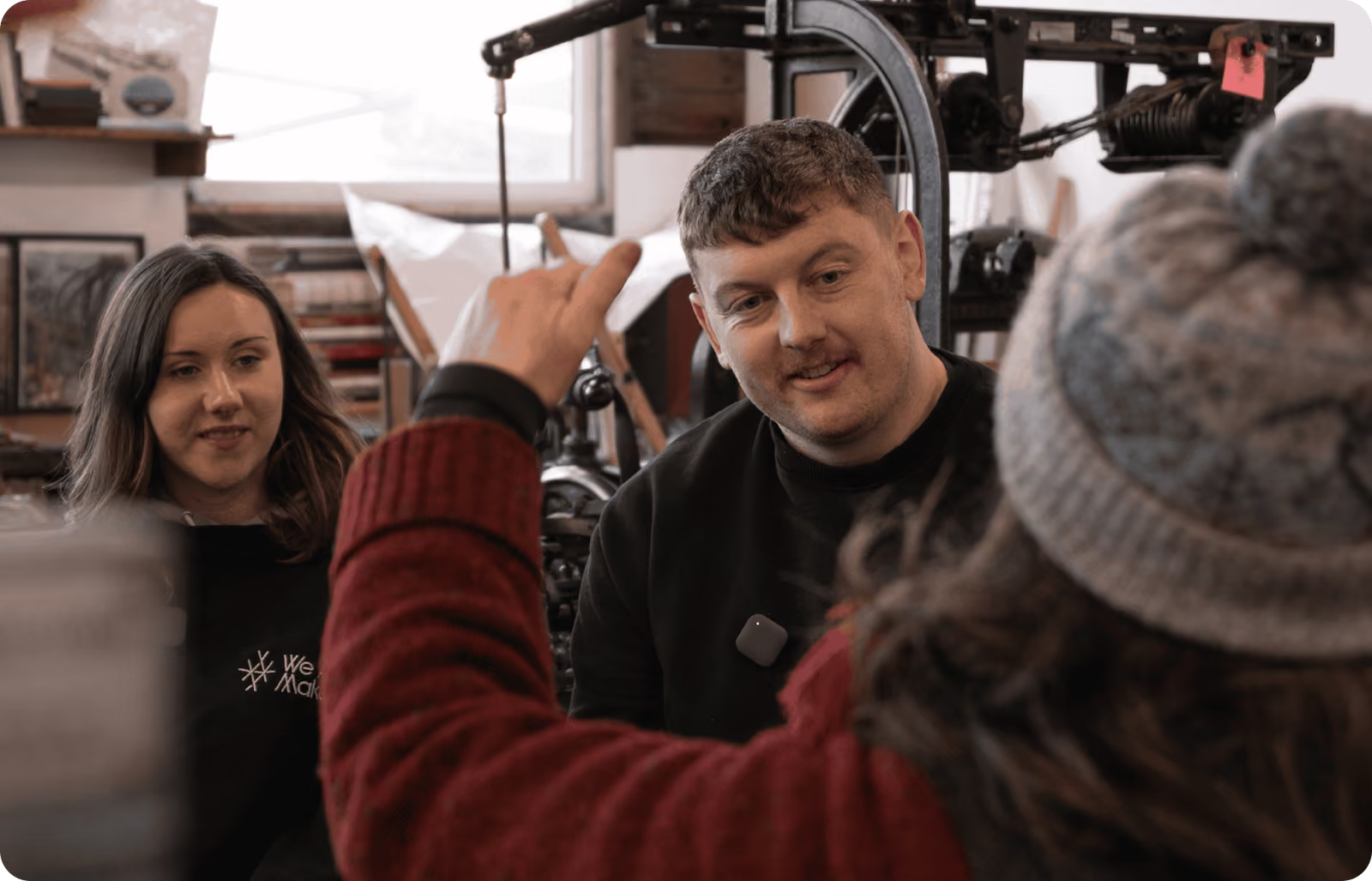
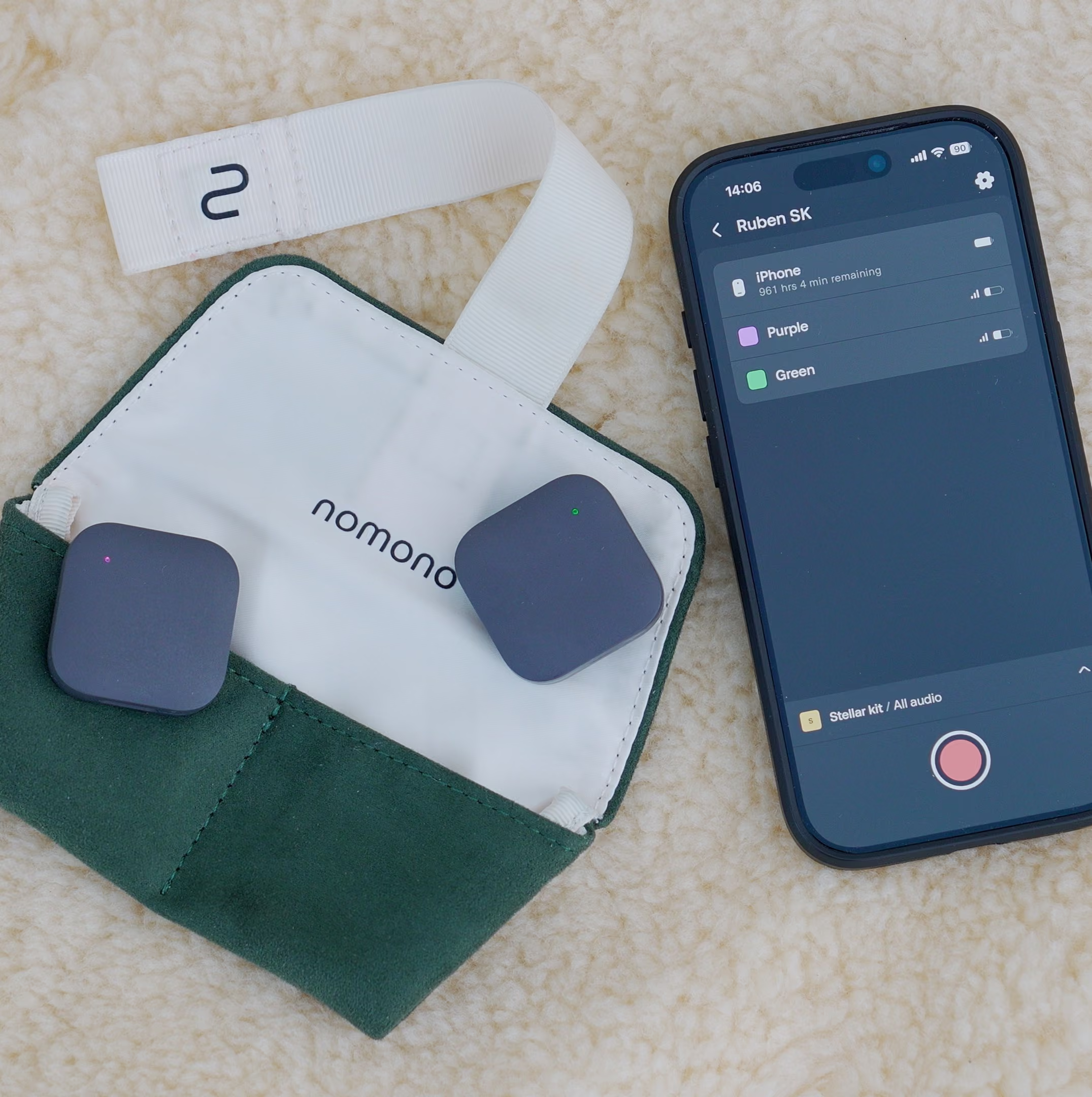
Recording was the smoothest stage of the whole project. The Nomono Sound Capsule handled the audio and an Insta360 X4 handled the picture, and that was the entire kit. No separate audio bags, no bulky gear. The Capsule tracks the wireless lav mics in space, so each voice sits in the mix where the speaker actually stood, and its 8-mic array records an ambisonic ambience bed you can mix under the dialogue to taste. EQ, denoising, leveling, and loudness normalization all happen automatically. The device weighs less than most traditional ambisonic microphones on their own.
One camera lesson from the shoot: 8K sounds like a lot of resolution until you stretch it across a full sphere, and auto settings will not save you. Our auto-exposed footage suffered for it. Manual exposure is what we will use on the next shoot, and what we would tell anyone starting a 360 project to use from day one.
Post-production is where things start to get complicated. We edited the documentary in DaVinci Resolve, which has solid ambisonics mixing support, with two caveats we hit head-on. Resolve makes you manually label ambisonic files on import, and it cannot mux audio and video into a single 360 deliverable on export, so third-party tools are still required to finish the job.
Platform quirks cost us time too. Resolve on Mac crashed every time we imported an EBU ADM file, while the same import worked fine on PC. Dolby Atmos ADM imported cleanly on both. If your project is headed for Apple Vision Pro, that Atmos path is good news. The tools are also improving underneath us: since our February 2025 shoot, Insta360 Studio added import support for first-order ambisonics, and Google is developing the Eclipsa audio format, which could straighten out this whole workflow. With players that size stepping in, we expect the landscape to change fast.
Muxing means combining your 360 video with the ambisonic audio and a headlocked stereo track into one publishable file, and it was the biggest challenge of the entire project. The only tool that muxes third-order ambisonics with headlocked stereo is the Facebook 360 Encoder, part of the old Facebook Spatial Workstation, unmaintained since 2018. A modified version kept alive by the late Angelo Farina, to whom we owe real gratitude, eventually got us there. Getting it running took two months and five different Macs. Once it works, though, it works well.
Accepting first-order ambisonics without headlocked stereo opens up more options, none of them smooth. Adobe Premiere supports it at first order only, at Premiere prices. The old Spatial Media Metadata Injector still functions if you have the technical patience to install it. What we actually want is to export a fully muxed, metadata-rich 360 video straight out of Resolve or Premiere, and we are in conversations with Blackmagic and Google advocating for exactly that.
Playback should be the easy part. It is currently the least predictable, and the viewer's device decides how much of your spatial mix survives. Here is where each major platform stood as of our April 2026 update:
| Platform | Spatial audio playback | Notes from our testing |
|---|---|---|
| Meta Quest (Meta TV / YouTube VR) | Works well | The full experience: 360 view with head-tracked spatial audio |
| Apple Vision Pro | Works well | Solid immersive playback; Dolby Atmos ADM masters import cleanly for this target |
| Facebook mobile app | Partial | Headlocked stereo and first-order ambisonics play; desktop browser playback does not work properly |
| YouTube (youtube.com) | Works as of 2026 | Full immersive playback with head tracking now behaves correctly on YouTube itself |
| YouTube mobile app | Broken | Head tracking does not appear to work; we reported it and YouTube filed a ticket, but the problem remains |
| YouTube embedded players | Broken | As of 2026, embeds lock to a fixed frame with no 360 panning and no head-tracked audio |
Our practical advice from living with this table: publish for VR headsets first, since Quest and Vision Pro are the only places the full experience reliably lands. Then offer a binaural stereo version for headphone listeners without a headset, which is what we did for The Goatboat teaser. And test your published file on every surface your audience will use, because a mix that sounds right in the edit can arrive with broken channel mapping in a browser.
Immersive content creation is still early, and the pipeline is uneven in a specific way: capture has been solved, and everything downstream is catching up. A creator with a Sound Capsule and a 360 camera can record spatial audio in minutes, then spend weeks on muxing and publishing steps that a flat video would finish in an afternoon. Every tool update since our shoot has narrowed that gap, and formats like Eclipsa suggest the standards problem is finally getting attention from companies big enough to fix it.
We keep publishing what we learn as we go. Our guide to creating immersive soundscapes covers the craft side of ambience, and recordings from the Capsule land in Studio Cloud already enhanced and ready for spatial mixing. The Goatboat teaser is live now, with the full documentary on our YouTube channel, and it remains the best demonstration we have of why this work is worth the bumps.
Immersive audio content is sound recorded and mixed with three-dimensional spatial information, so listeners hear voices and ambience from the directions they originally came from. Ambisonics is the usual capture format, often combined with a headlocked stereo track for narration and music. It is played back through headphones (binaurally) or a VR headset with head tracking.
Ambisonic audio rotates with the viewer: turn your head and the blacksmith's hammer stays where the blacksmith is. Headlocked stereo stays fixed to your ears no matter where you look, which is what you want for voiceover, music, and scripted sound effects. A finished 360 piece usually carries both, and combining them is exactly the muxing step that current tools make difficult.
Two devices cover it now: an ambisonic recorder and a 360 camera. We shot The Goatboat with a Nomono Sound Capsule and an Insta360 X4 and carried no other audio gear. The Capsule records a full ambisonic ambience bed plus four tracked wireless lav mics, and it weighs less than most standalone ambisonic microphones.
Yes, with caveats that changed during 2026. Head-tracked spatial playback now works correctly on youtube.com and in YouTube VR on headsets. The mobile app still fails to head-track, and embedded players lock to a fixed frame with no 360 panning at all. Publish to your channel directly and point viewers there rather than relying on embeds.
Muxing is packaging the 360 video, the ambisonic audio, and the headlocked stereo track into one file with the spatial metadata platforms need. For third-order ambisonics plus headlocked stereo, the only working tool is a community-maintained build of the discontinued Facebook 360 Encoder. First-order-only projects can use Adobe Premiere or the old Spatial Media Metadata Injector instead.
The order describes spatial resolution. First-order ambisonics (FOA) uses four channels and gives a workable but soft sense of direction, and it is what YouTube supports. Third-order uses sixteen channels and localizes sounds much more precisely, at the cost of a harder publishing path. Our documentary was mixed in third order, with an FOA version for the YouTube teaser.
No, but the headset gets the full experience. On Meta Quest or Apple Vision Pro the viewer looks around freely and the audio follows their head. On ordinary headphones, a binaural mix still delivers convincing 3D sound from a fixed perspective, which is why we publish a binaural version of everything alongside the 360 file.
Resolve mixes ambisonics well, and it is what we cut The Goatboat in. Two limitations to plan around: ambisonic files must be labeled manually on import, and Resolve cannot export a muxed 360 deliverable, so a separate muxing step follows every export. On Mac, EBU ADM imports crashed Resolve in our testing while Dolby Atmos ADM worked fine on both platforms.
Eclipsa is an open immersive audio format Google has been developing, aimed at making spatial audio easier to deliver across platforms. For creators, the promise is a standard that replaces today's patchwork of legacy encoders and injectors with something modern tools can export directly. It is one of the main reasons we expect this workflow to improve quickly.
Spatial audio is not only for 360 video. An ambisonic ambience bed under an ordinary podcast adds a sense of place that flat stereo cannot, and the Sound Capsule records one on every session whether or not you use it. Our piece on spatial audio for podcasts goes through when it earns its place in an audio-only mix.
Ruben Åeng is Lead Audio Engineer at Nomono and produced the spatial audio for The Goatboat.
Enjoy free express shipping to the listed locations within 2–5 business days.
 Austria
 Belgium
 Bulgaria
 Croatia
 Cyprus
 Czech Republic
.svg) Denmark
Denmark Estonia
 Finland
 France
 Germany
 Greece
 Hungary
 Ireland
 Italy
Italy Latvia
 Lithuania
 Luxembourg
 Malta
Malta Netherlands
 Norway
 Poland
 Portugal
 Romania
 Slovakia
 Slovenia
 Spain
Spain Sweden
 United Kingdom
 United States