Comparisons
October 27, 2026


The best 4-person podcast setup depends on where you record. For a show that moves between rooms, the Nomono Sound Capsule records four wireless mics on separate tracks from one battery-powered case. For a fixed desk with live mixing, the RØDECaster Pro II is the stronger buy. On a tight budget, a Zoom PodTrak P4next with four wired mics is the cheapest route.
A 4-person setup has to record four separate audio tracks at the same time, one per speaker. Anything that mixes four voices into a single stereo file takes away your ability to lower one loud guest, cut a cough or clean up one noisy mic in the edit. That rules out a single tabletop mic and most stereo handheld recorders.
Two more questions sort the options quickly. Does the setup need a power outlet, and does someone have to set gain on every channel before you hit record? A desk console says yes to both. A battery-powered wireless kit with automatic levelling says no to both, which matters when the fourth guest walks in two minutes before you start. Our guide to how to record a podcast covers the underlying capture decisions.
We looked at five things: whether all four speakers get isolated tracks, whether the rig runs on battery, how much setup it takes with four people in the room, what happens to the files after the session, and the realistic all-in cost rather than the headline price.
Nomono prices come from nomono.co. Competitor prices are list prices from the maker or US street prices from Sweetwater and B&H, checked in late September 2026. Prices move, so check before you buy.
| Setup | Price | 4 isolated tracks | Wireless | Battery | Editing included |
|---|---|---|---|---|---|
| Nomono Sound Capsule | $1,188 | Yes, plus spatial track | Yes, 4 mics | Yes, up to 25 h with case | Yes, Studio Cloud |
| RØDECaster Pro II + 4 mics | $595 console; $2,229.65 kit at B&H | Yes, 4 XLR | No | No | No |
| Zoom PodTrak P4next + 4 mics | $179.99 list ($149.99 sale) | Yes, 4 XLR | No | Yes, 2 AA or USB | No |
| Zoom H6essential + 4 mics | $329.99 recorder | Yes, 4 XLR/TRS | No | Yes | No |
| Tascam Portacapture X8 + mics | $399 at Sweetwater | Yes, 4 XLR/TRS | No | Yes | No |
| 2 x RØDE Wireless PRO | $260 each at B&H/Sweetwater | Yes, across 2 receivers | Yes, 4 mics | Yes | No |
| Riverside (remote) | $29/mo or $24/mo yearly | Yes, per participant | n/a | n/a | Yes |
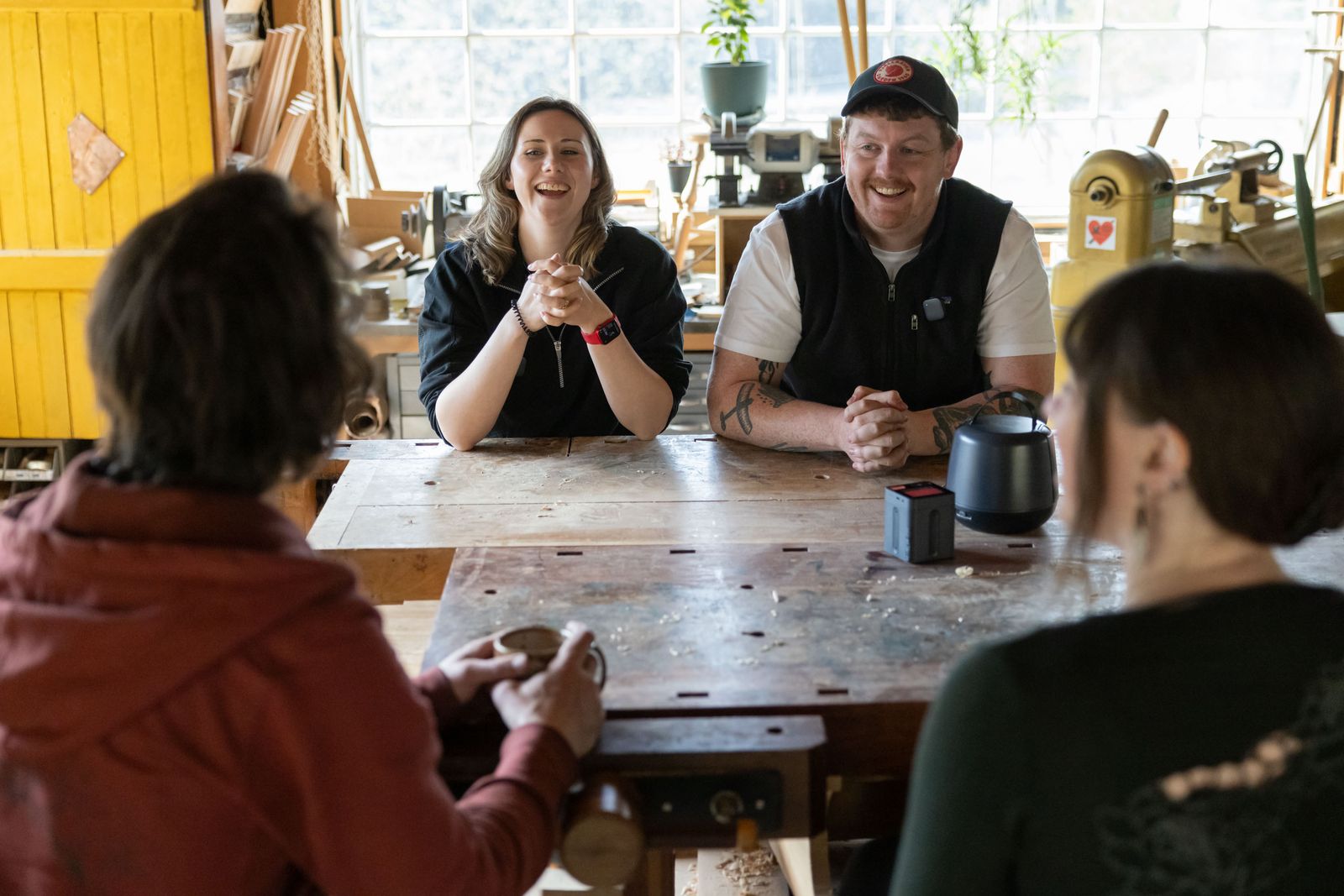
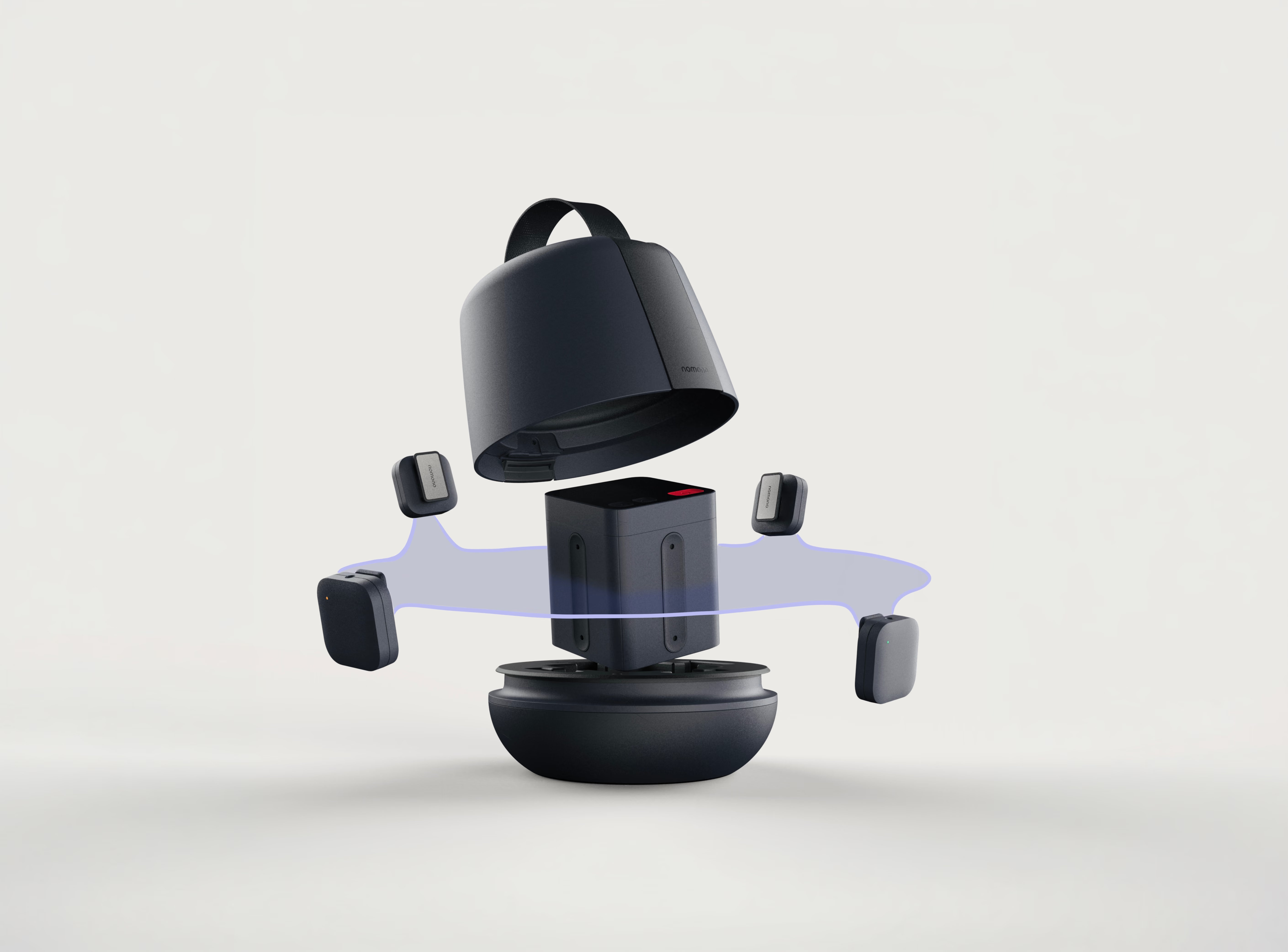
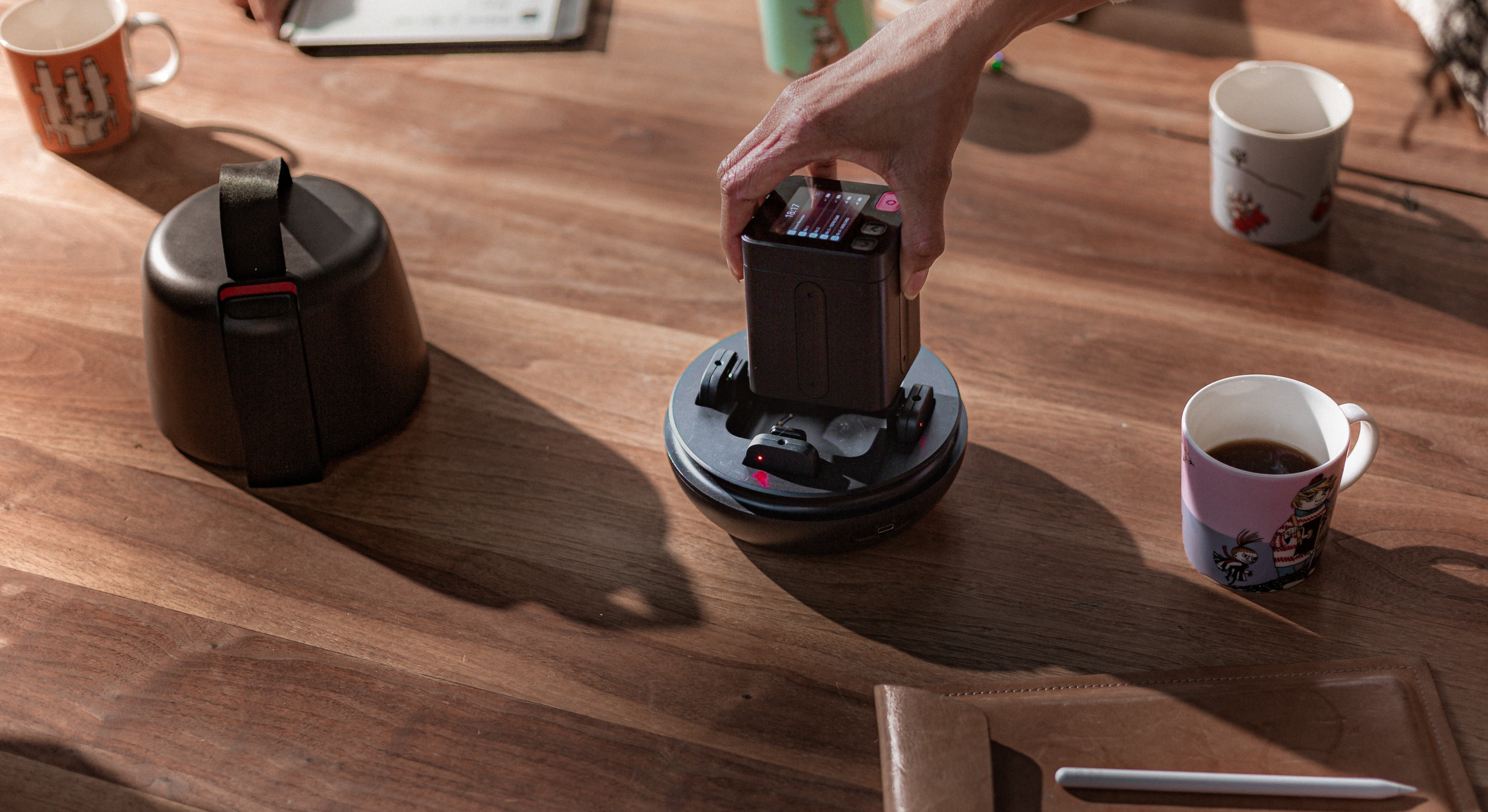
The Sound Capsule 4-person podcast kit is the setup to buy when the location changes every week and nobody on the team is an audio engineer. One 2.9 lb (1.3 kg) charging case holds the Space Recorder, which has an 8-mic ambisonic array, and four Stellar wireless mics that clip to each speaker. Each mic gets its own voice track at 16-bit/48 kHz, and the Space Recorder adds a spatial track of the room at 24-bit/48 kHz. Every mic levels itself automatically, so nobody rides a fader. The kit records for up to 10 hours, plus 15 more from the case, and stores up to 12 hours internally. It needs no phone or laptop and is ready to record in under 10 seconds.
The bigger difference is what happens after you stop recording. Files upload to Studio Cloud automatically, where you get cloud editing, AI noise removal and audio enhancement (600 minutes a month), unlimited transcriptions and spatial export. The price includes the first year of Studio Cloud Premium, and plan details are on the Studio pricing page. The honest trade-off: no physical faders for live mixing.
The RØDECaster Pro II is the right call for a show that records at the same table every week and mixes live. It has four combo XLR inputs with 76 dB of gain, APHEX processing, 64 SMART pads for music and stingers, mix-minus and Bluetooth for phone guests, and two USB-C audio interfaces. It records at 24-bit/48 kHz to microSD, USB or a computer.
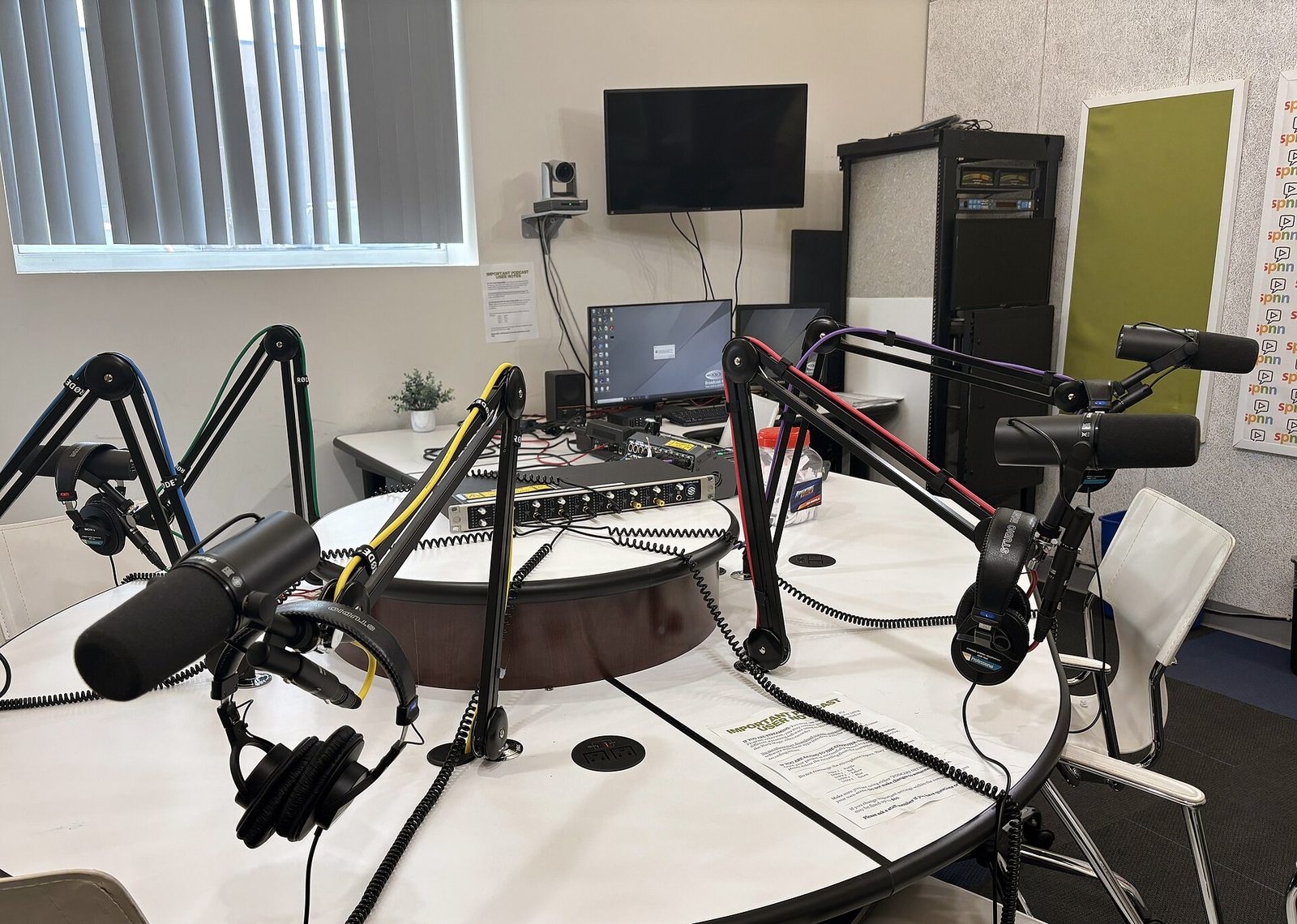
Cost is where buyers get surprised. The console is $699 list and $595 at Sweetwater, with no mics in the box. B&H sells a 4-person kit with four RØDE PodMics, four NTH-100 headphones, four PSA1+ boom arms and cables at $2,229.65. It also has no battery, so it needs an outlet or a 30 W+ USB-C power bank. We compare it with the Sound Capsule in detail in Nomono Sound Capsule vs RØDECaster Pro II.
Zoom has replaced the original PodTrak P4 with the PodTrak P4next. It costs $179.99 list and was $149.99 on sale at Sweetwater. You get four XLR inputs with 70 dB of gain, four headphone outputs, mix-minus and four sound pads, and it runs on two AA batteries or USB, so it works on a picnic table. It records 24-bit/48 kHz to microSD.
You still need four mics. Zoom's ZDM-1 Podcast Mic Pack ($99.99 list) includes a mic, headphones, a tabletop stand, a windscreen and a cable, so four packs plus the recorder come to about $550 at the sale price. Four wired guests also means four cables across the table, which is the real cost on location.
The H6essential is the pick when you already own four XLR mics and want a small recorder. It has four XLR/TRS inputs and records 32-bit float, so there is little gain to set before you start. It costs $329.99. Add four RØDE PodMics at $86 each and you are at about $674 before stands, cables and headphones. There is no cloud workflow, so everything after the session happens in your own editing software.
The Portacapture X8 suits a team that wants a touchscreen interface. It has four XLR/TRS inputs, launched at $499 and sells for $399 at Sweetwater. With four PodMics, the total is about $743 before stands and cables. Like the Zoom recorders, it hands you files and stops there.
Stacking two 2-person wireless kits puts four people on wireless mics. Two RØDE Wireless PRO kits cost $520 at $260 each at B&H and Sweetwater ($299 list each). They support timecode, which is why video teams choose them. Two DJI Mic 3 kits ($259 each at B&H) are a similar option with timecode. The catch is two receivers, two sets of pairings and two file sets to line up in the edit, and no post-production.
Remote panels are a different problem. Riverside records each participant separately, so you still get one track per person. Pro is $29 a month or $24 a month billed yearly. Audio quality still depends on each guest's own mic and room, so it does not replace hardware for people sitting at the same table.

| Setup | Headline price | Still to buy | Editing |
|---|---|---|---|
| Nomono Sound Capsule | $1,188 | Nothing; 4 mics included | First year of Studio Cloud included |
| RØDECaster Pro II | $595 | 4 mics, arms, cables, headphones | Your own software |
| RØDE 4-person kit | $2,229.65 at B&H | Nothing essential | Your own software |
| Zoom PodTrak P4next | $149.99 sale | 4 x ZDM-1 packs, about $400 | Your own software |
| Zoom H6essential | $329.99 | 4 mics, stands, headphones | Your own software |
| Tascam Portacapture X8 | $399 | 4 mics, stands, headphones | Your own software |
| 2 x RØDE Wireless PRO | $520 | A recorder or camera | Your own software |
| Riverside Pro | $24 to $29/mo | A mic per guest | Included |
Post-production is the line most buyers leave out. A four-person episode produces four tracks that need levelling, noise cleanup and often a transcript every week, and that work recurs while the hardware cost does not. The Sound Capsule includes the first year of Studio Cloud; after the first year you can stay on the Free plan or continue Studio Cloud from $29/month (Professional) or $99/month (Premium), and the hardware keeps working either way. For the full cost picture across team sizes, see our podcast equipment cost guide and podcast equipment bundles for 2, 3 and 4 people.
Record four people without a cable in sight
The Sound Capsule puts four wireless mics, a spatial recorder and a year of Studio Cloud Premium in one case.
It depends on the room. For changing locations, the Nomono Sound Capsule records four wireless mics on separate tracks from one battery-powered case, with cloud editing included, for $1,188. For a permanent desk with live mixing, the RØDECaster Pro II at $595 is the better fit.
A Zoom PodTrak P4next with four ZDM-1 mic packs comes to about $550. A RØDECaster Pro II 4-person kit is $2,229.65 at B&H. The Nomono Sound Capsule is $1,188 with mics and editing included.
Yes. One shared mic in the middle of the table picks up each voice at a different distance plus the whole room, and you cannot fix one person in the edit. Every setup here records a dedicated track per speaker.
Yes. The Sound Capsule records four Stellar wireless mics into one Space Recorder. The alternative is stacking two 2-person kits such as RØDE Wireless PRO, which works but leaves you with two receivers and two file sets.
Rarely, for speech. 32-bit float was designed for mixing in software, and a spoken recording typically spans 40 to 60 dB, well inside the 96 dB a 16-bit recording captures. Good mic placement and automatic levelling matter far more. The Nomono Sound Capsule records 16-bit/48 kHz voice tracks with auto-levelling on every mic, and our support article explains why 16-bit is enough for spoken audio.
Only the Sound Capsule here. Its Space Recorder captures the room with an 8-mic ambisonic array alongside the four voice tracks, and the recording is Dolby Atmos-ready. Our guide to spatial audio for podcasts explains what it adds.
Buy a console if your show records in one room and you want live faders, pads and phone-ins. Buy a portable recorder or wireless kit if your show moves. Our guide to recording outside the studio covers what changes on location.
Written by Ruben Åeng, Lead Audio Engineer at Nomono
Audio engineer and Product Manager for spatial audio products at Nomono, with 15 years of experience in film and television sound. Before joining in 2021 he worked as a production sound mixer, dialogue editor and sound designer, with credits including the Oscar-nominated short “Night Ride”.
Enjoy free express shipping to the listed locations within 2–5 business days.
 Austria
 Belgium
 Bulgaria
 Croatia
 Cyprus
 Czech Republic
.svg) Denmark
Denmark Estonia
 Finland
 France
 Germany
 Greece
 Hungary
 Ireland
 Italy
Italy Latvia
 Lithuania
 Luxembourg
 Malta
Malta Netherlands
 Norway
 Poland
 Portugal
 Romania
 Slovakia
 Slovenia
 Spain
Spain Sweden
 United Kingdom
 United States
.avif)