Podcasting guides
October 20, 2026



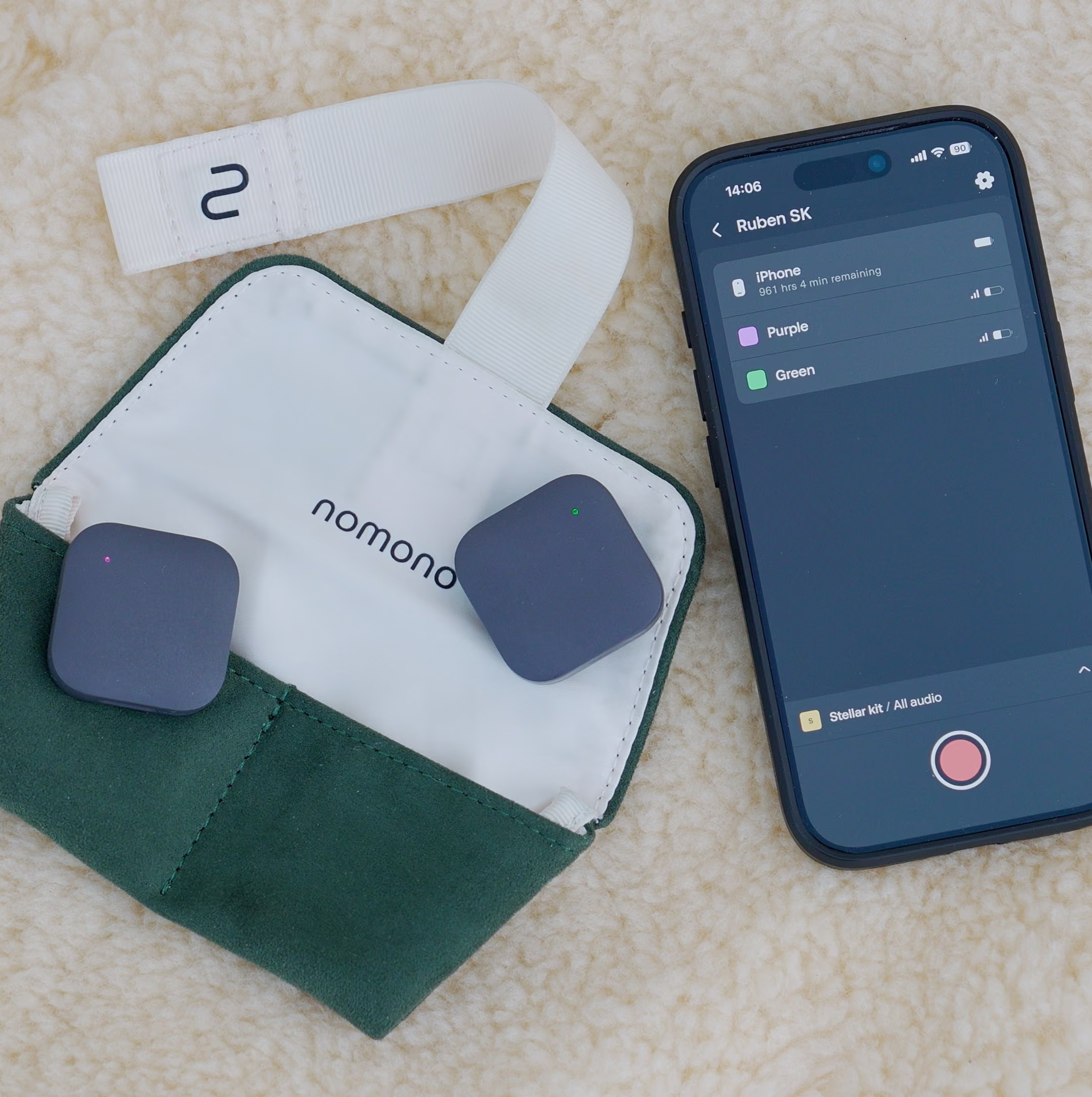
You can record a professional podcast outside the studio by controlling four variables: microphone placement, level stability, wind and noise management, and file safety. A wireless kit such as the Nomono Sound Capsule keeps every speaker close-miked even while they move, which removes the biggest failure point of location recording.
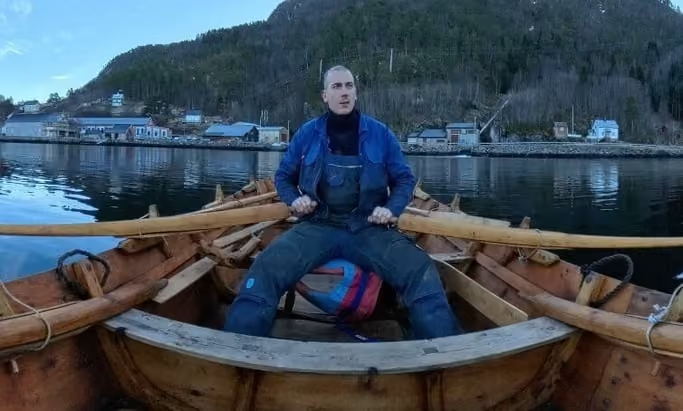
Recording outside the studio removes every control a treated room gives you. Noise becomes unpredictable, speakers move, hard surfaces reflect sound, and outdoors you trade room echo for wind and ambient noise. None of that stops a recording from sounding professional. What changes is where the work happens: instead of relying on the room, you rely on equipment choice, speaker positioning, mic placement, level management, and a short pre-flight check of batteries and storage.
The guide below covers the technique and gear specific to events, walk-and-talks, offices, and outdoor locations. For microphone basics, episode structure, and the full studio workflow, start with the pillar guide on how to record a podcast and come back here for the location-specific layer.
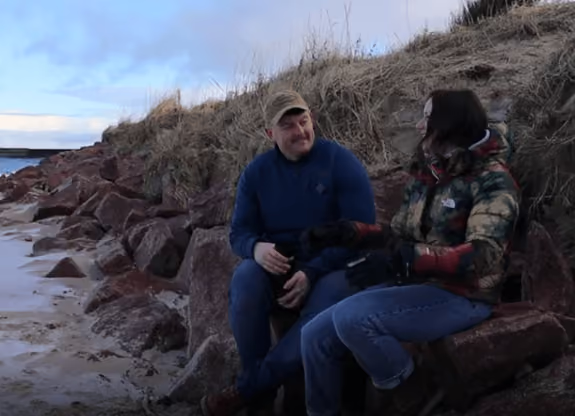
Every location recording starts with a 60-second listen. Stand where you plan to record and note the loudest constant noise source (HVAC, a coffee machine, a stage PA), the hardest reflective surfaces (glass walls, tile floors), and the direction foot traffic flows. Then position accordingly: move away from walls and windows, put the noise source behind the speakers rather than behind the microphones, and pick the corner of the space furthest from traffic. At a conference, ten meters of distance from the expo floor's center lowers the noise floor more than any plugin will later.
Microphone technique becomes more important the moment people start moving. The rule is short and fixed distance: keep each mic close to its speaker, and keep that distance constant for the whole session. A guest who leans back mid-answer on a handheld mic just changed their level, their tone, and their ratio of voice to room noise, all at once. Wearable wireless lavaliers solve the drift problem mechanically because the mic moves with the speaker. Clip the capsule 15 to 20 cm below the chin, away from jewelry and jacket zips, and angle it away from the loudest noise source. Placement determines most of what you hear at the end; the guide to what makes recordings sound great covers the acoustics behind it.
Level issues are harder to fix later than most people expect. Clipped audio is permanently damaged, and a guest recorded 15 dB quieter than the host means noise gets amplified along with their voice in post. Before recording, have every speaker talk at their real conversational volume, not a polite soundcheck murmur, and set gain so peaks land with clear headroom below zero. Balance speakers against each other at the source. In fast-moving environments where you cannot watch meters, hardware that handles gain automatically, such as 32-bit float recorders or the Sound Capsule's per-speaker tracks, buys you a margin of safety that manual gain cannot.
A location interview usually cannot be repeated, so treat file safety as part of the setup, not an afterthought. Charge every device the night before and confirm battery state on site. Check free storage before pressing record, not after. Confirm the recorder saves files locally rather than depending on a live wireless link, and know how you will get the files off afterward. A rough phone backup in a pocket costs nothing and has saved more than one episode.
A good location setup carries through to editing. Multi-track recordings with one clean file per speaker give you independent control in post, and a consistent file naming and folder habit means episode 40 is as easy to find as episode 4. Cloud-connected workflows shorten the chain further: the Sound Capsule uploads its tracks to Studio Cloud, where enhancement, editing, and export happen in the browser without a manual transfer step. Whatever tools you use, the target is the same: minimal corrective work, and hours rather than days between capture and publish.
Location recording gear is a tradeoff between portability, channel count, and how much correction you accept doing later. The table below maps the four most common out-of-studio scenarios to a recommended setup and a budget alternative, with US pricing as of August 2026. The podcasting equipment buyer's guide covers the full market in more depth.
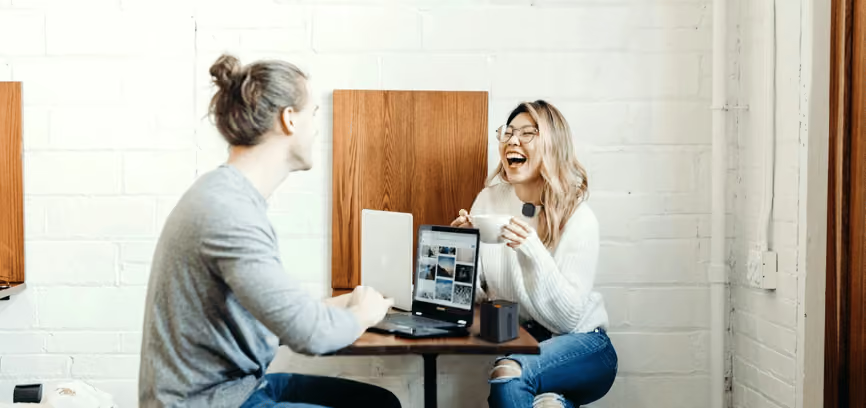
| Scenario | Main audio problem | Recommended setup | Budget alternative |
|---|---|---|---|
| Event booth or conference floor | Constant crowd noise and PA bleed | Nomono Sound Capsule: 4 wireless lavs plus ambient array, per-speaker tracks, sets up in about a minute | Zoom PodTrak P4 ($149.99) with wired dynamic mics; cheaper, but cables anchor guests to the table |
| Walk-and-talk | Movement, wind, variable distance | Wireless lavaliers with windshields; Sound Capsule covers up to 4 walkers at once | Rode Wireless Pro ($399) or DJI Mic 2 ($349), both 2-person 32-bit float kits |
| Office or client space | Reflective glass, HVAC, keyboard noise | Close-worn lavs to maximize voice-to-room ratio; no cables to run through a client's meeting room | Shure MV7+ ($299) per speaker if a table setup is acceptable |
| Outdoor location | Wind and uncontrollable ambient sound | Lavs with foam windshields, bodies as windbreaks; the Sound Capsule's ambisonic array captures usable ambience on a separate track | DJI Mic 2 with furry windscreens for 2-person outdoor sessions |
Battery-powered kit is the constant across all four rows. Desktop consoles such as the RODECaster Pro II ($595) produce excellent audio but need mains power and XLR cabling, which rules them out of most of the scenarios above. Among the portable options, the Sound Capsule is the only one that records four speakers wirelessly plus a spatial ambient track and includes a cloud editing workflow; the two-person camera kits from Rode and DJI are strong choices when your show is a duo and video-first.
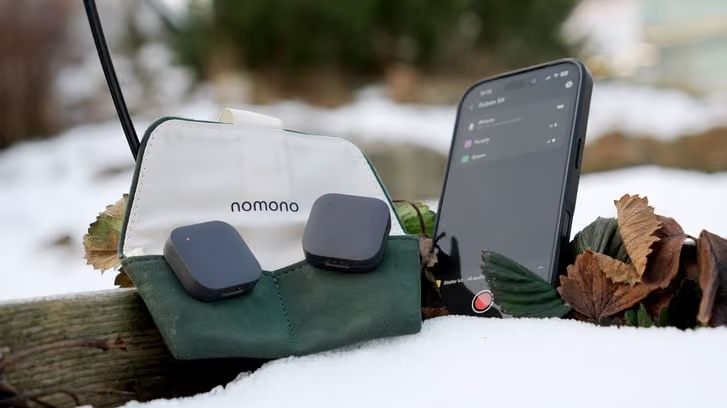
Event recordings live or die on speaker-to-mic distance, because you cannot lower the noise floor of a trade show. Mic every speaker individually and closely; a single table mic in a booth picks up more expo hall than conversation. Set up slightly away from the busiest walkways and orient speakers so their backs, not their mics, face the noise. Do not rely on the venue's PA feed as your primary audio: house feeds are mixed for the room and arrive at levels outside your control. Fast setup matters too, since guest slots at events run 15 minutes and overrun. The barbering-industry show How To Cut It records interviews on the trade-show floor with the Sound Capsule for that reason: mics clipped on, recording inside a minute.
Walk-and-talk formats demand microphones that move with the speaker, which means wearable wireless lavs rather than handhelds that drift with tired arms. Fit foam windshields even on calm days, since walking pace alone generates wind noise across a bare capsule. Keep walkers within a couple of meters of each other so conversational energy stays natural, and route the walk away from main roads. Walk in the Park with Kate built its entire format on this approach, recording interviews on the move with Nomono. If you shoot video alongside, record audio separately and align it in post; the walkthrough on syncing Nomono audio with your camera covers the method.
Offices are quiet on paper and hostile in practice: glass walls, bare desks, and hard floors reflect voices into a boxy, echoey recording. Counter the room by shrinking it. Sit speakers closer together than feels natural, work close to the mics so direct voice dominates the reflections, and pick the smallest furnished room available, since soft furnishings absorb what glass reflects. Silence the avoidable noise before recording: notifications off, HVAC down if you can, laptops away from mics. The tattoo-culture show Hold The Gate records in working studio spaces rather than a treated room and holds broadcast-listenable quality by keeping mics close and setups minimal.
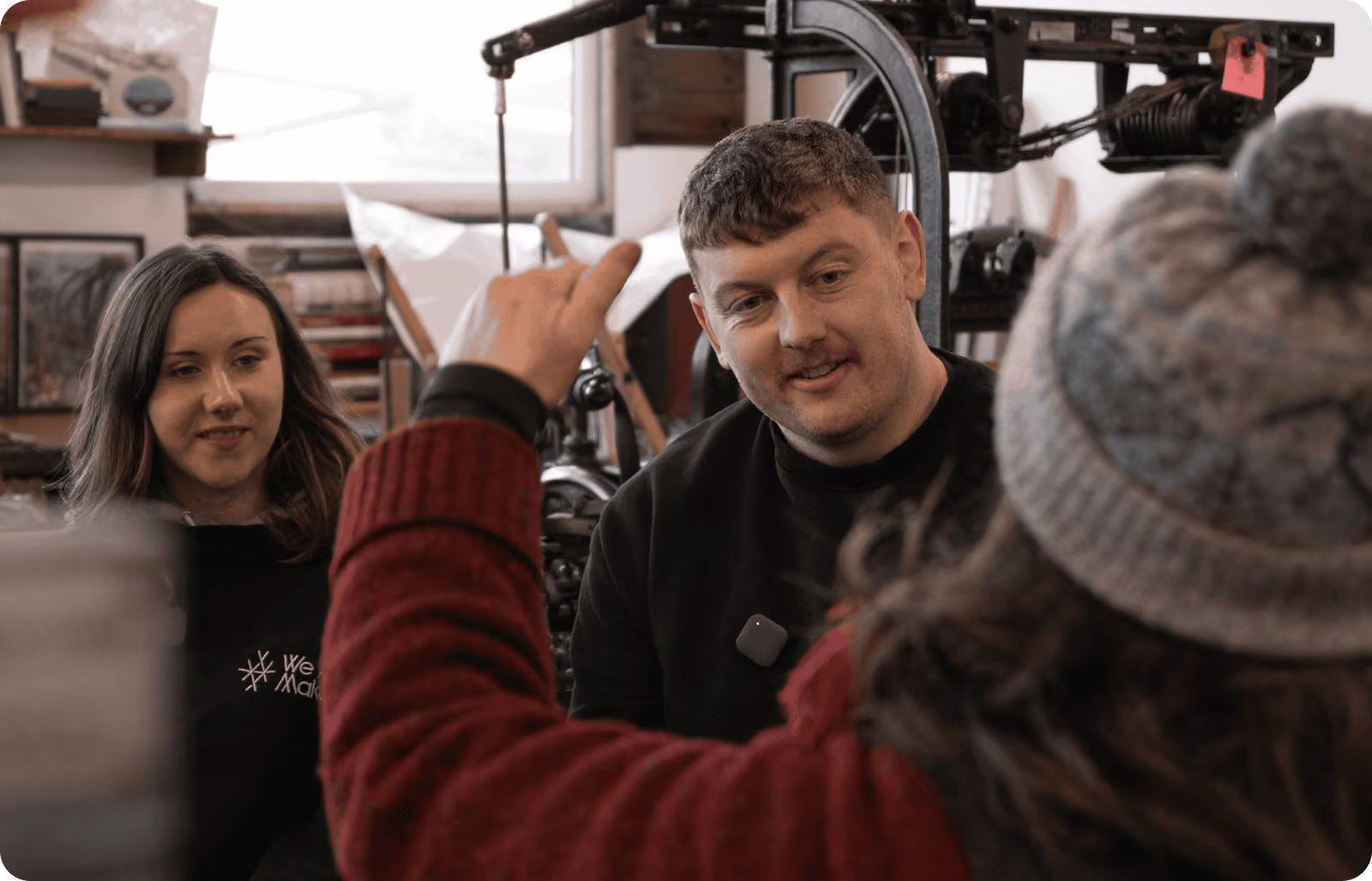
Outdoor recording swaps room problems for wind, and wind is the one problem you must solve physically, at the capsule, because no amount of editing removes heavy wind distortion. Fit foam or furry windshields on every mic, position speakers so their bodies shield the capsules from the prevailing wind, and use natural windbreaks such as walls, hedges, or vehicles. Then change your attitude to the rest of the ambient sound: birdsong, distant surf, or market chatter is context, and listeners accept it as part of the story. Craft documentary series We Are Makers recorded artisans in workshops and outdoor locations worldwide and treated the environments as part of the sound. A separate ambient track, recorded by the Capsule's 8-mic ambisonic array, lets you set how much location stays in the mix.
Most bad location audio traces back to a handful of preventable errors rather than cheap gear. The recurring ones:
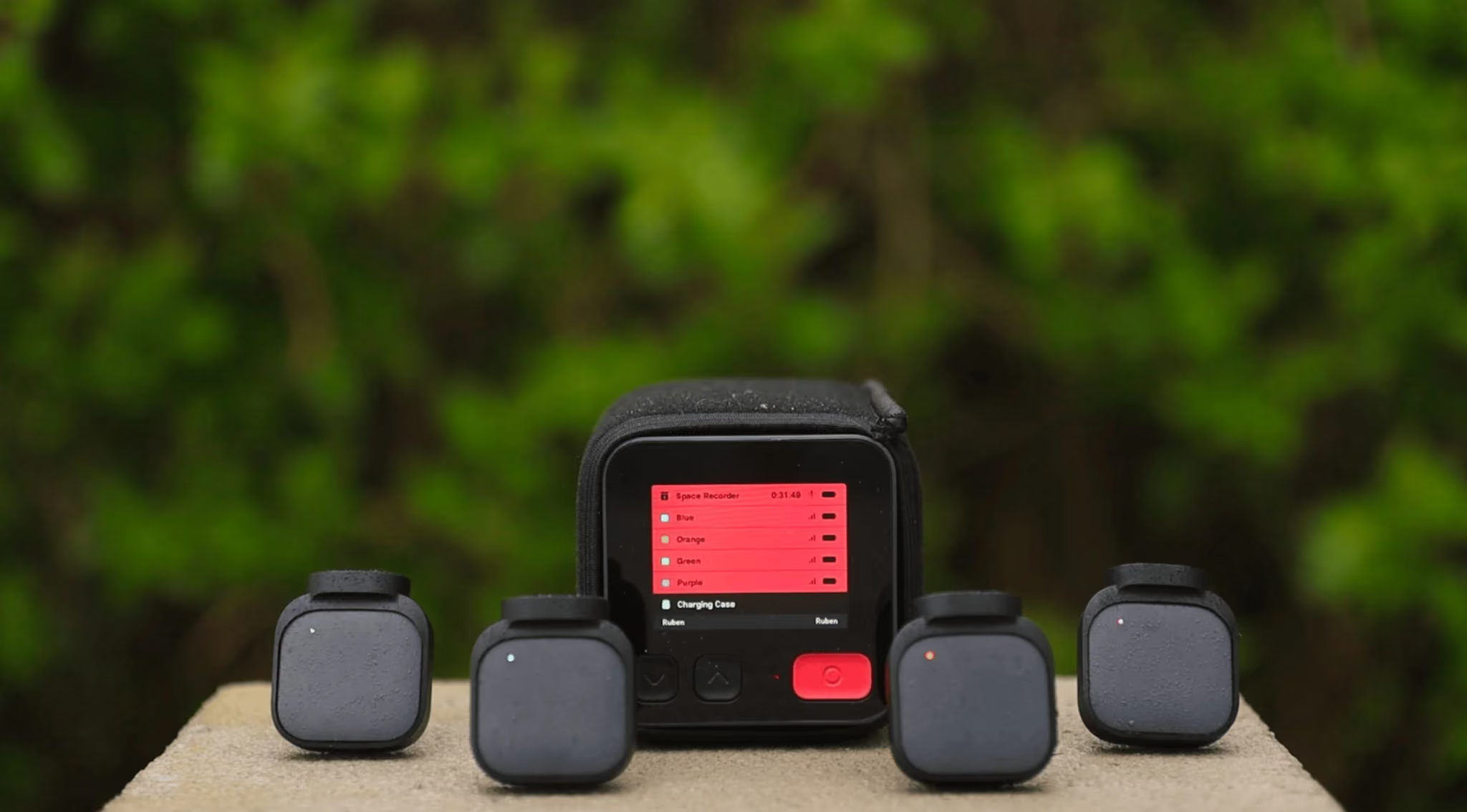
Sustainable location recording comes down to setup speed, consistency across environments, and a workflow that does not change per venue. A rig you can deploy in under five minutes gets used; a rig that needs half an hour gets left at home, and the episode does not happen. Consistency means the same gear and the same checklist at a booth, on a trail, or in a boardroom, so quality stops depending on the venue. Workflow integration closes the loop: files accessible immediately after capture, minimal cleanup, and a straight line into editing and publishing. Shows that hold all three together publish location episodes on the same schedule as studio ones, and independent accounts of doing it are collected on Nomono's reviews page.
Yes. Professional results outside the studio come from controlling four variables: close and consistent microphone placement, stable levels set before recording, wind and noise management, and file safety checks. Wireless per-speaker recording, such as the Nomono Sound Capsule provides, keeps placement consistent even while speakers move, which is the hardest of the four to manage manually.
A portable multi-speaker recorder with individual mics per guest is the core requirement. The Nomono Sound Capsule covers four speakers wirelessly with no cables or mains power, and the Zoom PodTrak P4 ($149.99) is a wired budget option. Bring headphones for spot checks, spare batteries or a charging case, and confirmed free storage. Skip the venue PA feed as your main source.
Wind must be blocked physically at the microphone, because heavy wind distortion cannot be edited out. Fit foam or furry windshields on every capsule, position speakers so their bodies shield the mics from the prevailing wind, and use walls, hedges, or vehicles as windbreaks. Even walking pace creates wind noise, so windshield lav mics on every walk-and-talk regardless of weather.
Yes, modern wireless lavaliers are broadcast-standard, and for location work they beat handheld or table mics because they hold a fixed mic-to-mouth distance while speakers move. Placement matters more than the category: clip the capsule 15 to 20 cm below the chin, clear of jewelry and zips. Nomono's Stellar mics, Rode Wireless Pro, and DJI Mic 2 all record at this standard.
Fix the mic to the guest so distance never changes, then let the recorder manage gain. Wearable lavs remove distance drift mechanically, and 32-bit float or automatic level control absorbs volume swings without clipping. Recording each speaker to a separate track preserves the option to balance voices independently in the edit, which a single mixed file does not.
No. Self-contained portable recorders have replaced the mixer for location work. Wireless systems like the Sound Capsule record each speaker to its own file with no interface, cables, or mains power, and wired portables like the PodTrak P4 handle gain onboard. Desktop consoles such as the RODECaster Pro II ($595) suit a fixed studio, where mains power and cabling are available.
Four is the practical ceiling for most portable kits. The Nomono Sound Capsule records four wireless lav mics plus an ambient array simultaneously, and the Zoom PodTrak P4 takes four wired XLR mics. The popular two-person camera kits, Rode Wireless Pro and DJI Mic 2, cap at two speakers, which is enough for a duo show but not a location roundtable.
32-bit float is a recording format with enough dynamic range that a too-loud take can be turned down in post without clipping damage. On location, where you cannot always watch meters, that safety margin is genuinely useful. Kits like the Rode Wireless Pro and DJI Mic 2 offer it; per-speaker tracks with automatic level management solve the same problem a different way.
Yes, when the interview cannot be repeated. A phone recording app running in a shirt pocket costs nothing and provides usable rescue audio if the primary rig fails. Treat it as insurance, never as the plan: the primary safeguards remain charged batteries, confirmed storage, local file saving on the recorder itself, and a known path for getting files off afterward.
Portable kits run from $149.99 for the wired Zoom PodTrak P4 to $349 to $399 for two-person wireless kits from DJI and Rode. Nomono prices the full four-person Sound Capsule with Studio Cloud Premium at $99 per month, $1,188 for the first year, and a Professional tier at $348 for the first year; current tiers are listed on the Studio Cloud pricing page.
Enjoy free express shipping to the listed locations within 2–5 business days.
 Austria
 Belgium
 Bulgaria
 Croatia
 Cyprus
 Czech Republic
.svg) Denmark
Denmark Estonia
 Finland
 France
 Germany
 Greece
 Hungary
 Ireland
 Italy
Italy Latvia
 Lithuania
 Luxembourg
 Malta
Malta Netherlands
 Norway
 Poland
 Portugal
 Romania
 Slovakia
 Slovenia
 Spain
Spain Sweden
 United Kingdom
 United States