Podcasting guides
October 20, 2026



A professional-sounding recording comes down to five controllable factors: a quiet, low-reflection capture environment, consistent microphone technique, correct gain staging, an isolated track for every speaker, and restrained post-processing. Nomono's Sound Capsule and Studio workflow automate four of those five. The factor no tool can automate is choosing where and how you capture the sound.
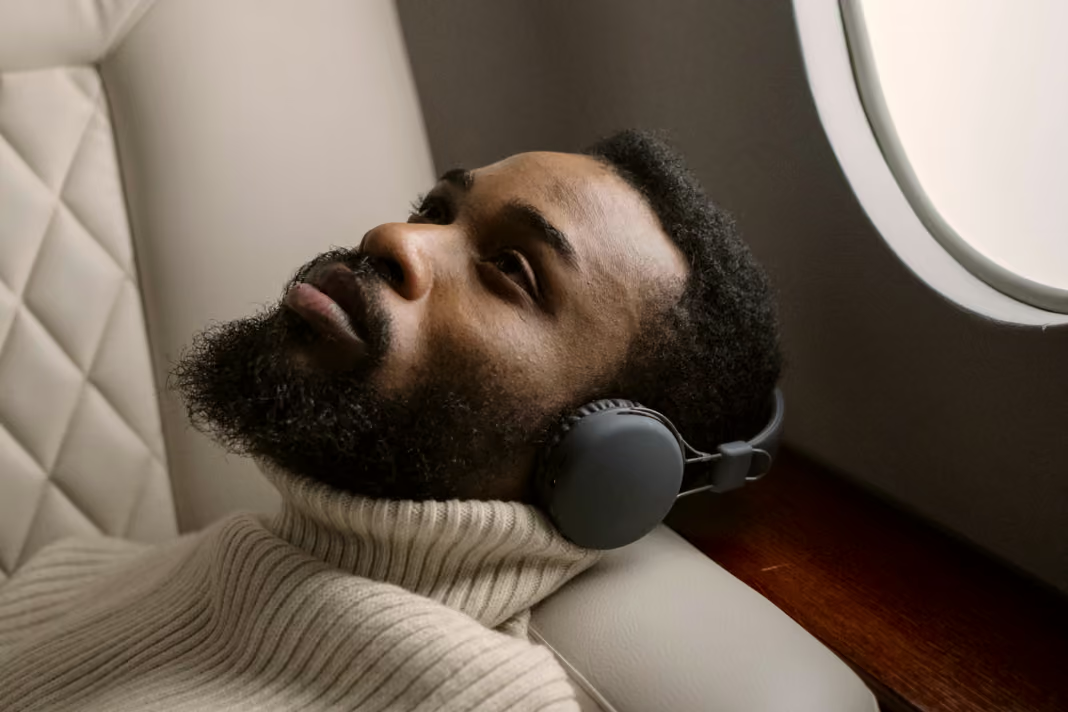
Listeners forgive a rough video far more readily than rough audio. Podcast audiences have grown steadily for a decade, and Edison Research's Infinite Dial studies have tracked listening reaching record levels among younger audiences in particular. As the audience grows, so does its baseline expectation: shows compete against professionally produced audio in the same feed, and a listener who hits reverb, hiss, or wildly uneven levels usually skips rather than adjusts. Audio quality also compounds commercially, because sponsors and networks screen for it before they screen for content. The full breakdown of that relationship is in Nomono's article on how audio quality affects podcast growth and monetization. The practical question for anyone recording speech, then, is which levers actually move perceived quality. Five do.
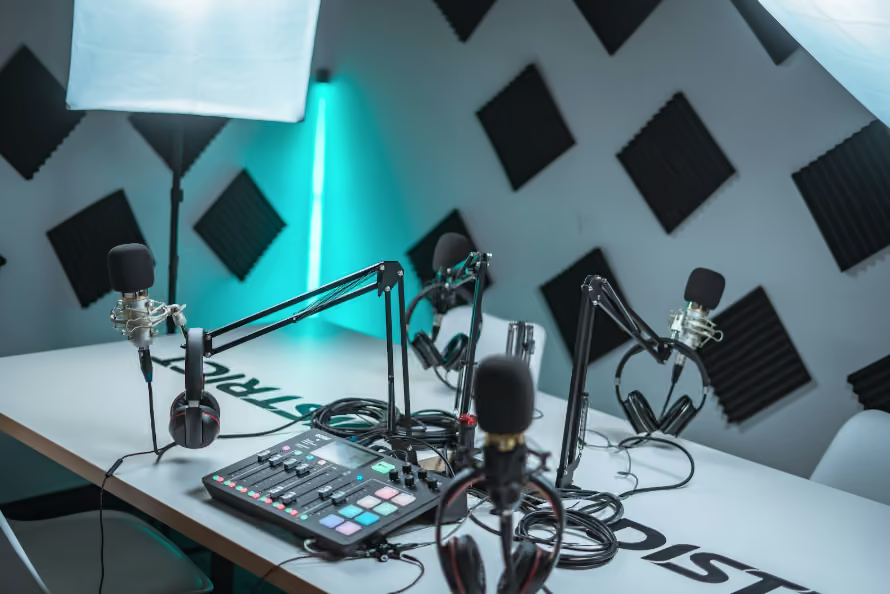
The single biggest difference between amateur and professional recordings is the space they were captured in. Hard parallel surfaces, glass, and bare walls reflect sound back into the microphone milliseconds after the direct signal, which listeners hear as echo and boxiness. Steady background sources such as air conditioning, fans, refrigerators, and traffic add a noise floor underneath every word. Both problems are captured into the waveform itself, mixed with the voice, and no editor can cleanly separate them afterward.
Professionals treat rooms with absorption panels, but you can get most of the benefit for free. Record in a smaller room with soft furnishings, carpet, curtains, and full bookshelves. Turn off anything that hums, and listen for 30 seconds of silence before pressing record; whatever you hear in that silence will sit under your entire episode. Recording on location follows the same logic, and Nomono's guide to recording a podcast outside the studio covers how to pick usable spaces in the field. A mediocre microphone in a good room beats an excellent microphone in a bad one, every time.
Microphone technique means keeping a constant, close distance between the mic and the mouth for the whole session. Speech recorded from 4 to 8 inches sounds present and full; the same voice from 2 feet away sounds thin and pulls in far more room reflection. The common failure is inconsistency rather than distance itself. Speakers lean back when they relax, turn toward a co-host, or gesture away from a desk mic, and the tone and level shift audibly with every move.
Nervousness makes this worse. A large microphone on a boom arm reminds people they are being recorded, and self-conscious speakers drift off-axis, add filler words, and drop their volume. Wearable lavalier microphones solve the consistency problem mechanically, since the mic moves with the speaker and the distance never changes. Whatever you record with, do a 20-second test in position, listen back on headphones, and lock the placement before the real conversation starts.
Gain staging is setting the input level so the loudest moment of speech peaks well below distortion while normal speech sits comfortably above the noise floor. Set the gain too high and loud moments clip, a hard digital distortion that is unrecoverable. Set it too low and you must amplify the recording later, which amplifies the hiss and room noise along with the voice.
On conventional gear, the working method is to have each speaker talk at their genuine loudest, set the input so those peaks land around -12 dB to -6 dB, and then leave it alone. Every speaker needs their own setting, because voices vary enormously in projection. Modern recorders increasingly remove this step: 32-bit float and high-dynamic-range capture systems record such a wide range that clipping at the input stage effectively disappears, and levels are set safely in post instead. The Sound Capsule takes that approach, which is why it has no gain knobs at all.
Professional multi-person recordings put every speaker on a separate, isolated track. A single shared microphone forces one compromise level on everyone, captures whoever is loudest, and makes overlapping speech impossible to untangle. With one track per person, an editor can balance a quiet guest against a booming host, cut a cough from one channel without touching the other, and clean up crosstalk where two people talk at once.
Bleed is the enemy of isolation. Open mics in one room pick up every voice in it, so close-worn lavaliers or directional mics help, and so does physical spacing between speakers. Track separation also carries a workflow benefit that shows up after the session: independent tracks feed noise reduction and EQ per voice, so processing tuned for one speaker never degrades another. For a full walkthrough of multitrack session setup, see Nomono's podcast recording guide.
Post-processing has hard limits, and knowing them changes how you record. Modern tools handle four jobs well: steady broadband noise reduction, EQ to shape tone, compression to even out level swings, and loudness normalization to hit platform targets. Applied to a clean capture, that chain is the difference between good and polished.
What processing cannot do is reverse information loss. Heavy reverb is the voice smeared across time, and removing it aggressively leaves metallic artifacts. Clipping destroys the waveform's peaks outright. Intermittent noise such as a passing siren sits in the same frequencies as speech, so removing one damages the other. Over-processing a bad capture produces the watery, robotic sound listeners now associate with cheap AI cleanup, which reads as less professional than mild room tone. The working rule: processing should be the last 20 percent of quality, never the rescue plan. Nomono's article on podcast editing and audio quality goes deeper on where enhancement earns its keep.
| Factor | What it controls | Typical amateur mistake | Recoverable in post? |
|---|---|---|---|
| Capture environment | Reverb, echo, background noise floor | Recording in a bare, hard-surfaced room with a fan running | No. Reflections and noise are mixed into the voice signal |
| Microphone technique | Presence, tonal consistency | Drifting distance as speakers move and relax | Partly. Level rides help, tonal shifts remain audible |
| Gain staging | Distortion and noise floor | Clipped peaks or a signal recorded too quietly | No for clipping. Quiet recordings gain noise when boosted |
| Per-speaker isolation | Balance between voices, editability | Several people sharing one microphone and one track | No. Overlapped voices on one track cannot be separated cleanly |
| Post-processing | Final polish: noise, EQ, loudness | Over-processing a poor capture into artifacts | Yes, this is the post stage itself, within the limits above |

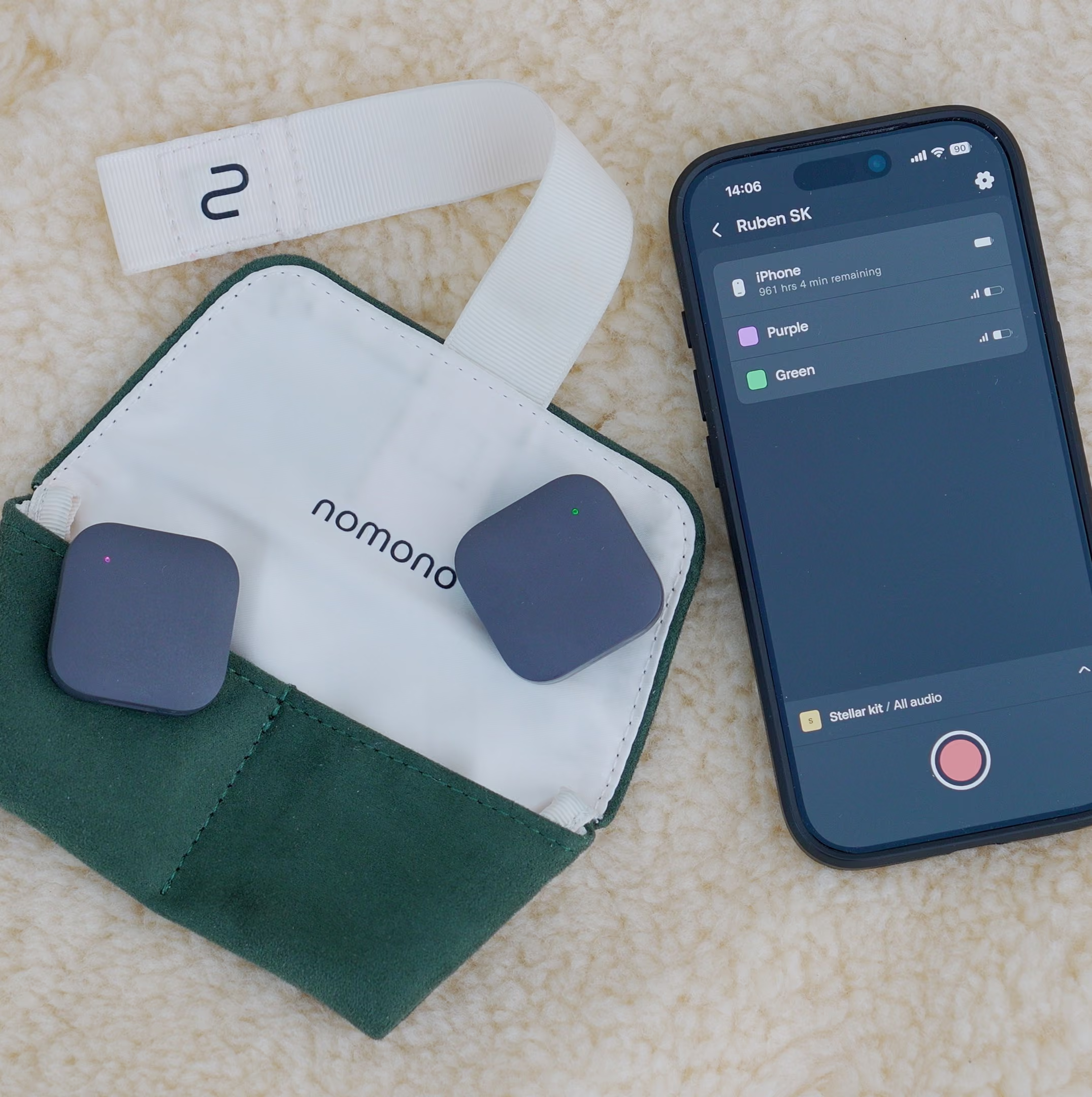
Nomono built the Sound Capsule around a question an audio professional at a Norwegian broadcaster asked the founding team in 2019: why is there no button for good sound? The Sound Capsule is a 2.9 lb kit holding four Stellar wireless lavalier microphones and a Space Recorder with an 8-microphone ambisonic array, all in a self-charging case. Each speaker wears a lav, which locks mic distance in place, and every voice records to its own isolated mono WAV alongside a 4-track ambisonic room capture, so isolation and technique are handled by the hardware. High-dynamic-range capture removes gain staging from the operator entirely; there are no levels to set.

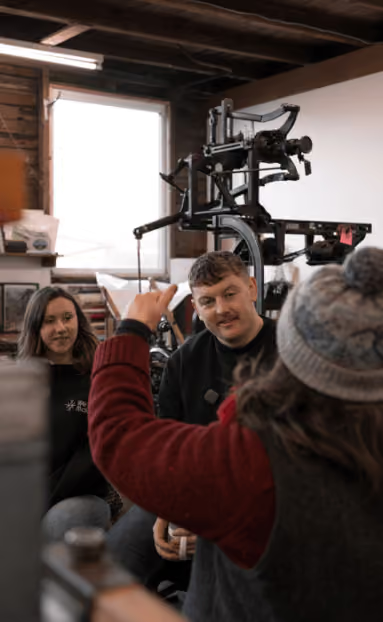
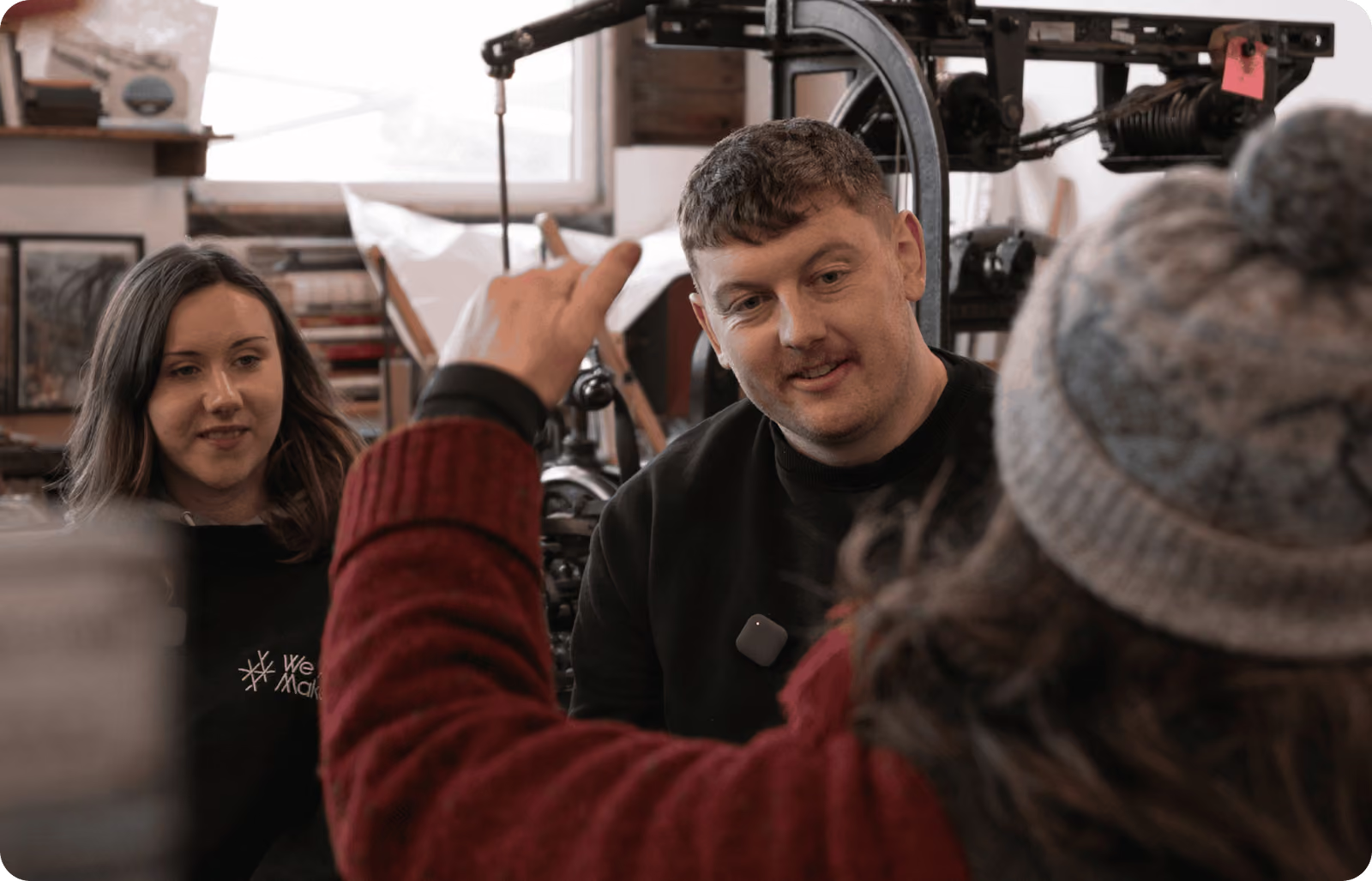
Post-processing runs in Studio Cloud, the cloud workflow that applies speech enhancement developed over five years of signal-processing research, tuned per voice, then hands off to editing, collaboration, and export. The spatial ambience track also adds a spatial layer, which none of the desktop consoles in its class capture. The capture environment remains the user's job, though the system is forgiving: Kate Lennie of We Are Makers records craft interviews in workshops and fields, and describes creating professional podcasts in environments that were previously impossible.
Five controllable factors make a recording sound professional: a quiet, low-reflection capture environment, consistent microphone technique, correct gain staging, an isolated track per speaker, and restrained post-processing. The capture environment matters most, because reverb and noise recorded into the file cannot be cleanly removed later. Gear and software support the other four factors, and systems like Nomono's Sound Capsule automate them.
No, a microphone upgrade alone rarely fixes unprofessional sound. An expensive mic in an echoey room faithfully records the echo. Room choice, mic distance, and level setting each change the result more than the price of the capsule. Spend on acoustics and workflow before spending on a flagship microphone, and see Nomono's podcasting equipment buyer's guide for where money actually moves quality.
Record in a small room full of soft materials: carpet, curtains, sofas, a full closet, or bookshelves. Soft surfaces absorb reflections that bare walls bounce back into the microphone. Getting the mic closer to the mouth also raises the ratio of direct voice to room reflection, which is the cheapest echo reduction available. Duvets and moving blankets hung around the recording position work as improvised absorption.
Gain staging is setting the recording input level so loud speech never distorts and quiet speech stays clear of the noise floor. Clipped audio is permanently damaged, and audio recorded too low gains hiss when amplified later. On traditional gear, set each speaker's peaks around -12 dB to -6 dB. High-dynamic-range recorders such as the Sound Capsule remove the step by capturing a range wide enough that input clipping effectively cannot happen.
Separate tracks let you balance, edit, and clean each voice independently. On a shared track, one loud host buries a quiet guest, a cough lands on everyone's audio, and overlapping speech can never be untangled. Per-speaker isolation is standard practice in professional production, and it is why multi-mic kits record one file per person rather than a single mixed file.
Editing software can reduce steady background noise, balance levels, and shape tone, but it cannot reverse clipping, remove heavy reverb without artifacts, or separate voices recorded onto one track. Enhancement tools work proportionally to the quality of the capture. Aggressive processing on a poor recording produces watery, robotic artifacts that sound worse to listeners than mild, natural room tone.
Speech sounds fullest recorded from roughly 4 to 8 inches on a handheld or desk microphone, kept constant for the whole session. Consistency matters more than the exact number, since drifting distance changes tone and level audibly. Wearable lavalier microphones, including Nomono's Stellar lavs, fix the distance mechanically because the mic moves with the speaker.
Yes, field recordings reach professional quality when the five factors are controlled: pick a quiet spot away from traffic and wind, use close-worn mics per speaker, rely on high-dynamic-range capture, and enhance afterward. Portable systems built for this exist; the Sound Capsule was designed for exactly this use, and We Are Makers publishes broadcast-quality interviews recorded in working craft workshops with it.
Nomono's Professional plan is $348 upfront for the Stellar Kit with 12 months of Studio Cloud Professional, then $29 per month. The Premium plan is $1,188 upfront for the Sound Capsule with Studio Cloud Premium, then $99 per month. Both include the cloud enhancement and editing workflow. Current tiers and inclusions are listed on the Studio Cloud pricing page.
Yes, listeners notice audio quality quickly and act on it. Podcast audiences now compare every show against professionally produced audio in the same app, and reverb, hiss, or uneven levels are common reasons to skip an episode within the first minute. Quality also gates monetization, since sponsors and networks screen shows on production standards before evaluating content.
Enjoy free express shipping to the listed locations within 2–5 business days.
 Austria
 Belgium
 Bulgaria
 Croatia
 Cyprus
 Czech Republic
.svg) Denmark
Denmark Estonia
 Finland
 France
 Germany
 Greece
 Hungary
 Ireland
 Italy
Italy Latvia
 Lithuania
 Luxembourg
 Malta
Malta Netherlands
 Norway
 Poland
 Portugal
 Romania
 Slovakia
 Slovenia
 Spain
Spain Sweden
 United Kingdom
 United States