Podcasting guides
October 20, 2026


We Are Makers, the maker-focused publication and podcast founded by Jack and Kate Lennie, records its craft interviews with a Nomono Sound Capsule (four wireless Stellar mics and a Space Recorder in one charging case) and enhances them in Nomono Studio Cloud. Since adopting Nomono, the two-person team has recorded 440% more episodes, including 32 podcasts in 35 days on their first US tour.
We Are Makers is an award-winning publication and podcast platform run by husband-and-wife team Jack and Kate Lennie. The pair launched it to give independent makers, artists, and craftspeople the recognition they deserve, starting with a coffee-table magazine and expanding into audio and video. Through those three formats they have shared over 500 stories across 43 countries (We Are Makers, 2026).
"We wanted to create a space where makers feel comfortable telling their stories. As a maker myself, I know what it's like to be on the other side of the mic." (Kate Lennie, co-founder, We Are Makers)
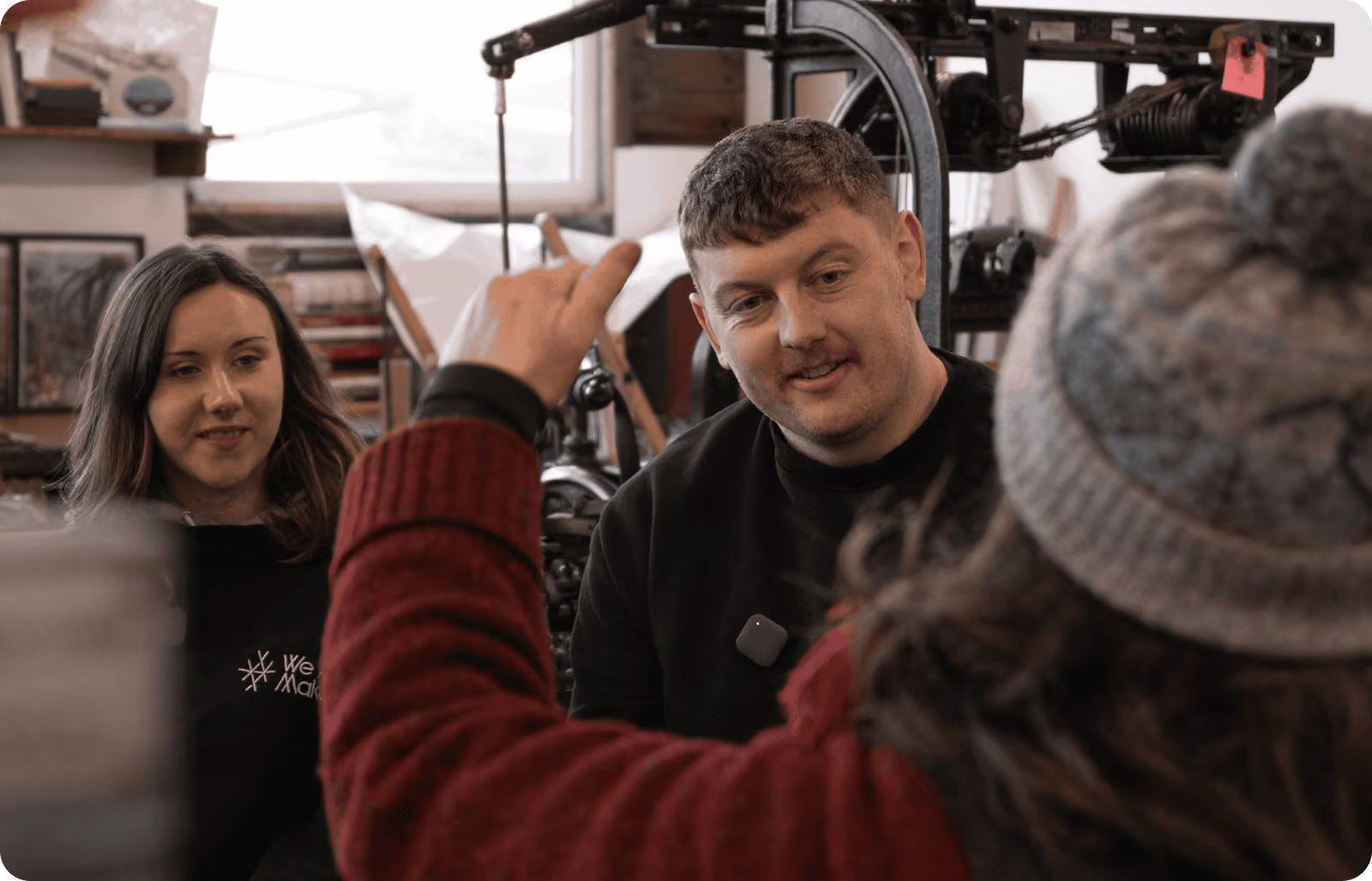
The magazine found its audience quickly, but some stories could not be told in print alone. So Jack and Kate turned to podcasting, with one decision that shaped everything after it: they would travel to makers in their own workshops, from Scottish weavers to American leatherworkers.
Traveling to the guest solves the storytelling problem and creates an audio problem. Workshops are not soundproofed, the acoustics are unknown until you walk in, and a conventional podcast rig of mixers, microphones, stands, and cables is heavy enough to make international travel close to impossible for two people.
"Podcasting isn't something you typically travel with. You don't know the spaces you're going into, they're not soundproofed, they're noisy, and the kit is huge. Every setup felt like a logistical battle." (Jack Lennie, co-founder, We Are Makers)
Bringing guests to a studio instead was never a real option, because taking a maker away from their workshop strips out the thing that defines their craft. Makers, as Jack puts it, are not media-trained and are often introverts. The recording setup had to disappear or the conversations would stay guarded.
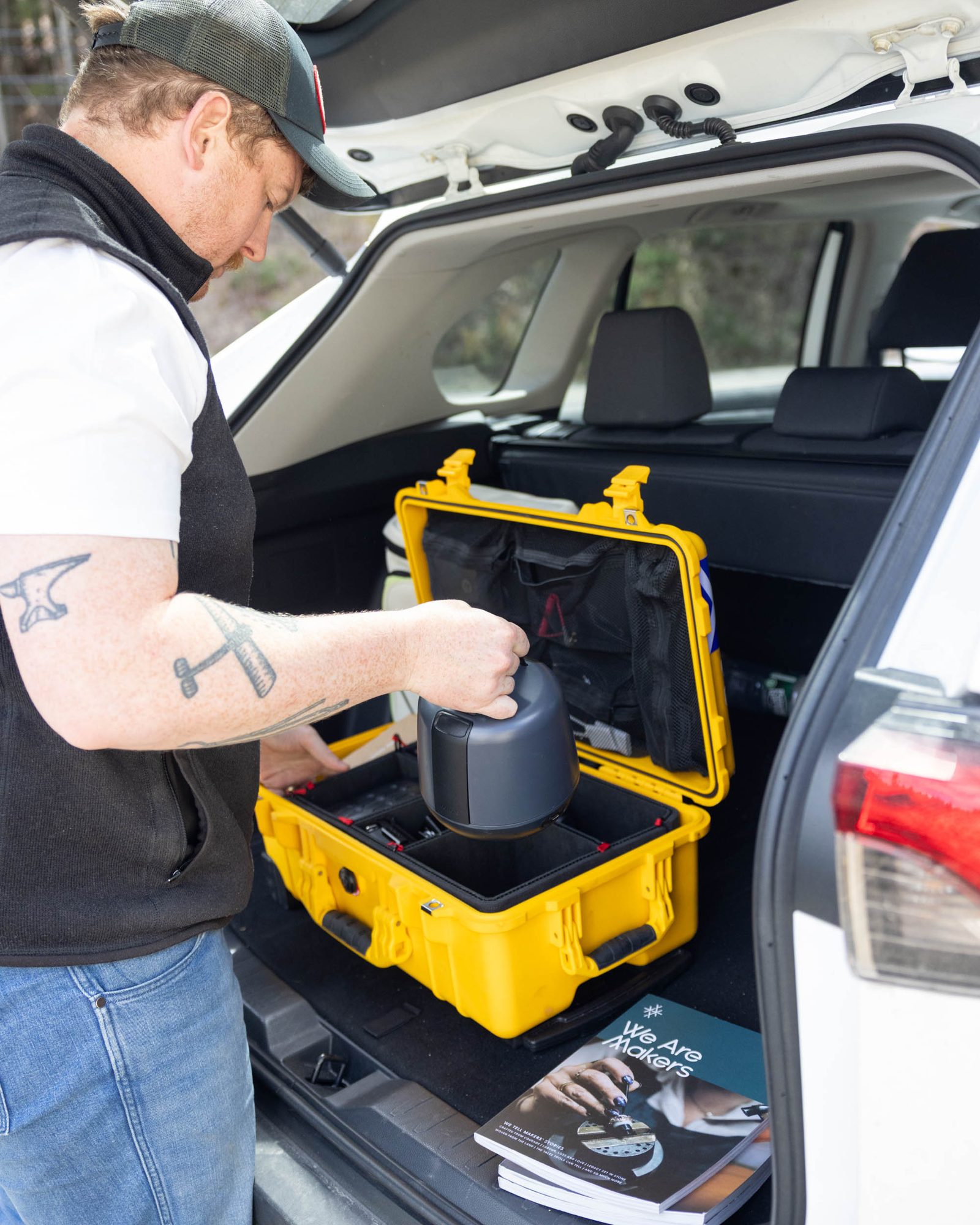
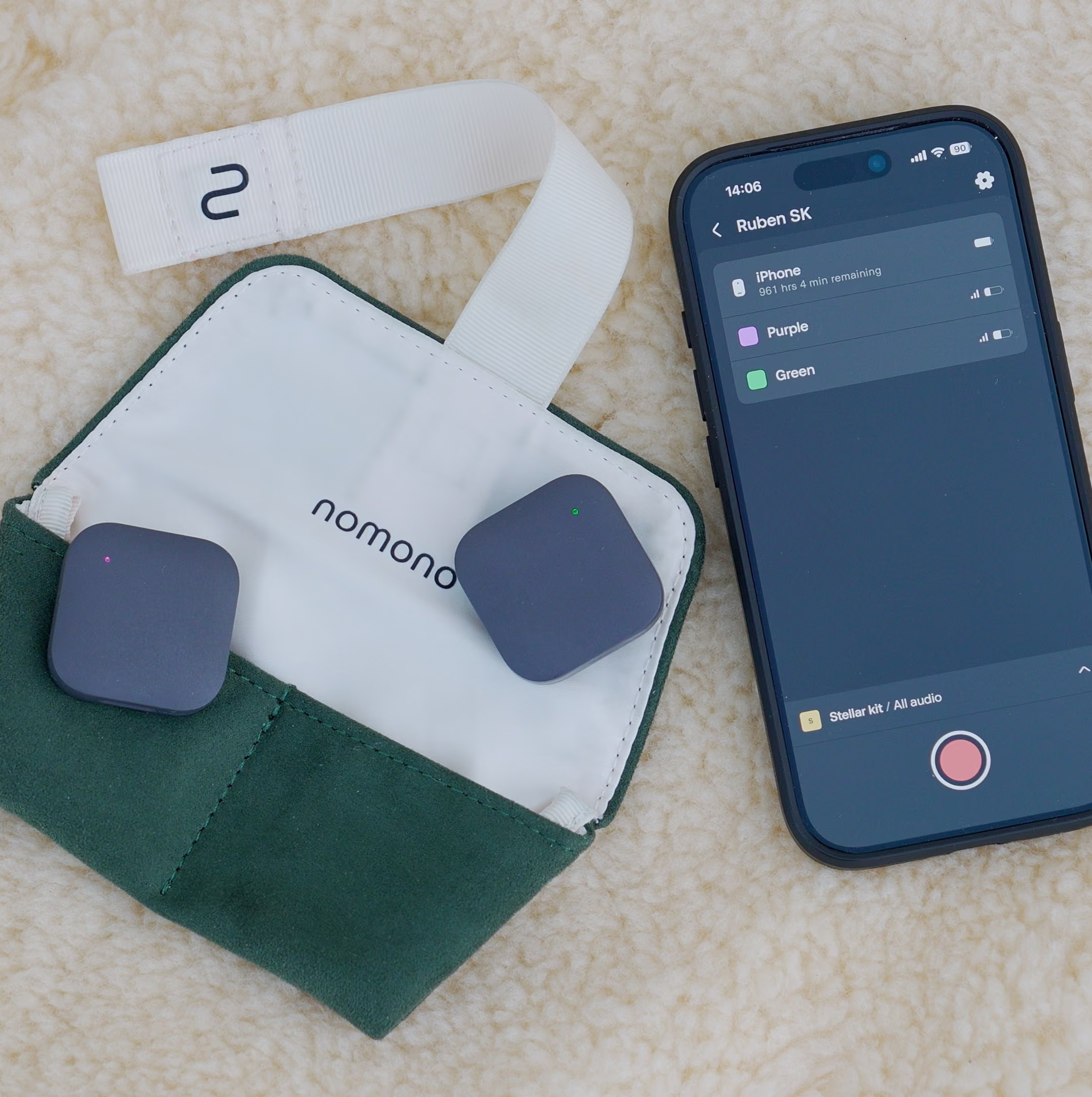
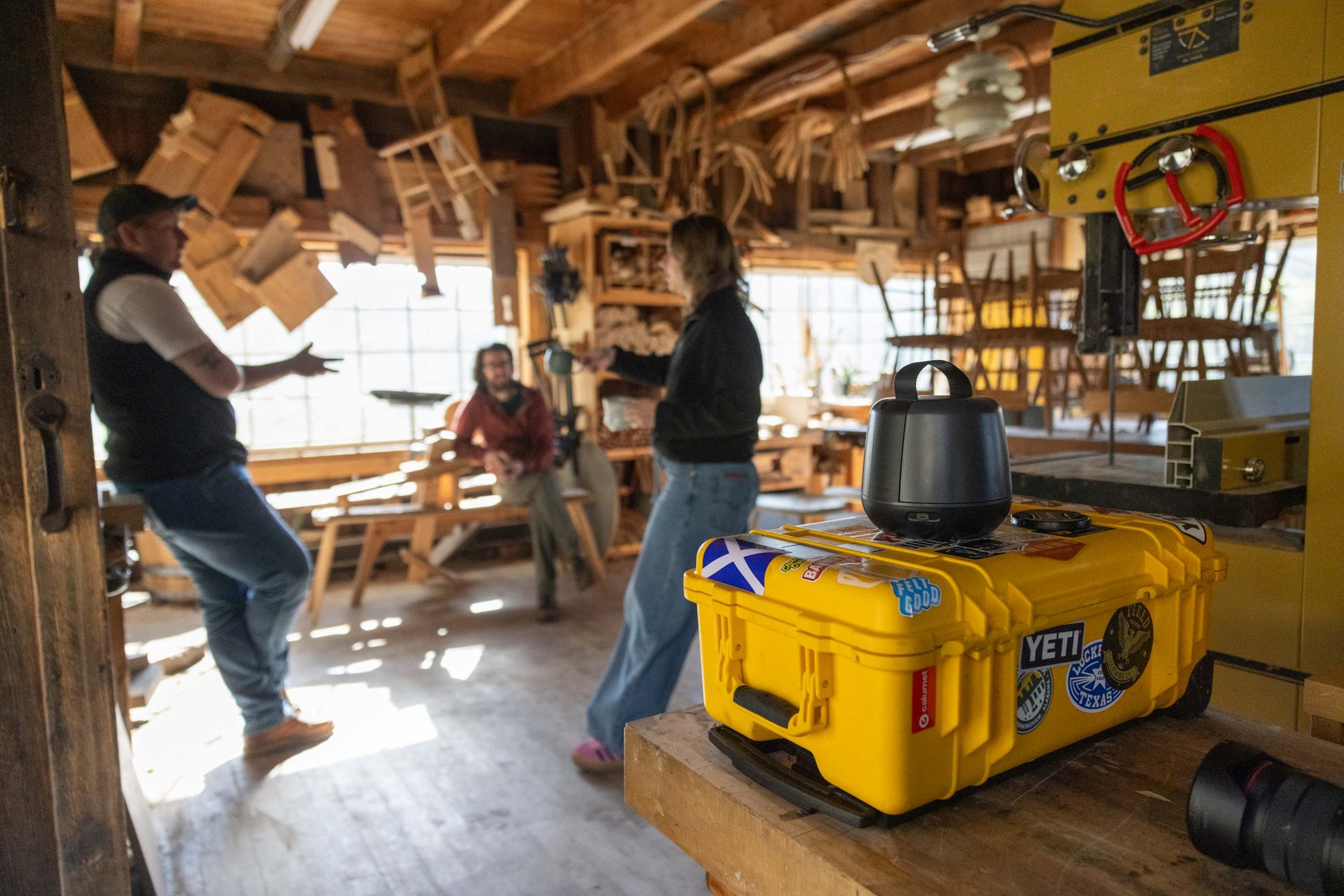
We Are Makers records with the Nomono Sound Capsule: four wireless Stellar lav mics and a Space Recorder with a built-in ambisonic mic array, carried in a single 2.9 lb charging case. Setup needs no stands, no cables, and no power sockets. Each session records a separate mono WAV per lav plus a spatial recording of the room, which is how the sound of looms, chisels, and workshop life ends up in the finished episodes through Nomono's spatial audio.
After each session, the recording uploads automatically to Studio Cloud, the cloud workflow where one click of Enhance cleans and balances the audio.
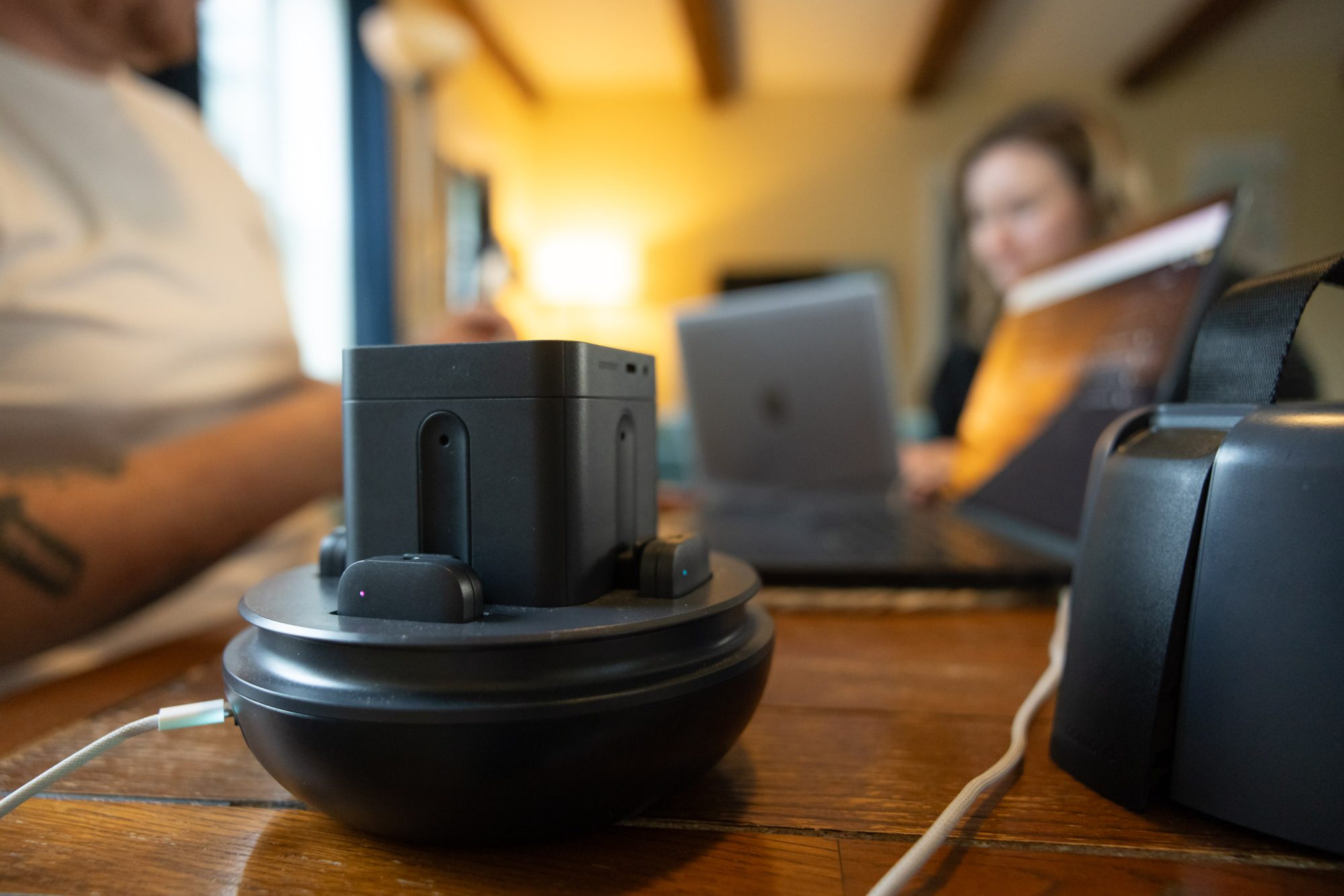
"As soon as we finish recording, it uploads to the cloud. By the time we're back at the hotel, it's there. We hit Enhance, and it's done. All the background noise is gone and the voices shine through." (Jack Lennie)
Jack then syncs the enhanced audio with video and prepares each episode for YouTube and streaming platforms, often within 48 hours of recording. The same sync step is covered in Nomono's guide to syncing Nomono audio with your camera.
Every location on the We Are Makers schedule fails a traditional studio checklist. The table maps the scenarios the Lennies have actually recorded in against how the kit copes.
| Scenario | On-site problem | How the kit responds |
|---|---|---|
| Outdoors, in front of a waterfall | Constant broadband background noise | Wireless lavs isolate each voice; Studio Cloud Enhance strips the noise after upload |
| Working workshop (a saddle maker mid-job) | Tool noise through the whole interview | Enhance removes enough noise for clarity while the spatial track keeps the craft sounds that give the episode its atmosphere |
| Busy shared studios | Other people, machines, unpredictable acoustics | No room treatment needed; per-voice mono WAVs keep each speaker clean |
| Multi-city US tour, 32 episodes in 35 days | No time to set up, tear down, or edit between stops | The 2.9 lb case sets up without stands or cables, and enhancement runs in the cloud overnight |
| A nervous, camera-shy guest | Visible gear makes non-media-trained makers clam up | Discreet clip-on mics with no boom or console between host and guest |
Kate Lennie sums up the range in one line: "We certainly wouldn't have been able to go abroad without Nomono. It's made travel stress-free. We've recorded in front of waterfalls, in busy studios, even while a saddle maker was working. Now it feels like the possibilities are endless."
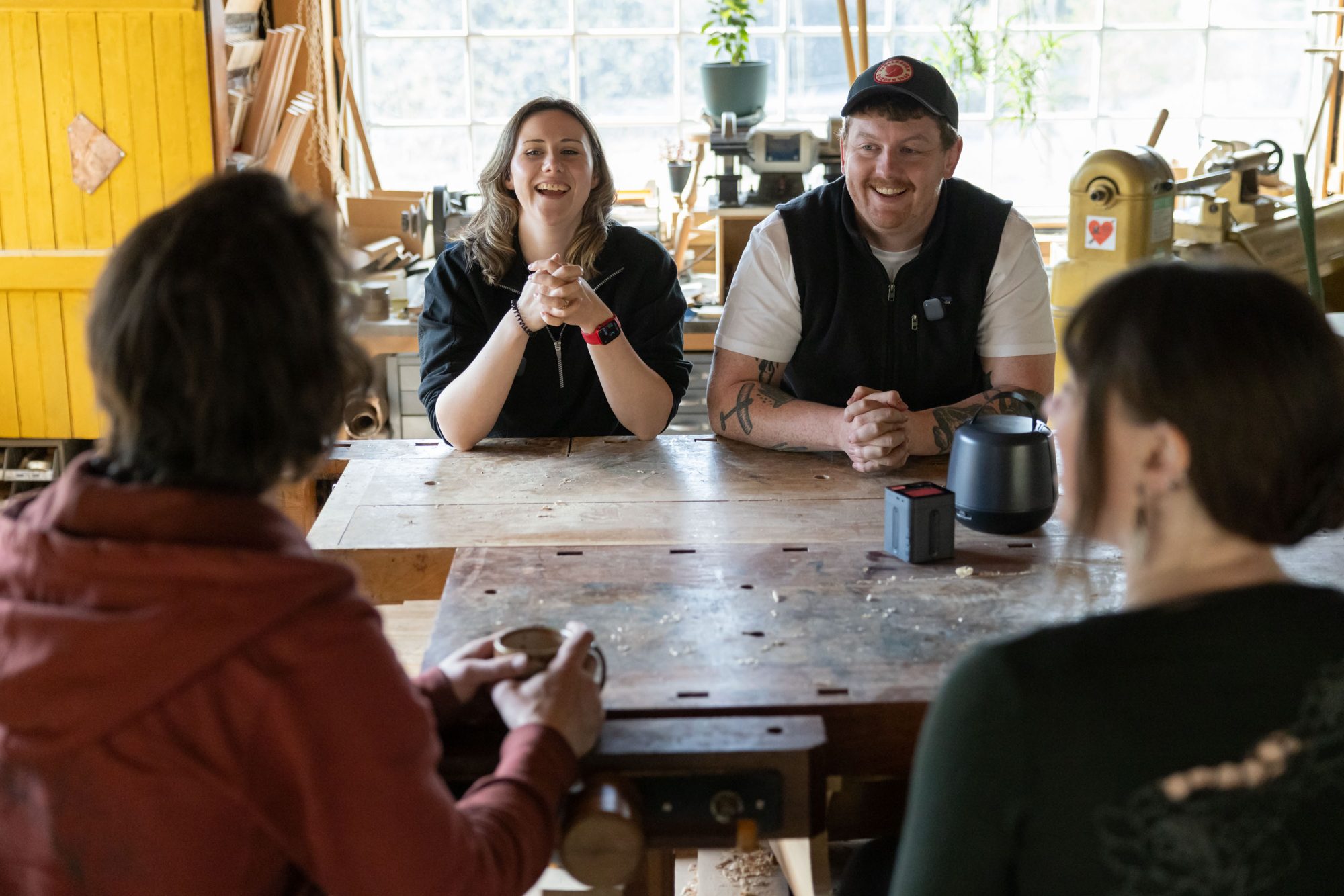
Sound quality was only half of what We Are Makers needed. The other half was behavioral: guests who forget they are being recorded talk differently.
"We tell our guests, 'This is your podcast. We just brought the equipment.' They relax. They forget the mics are there. That's when you capture who they really are." (Kate Lennie)
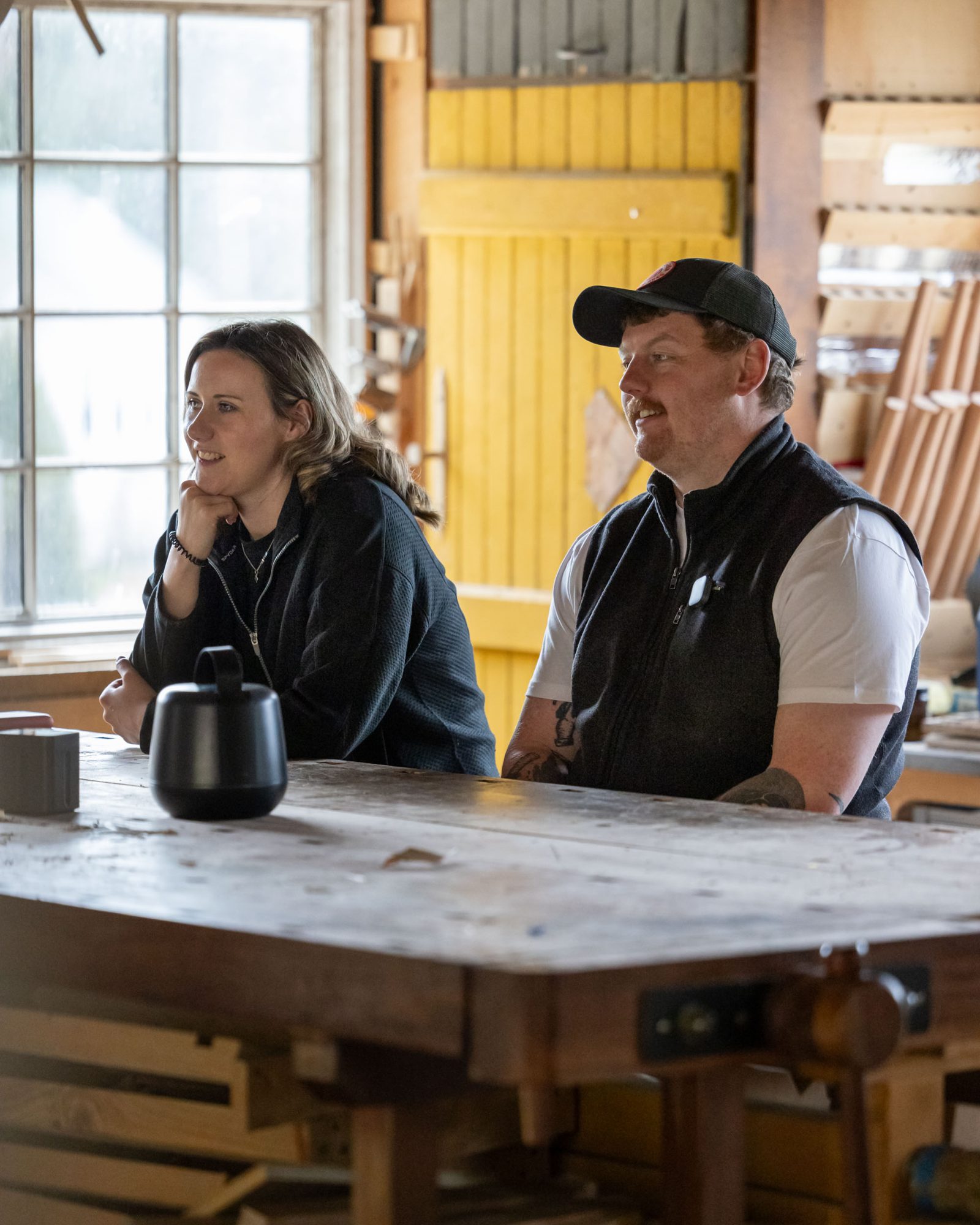
Removing the gear also removed a job. Before Nomono, one host was adjusting levels mid-interview, wearing headphones and thinking about equipment instead of the guest. Now both stay in the conversation. Jack describes the shift plainly: "Nomono has completely changed the way we work. It's made podcasting something we can take anywhere and every conversation more honest."
We Are Makers reports these outcomes since adopting Nomono (We Are Makers case study, Nomono, 2026):
"We're a two-person team juggling print, video, and podcast. We can't spend days editing each episode. Nomono's cloud workflow does the heavy lifting for us." (Jack Lennie)
The pair now plan to expand into short-form documentaries and more video storytelling, with a stated goal of passing the 100-podcast mark. Community remains the point of all of it. "Community is everything to us. We've built a platform where makers can share their stories, feel heard, and feel proud of what they do." (Kate Lennie)
We Are Makers records with the Nomono Sound Capsule: four wireless Stellar lav mics and a Space Recorder with an ambisonic mic array, in a 2.9 lb charging case. Recordings upload automatically to Nomono Studio Cloud, where the Enhance feature cleans and balances the audio. No stands, cables, mixers, or power sockets are involved.
Yes. Jack and Kate Lennie run We Are Makers as a two-person team covering print, video, and podcast, with no production crew. They have recorded 72 episodes, including 32 in 35 days on a US tour, because setup takes minutes and Nomono's cloud workflow handles the enhancement work that would otherwise take days of editing.
We Are Makers has recorded 72 podcasts in total, and more than 60 of those were recorded on Nomono equipment (We Are Makers case study, 2026). The team reports a 440% increase in episodes recorded since adopting the Sound Capsule, alongside more than 500 maker stories shared across 43 countries in all formats.
The Sound Capsule records each speaker on a separate wireless lav track, then Studio Cloud's Enhance feature removes background noise in the cloud after upload. We Are Makers has used it in front of waterfalls, in busy studios, and while a saddle maker worked through the interview, keeping the voices clear while the spatial track preserves the workshop atmosphere.
We Are Makers often has episodes ready for YouTube and streaming platforms within 48 hours of recording. Recordings upload to Nomono Studio Cloud automatically after each session, enhancement runs with one click, and Jack Lennie syncs audio with video from there. The team says production time per episode has fallen by more than half, from days to hours.
No. We Are Makers records entirely on location in spaces that are unknown, untreated, and noisy, because taking makers out of their workshops would remove the setting that defines their craft. Per-voice wireless mics plus cloud noise reduction deliver clean dialogue from those rooms, an approach covered further in Nomono's guide to recording a podcast outside the studio.
The Nomono Premium plan, which pairs the Sound Capsule with 12 months of Studio Cloud Premium, costs $1,188 upfront for year one and then $99 per month (Nomono Studio pricing, September 2026). A Professional plan built on the Stellar Kit runs $348 upfront for year one, then $29 per month.
Yes. We Are Makers publishes its episodes to YouTube as well as audio platforms, syncing Nomono audio with camera footage in the edit. Studio Cloud's Audio/Video Sync feature, available on all plans since March 2026, matches the enhanced audio to video automatically, which is how a two-person team keeps a 48-hour turnaround on video episodes.
Workshop sound is part of the story. The rhythm of weaving looms, the scrape of chisels, and the ambient life of each workspace give listeners the sense of being there, and the Space Recorder's spatial audio captures that room sound on its own track. Enhance then removes just enough noise for the conversation to stay clear.
Nomono collects creator and customer experiences with the Sound Capsule and Stellar Kit on its reviews page. We Are Makers itself publishes a magazine, podcast, and video interviews with makers worldwide, with a stated goal of passing 100 podcast episodes and expanding into short-form documentaries.
Enjoy free express shipping to the listed locations within 2–5 business days.
 Austria
 Belgium
 Bulgaria
 Croatia
 Cyprus
 Czech Republic
.svg) Denmark
Denmark Estonia
 Finland
 France
 Germany
 Greece
 Hungary
 Ireland
 Italy
Italy Latvia
 Lithuania
 Luxembourg
 Malta
Malta Netherlands
 Norway
 Poland
 Portugal
 Romania
 Slovakia
 Slovenia
 Spain
Spain Sweden
 United Kingdom
 United States