Podcasting guides
October 19, 2026


The Nomono Sound Capsule is a portable, battery-powered recording kit with four wireless mics and Studio Cloud editing, at $1,188. The RØDECaster Pro II is a $595 desk console with four wired XLR inputs and no microphones in the box. Choose the Sound Capsule if you record in different places, the console if your show lives at one desk.
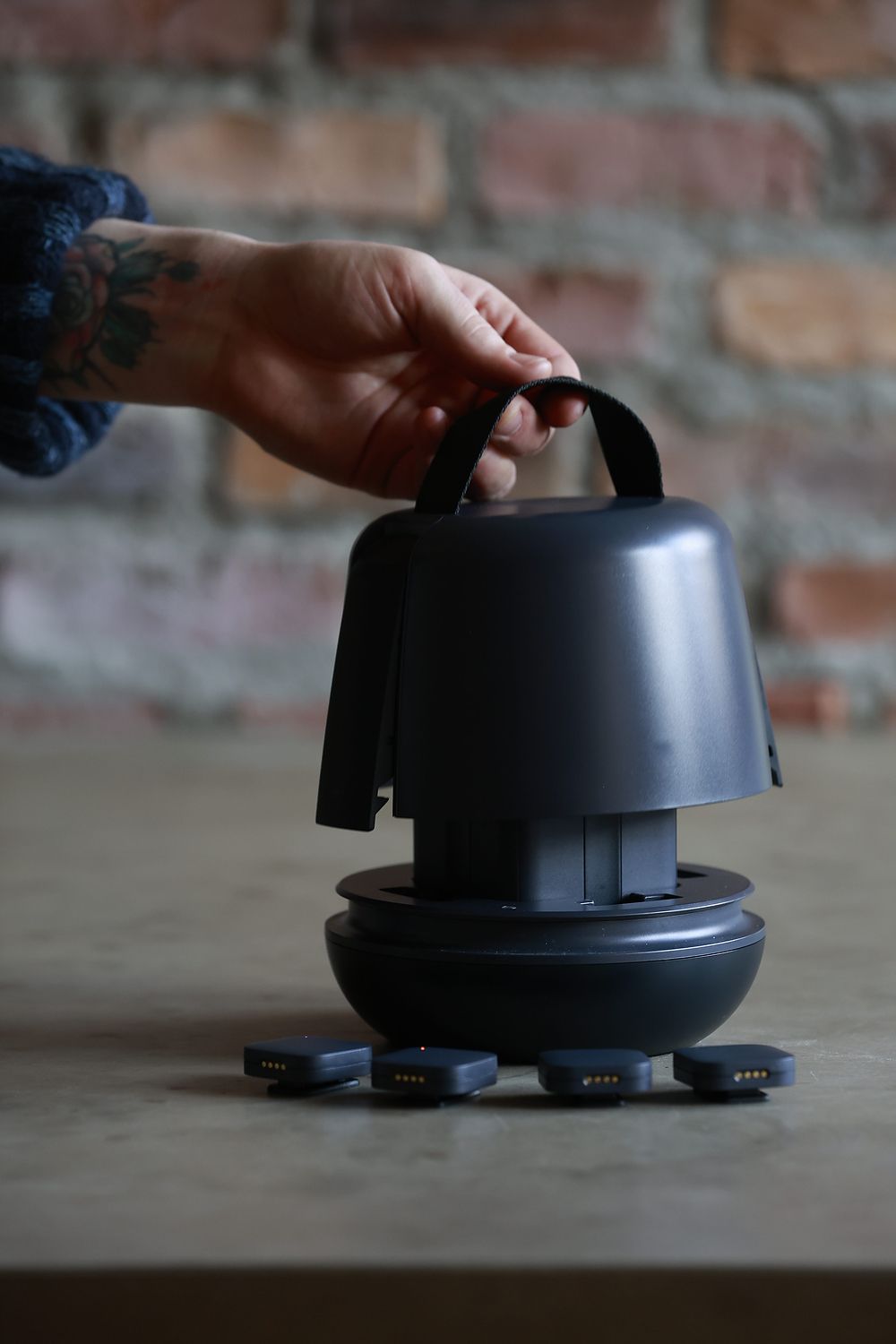
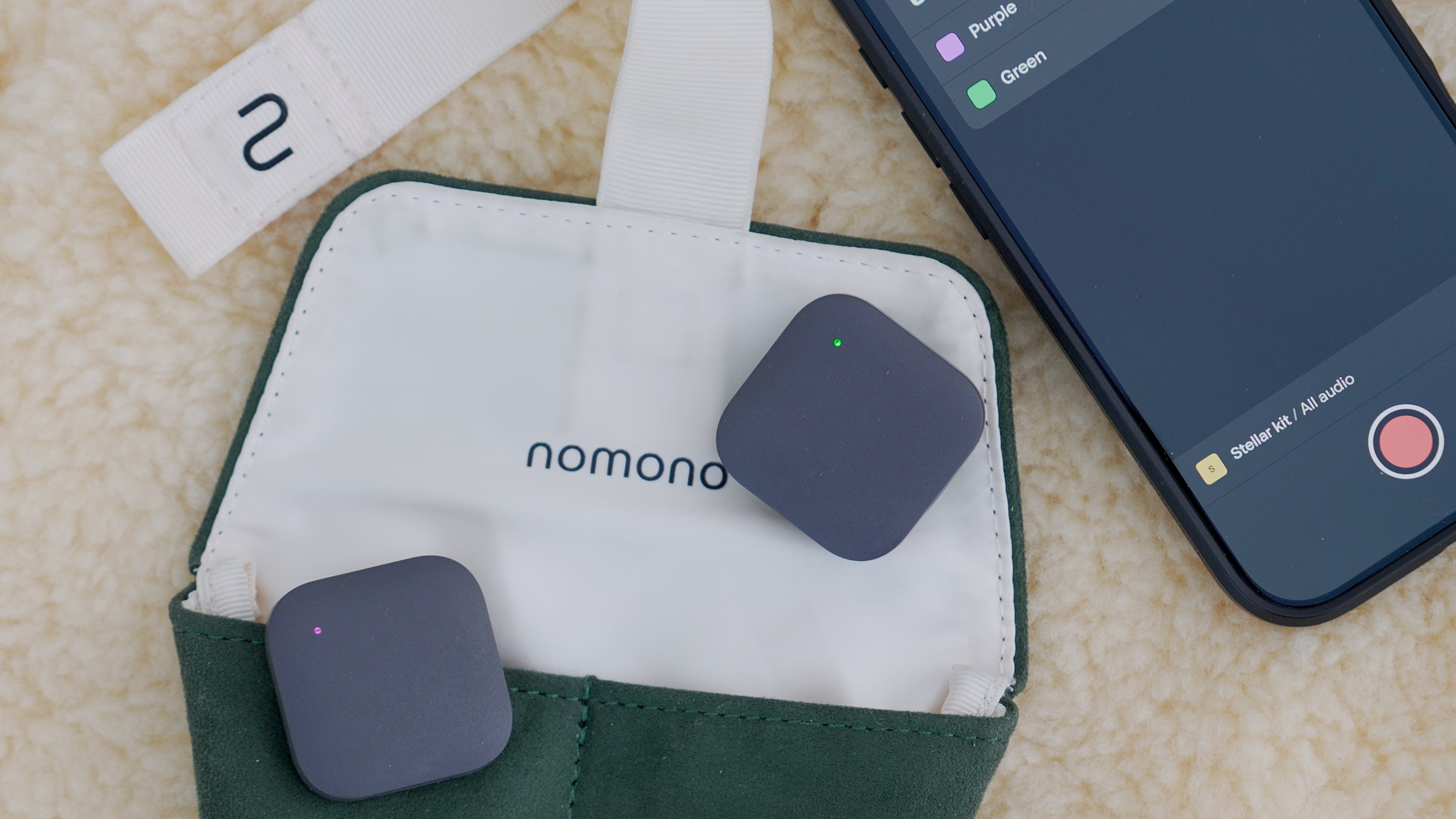
The Nomono Sound Capsule packs a four-person recording setup into a charging case that weighs 2.9 lb (1.3 kg) with everything inside. It holds the Space Recorder, which has an 8-mic ambisonic array and sits on the table between your guests, and four Stellar wireless lav mics that clip to each person. The kit records for up to 10 hours on a charge, and the charging case adds 15 more, for up to 25 hours in total. The Space Recorder stores up to 12 hours of audio internally and records without a phone or laptop. Each session produces four separate mono voice tracks plus a 4-track ambisonic recording of the room, and every mic levels itself automatically. Recordings upload on their own to Studio Cloud for editing and enhancement.
RØDE built the RØDECaster Pro II as the control surface for a studio that stays put. It has nine assignable channels (six physical faders plus three virtual ones), four combo XLR inputs with 76 dB of gain, APHEX processing, 64 SMART pads for stings and music beds, mix-minus routing for callers, Bluetooth for phone guests, two USB-C audio interfaces and a microSD slot. It records at 24-bit/48 kHz, as a stereo mix or as separate multitrack files. There is no internal battery, so it runs from its power supply (or a 30 W USB-C power bank), and you need a table big enough for the console and four mic arms. RØDE's list price is $699, and Sweetwater sells it for $595 (September 2026), before you add a single microphone. The faders, pads and live processing suit shows that mix in music, take phone calls or stream while they record.
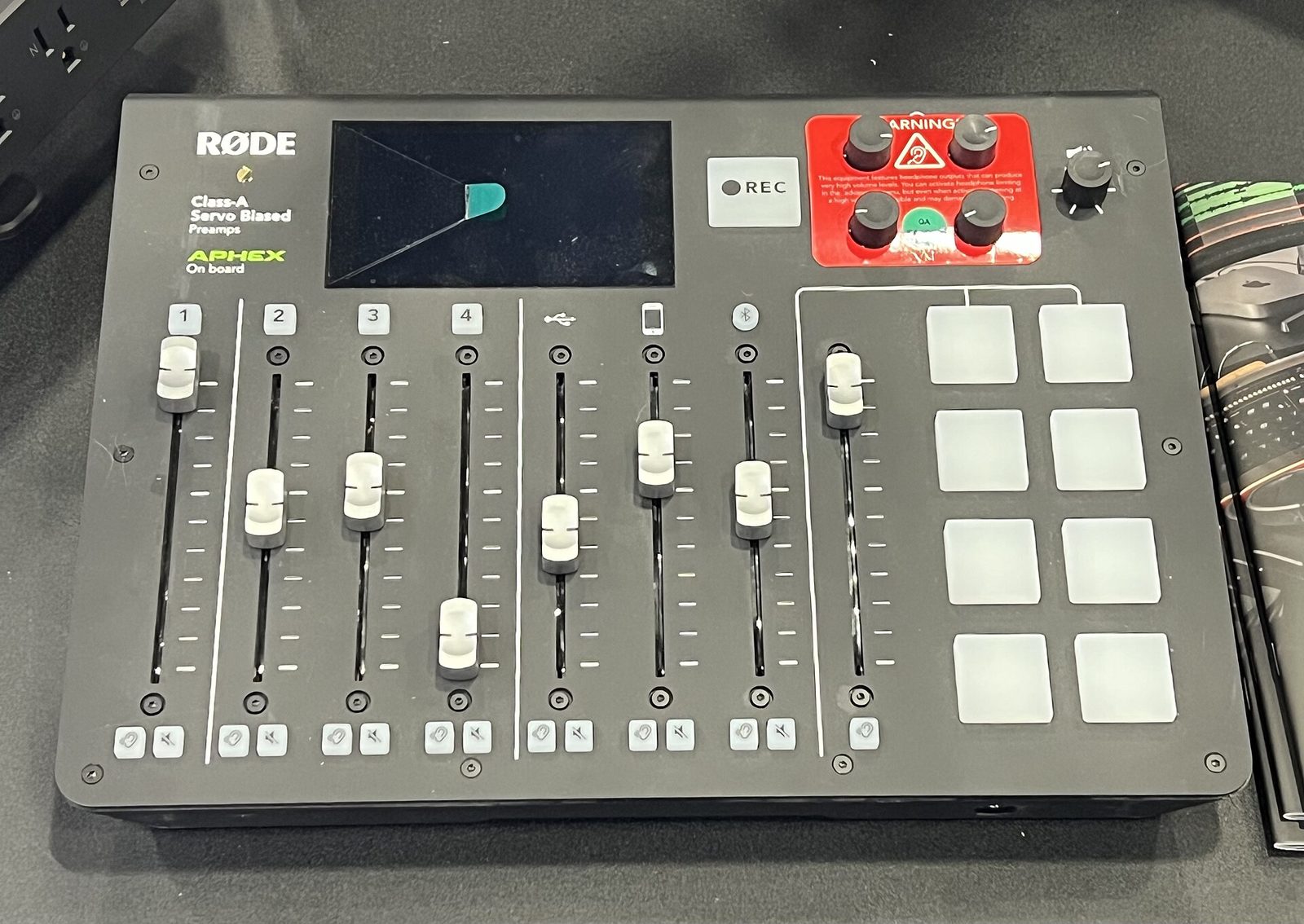
| Specification | Nomono Sound Capsule | RØDECaster Pro II |
|---|---|---|
| Category | Portable 4-person wireless kit with cloud editing | Desktop production console |
| Price (US) | $1,188 | $699 list, $595 at Sweetwater (Sep 2026), console only |
| Guests | 4, wireless lav mics | 4, wired XLR mics |
| Microphones included | 4 Stellar wireless mics | None |
| Recording resolution | 16-bit / 48 kHz per mic, 24-bit / 48 kHz spatial track | 24-bit / 48 kHz |
| 32-bit float | No | No |
| Gain | Automatic on every mic | Manual, up to 76 dB, APHEX processing |
| Spatial audio | 8-mic ambisonic array, Dolby Atmos-ready | None |
| Power | Up to 10 hrs battery, 25 hrs with charging case | Power supply or USB-C power bank, no internal battery |
| Storage | Up to 12 hours internal | microSD, USB drive or computer |
| Live production | None | 64 SMART pads, mix-minus, Bluetooth caller-in |
| Editing and cloud | First year of Studio Cloud included | None included |
| What you carry | One 2.9 lb case | Console plus mics, arms, cables and headphones |
Comparing $595 against $1,188 tells you little, because the console arrives without microphones. A four-guest RØDECaster Pro II desk needs four mics, four boom arms and four XLR cables before anyone speaks. With RØDE's own PodMic and PSA1+ arms, that comes to about $1,570 to $1,660, plus a pair of headphones per guest.
| Four-guest RØDECaster desk | Unit price | Total |
|---|---|---|
| RØDECaster Pro II | $595 | $595 |
| RØDE PodMic (XLR) x 4 | $99 | $396 |
| RØDE PSA1+ boom arm x 4 | $129 | $516 |
| XLR cable x 4 | $15 to $39 | $60 to $156 |
| Total before headphones | about $1,570 to $1,660 |
Prices are Sweetwater list prices in September 2026 and change often, so check them before you buy. The Sound Capsule's $1,188 covers the Space Recorder, four Stellar mics and the charging case, and the price includes the first year of Studio Cloud Premium: 600 minutes a month of AI audio enhancement, 600 GB of storage, two editors, unlimited reviewers and unlimited transcriptions. On the console route, budget separately for editing software, because the RØDECaster Pro II includes none. Full plan details are on the Nomono pricing page.
| Cost line | Nomono Sound Capsule | RØDECaster Pro II, 4-guest desk |
|---|---|---|
| Hardware to record four people | Included | About $1,570 to $1,660 |
| Total price | $1,188 | About $1,570 to $1,660, plus headphones |
| Editing and enhancement | First year of Studio Cloud included | Bought separately |
Buy the console when the show lives on one desk and the host wants hands on the mix. Faders let you ride a guest who leans away from the mic mid-answer. The 64 SMART pads fire intros, ad reads and stings during the take rather than in the edit, which is how radio-style shows keep their pace. Mix-minus routing plus Bluetooth means a phone guest hears everyone except themselves, with no echo and no second recording to line up afterward. Compression, de-essing, a noise gate and APHEX processing are applied as you record, so a well-run RØDECaster session needs only light editing. Streaming is the other strong case, with two USB-C interfaces feeding a computer and a second device at once. A show that records in the same room every week gets more from a console than from a travel kit.

Buy the Sound Capsule when the recording location changes. Everything travels in one 2.9 lb case, runs on battery for up to 10 hours and needs no table space beyond the Space Recorder itself. Setup is clipping four mics on four people and pressing record, which is the difference between taking a last-minute recording in a hotel suite and turning it down. Automatic gain on every mic helps when nobody on the team is an engineer: the guest who speaks quietly still gets a usable track. Spatial capture is the feature with no console equivalent. The Space Recorder records the room in ambisonics alongside the four voices, so every session is Dolby Atmos-ready. Conference floors, workshops and live events all have sound worth keeping, and a wired desk leaves it out. See the Sound Capsule product page for the full kit, and our guide to recording a podcast outside the studio for the method.
Setup separates these two products more than any spec. A four-mic RØDECaster desk means four boom arms clamped, four XLR runs laid, four gain checks and a headphone feed for every guest. On a desk you control, it stays built between episodes and costs you nothing on the day. In a borrowed room, the same build is the slowest part of the shoot, and one snagged cable can end a take. The Sound Capsule reverses that: open the case, hand out four mics, press record, and it is ready to record in under 10 seconds. A console rewards a permanent installation, a wireless kit rewards a schedule that moves. Teams that work both ways often keep a desk rig at base and a travel kit in the bag, and our podcast recording guide covers how to keep the two sounding alike.
Nomono shows how a Sound Capsule recording starts: undock the mics and press one button.
On paper the console has the edge: the RØDECaster Pro II records every input at 24-bit/48 kHz, while the Sound Capsule records each voice at 16-bit/48 kHz and the spatial room track at 24-bit/48 kHz. Both are above what podcast distribution needs, since episodes are delivered as compressed files. Neither records 32-bit float, so neither offers the clip-proof safety net that some two-person wireless kits, such as the RØDE Wireless PRO and DJI Mic 2, record on their transmitters. The difference is how each handles levels. The RØDECaster gives you 76 dB of clean gain and expects someone to watch the meters. The Sound Capsule levels each mic automatically, and AI audio enhancement in Studio Cloud removes background noise and balances voices afterward. Both approaches work. A console puts the risk on the operator, the Sound Capsule puts it on the system. Either setup can deliver the roughly -16 LUFS integrated loudness that Apple Podcasts recommends.
| Your situation | Recommended setup | Why |
|---|---|---|
| Weekly studio show, same four chairs, live music beds and ad reads | RØDECaster Pro II | Faders, SMART pads and live processing keep editing to a minimum. |
| Field interviews, conferences and guests' offices | Nomono Sound Capsule | Battery power, one 2.9 lb case and no cables to run. |
| Show that releases episodes in Dolby Atmos or spatial audio | Nomono Sound Capsule | Ambisonic capture on the Space Recorder, which the console does not offer. |
| Host who takes live phone calls | RØDECaster Pro II | Bluetooth caller-in with mix-minus routing. |
| Team with no audio engineer and no editor | Nomono Sound Capsule | Automatic gain on every mic, with noise removal and editing in Studio Cloud. |
| Video podcast recorded on location | Nomono Sound Capsule | Audio/Video Sync in Studio Cloud lines the audio up with your camera files, free on every plan. |
| Solo host or one-to-one interviews | Nomono Stellar Kit | Two wireless mics for $348. |
Recording four people away from a desk?
See what comes in the Sound Capsule, or compare the Premium and Professional plans.
Neither is better across the board, because they solve different problems. The Nomono Sound Capsule is a portable four-person wireless kit with spatial capture and cloud editing, built for recording away from a desk. The RØDECaster Pro II is a $595 console with faders, sound pads and live processing, built for a studio that stays put. Portability and post-production favor Nomono. Live production and hands-on mixing favor RØDE.
A four-guest RØDECaster Pro II desk costs about $1,570 to $1,660 once you add four RØDE PodMics, four PSA1+ boom arms and four XLR cables to the $595 console (Sweetwater prices, September 2026). Headphones for each guest come on top. Editing software, cloud storage and transcription are not included. The Nomono Sound Capsule is $1,188, with four mics and Studio Cloud editing included.
No. The RØDECaster Pro II records at 24-bit/48 kHz, and the Nomono Sound Capsule records voices at 16-bit/48 kHz. Neither records 32-bit float. Some two-person wireless kits, including the RØDE Wireless PRO and DJI Mic 2, record 32-bit float on their transmitters. The Sound Capsule handles the same risk differently, with automatic gain on all four mics and noise removal in Studio Cloud.
The Nomono Sound Capsule. It runs for up to 10 hours on battery, or 25 hours with the charging case, and the whole kit weighs 2.9 lb. The RØDECaster Pro II has no internal battery and needs desk space for four boom arms. On location, the Space Recorder's ambisonic array also records the room alongside the four voice tracks.
No. The RØDECaster Pro II records a stereo mix or separate channel tracks, with no ambisonic or spatial capture. Recording spatial audio with a console setup means adding a separate ambisonic microphone and recorder. The Nomono Sound Capsule records ambisonics through the Space Recorder's 8-mic array, and Studio Cloud Premium exports Dolby Atmos-ready spatial audio. Spatial audio for podcasts explains what that adds to a show.
The first year of Studio Cloud is included with the hardware: Premium with the Sound Capsule, Professional with the two-mic Stellar Kit. After the first year you can stay on the Free plan or continue Studio Cloud from $29/month (Professional) or $99/month (Premium), with monthly or yearly billing; the hardware keeps working either way. Nomono emails you 30 days before renewal so you can choose.
The Nomono Sound Capsule, because every mic sets its own level and there is no mix to run during the recording. The RØDECaster Pro II suits someone who knows what a compressor threshold does and wants to ride faders live. After a Nomono session, cleanup happens in Studio Cloud's browser editor rather than in a separate audio workstation.
For two people, the Nomono Stellar Kit is the better fit at $348. It includes two wireless mics, a travel sleeve and a year of Studio Cloud Professional. Choose the Sound Capsule if you regularly record three or four people, or if spatial capture matters to your format. Details are on the Stellar Kit page.
For more options across budgets and group sizes, see our podcasting equipment buyer's guide.
Written by Ruben Åeng, Lead Audio Engineer at Nomono
Audio engineer and Product Manager for spatial audio products at Nomono, with 15 years of experience in film and television sound. Before joining in 2021 he worked as a production sound mixer, dialogue editor and sound designer, with credits including the Oscar-nominated short “Night Ride”.
Enjoy free express shipping to the listed locations within 2–5 business days.
 Austria
 Belgium
 Bulgaria
 Croatia
 Cyprus
 Czech Republic
.svg) Denmark
Denmark Estonia
 Finland
 France
 Germany
 Greece
 Hungary
 Ireland
 Italy
Italy Latvia
 Lithuania
 Luxembourg
 Malta
Malta Netherlands
 Norway
 Poland
 Portugal
 Romania
 Slovakia
 Slovenia
 Spain
Spain Sweden
 United Kingdom
 United States