Comparisons
October 26, 2026


The DJI Mic 2, now replaced by the DJI Mic 3, is a two-person wireless kit built for camera creators, with a receiver that feeds the camera. The Nomono Sound Capsule records four people wirelessly plus a spatial room track and includes Studio Cloud. Pick DJI for vlogging and video, Nomono for multi-person, audio-first podcasts.
DJI has replaced the Mic 2 with the DJI Mic 3. The Mic 2 is still sold at $199 at B&H, so it remains a real option on price. The Mic 3 is $329 list with its charging case and $259 at B&H. Both record inside each transmitter and connect to a camera through a 3.5 mm output on the receiver. The Mic 3 adds timecode, and DJI rates its transmitters at 8 hours against 6 hours on the Mic 2. Both are two-transmitter kits.
Independent review: AVForums tests the DJI Mic 3.
DJI designs around a camera. The receiver feeds the camera a signal, the kit fits in a jacket pocket, and two transmitters cover a presenter and one guest. DJI also lists on-device noise cancelling on both generations.
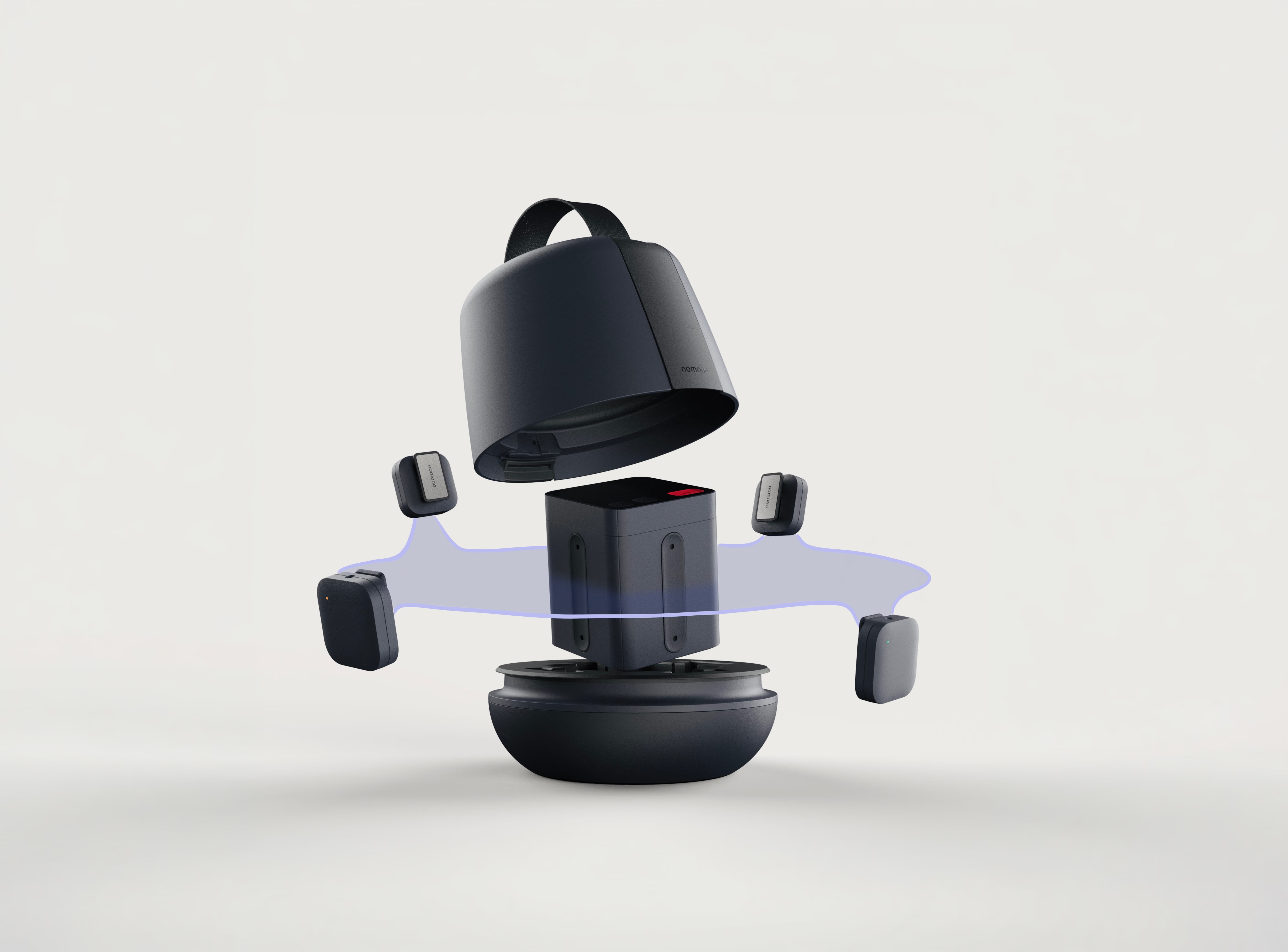
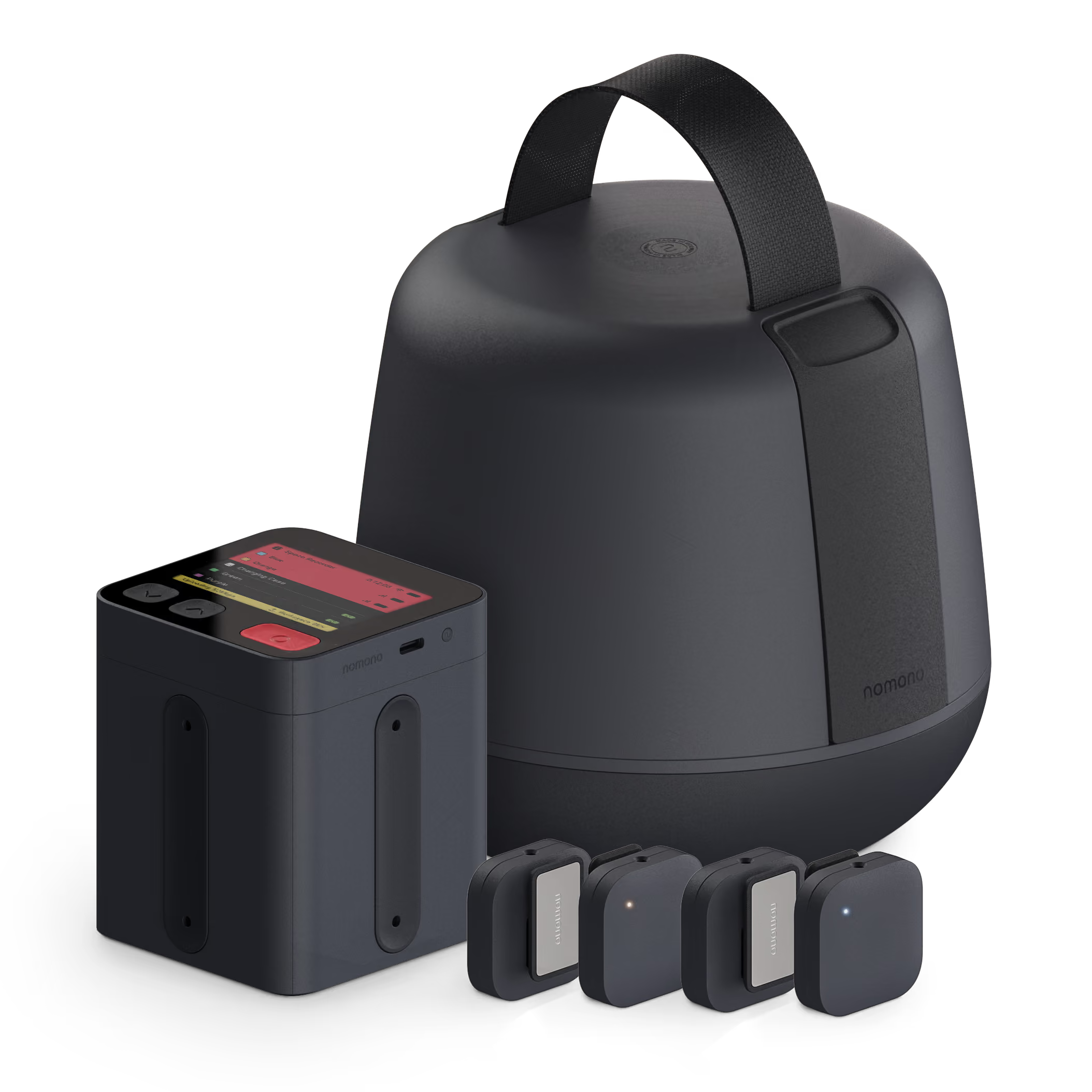
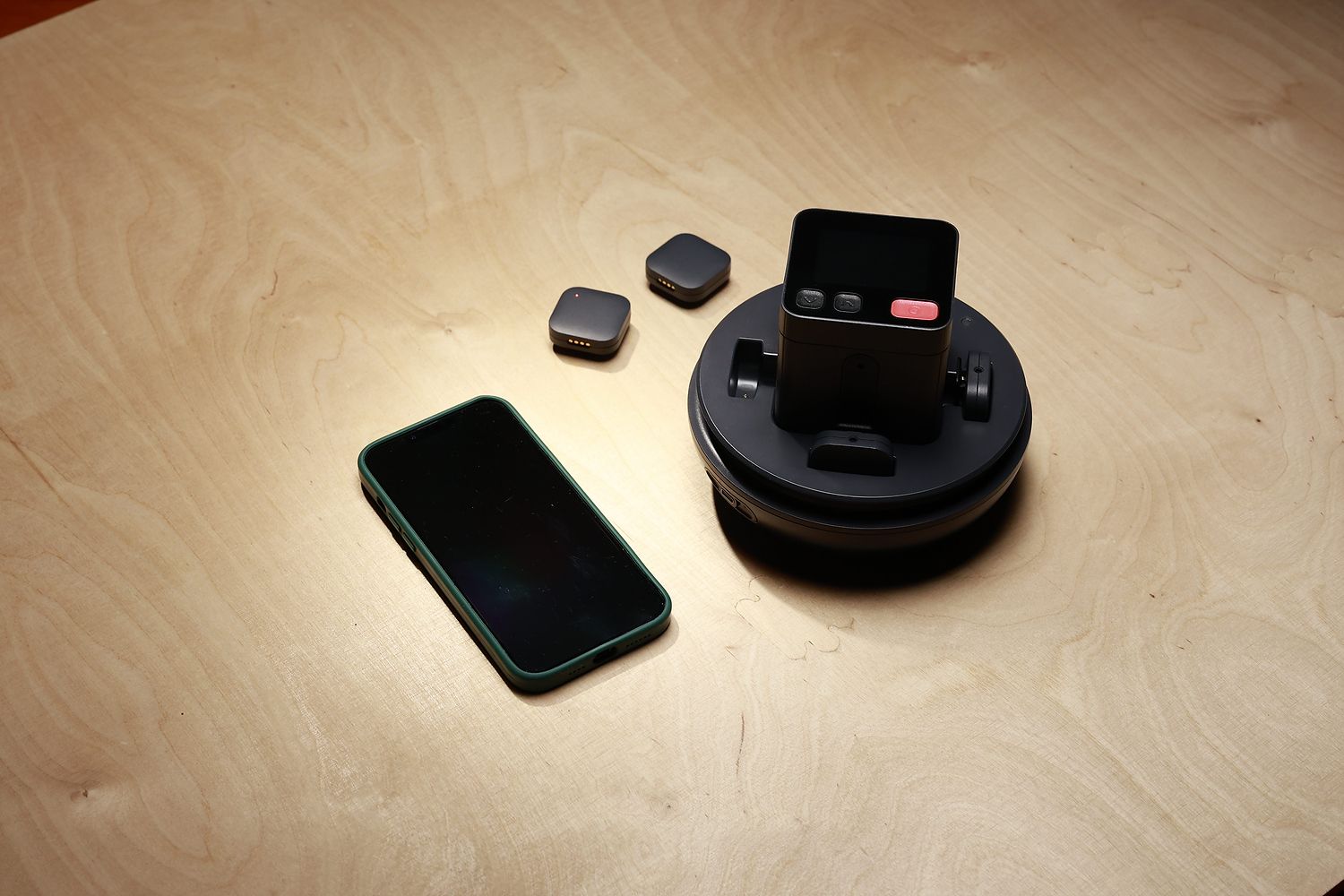
Nomono designs the Sound Capsule around a conversation. One case holds the Space Recorder with its 8-mic ambisonic array, four Stellar wireless mics and the charging case, at 2.9 lb (1.3 kg). Setup is opening the case and clipping on four mics, and the Sound Capsule is ready to record in under 10 seconds. There is no receiver to mount, and no phone, laptop or camera is needed to record.
| Spec | Nomono Sound Capsule | DJI Mic 2 | DJI Mic 3 |
|---|---|---|---|
| Price | $1,188 | $199 at B&H | $329 list, $259 at B&H |
| People | 4 | 2 | 2 |
| Recording format | 16-bit/48 kHz voice, 24-bit spatial | 32-bit float | 32-bit float or 24-bit |
| Internal recording | Up to 12 h (64 GB) | 14 h per DJI | 43 h per DJI |
| Battery | 10 h, 25 h with case | 6 h per transmitter | 8 h per transmitter |
| Timecode | No | No | Yes |
| Camera output | No | 3.5 mm | 3.5 mm |
| Spatial capture | Yes, Dolby Atmos-ready | No | No |
| Cloud editing and transcription | First year of Studio Cloud included | No | No |
Two transmitters is the ceiling on one DJI kit. A third voice needs a second kit and a second receiver, and two separate recordings to line up afterward. Four mics is the Sound Capsule's starting point, each recorded as its own track on one recorder, so a round table edits the same way as a two-person interview. Count the people on your busiest episode, not your average one. If you regularly host panels, our guide to multi-guest panel recording covers seating and mic placement for bigger tables.

Video-first work favors DJI, for practical reasons. The receiver puts audio into the camera as you record, which means one file and no sync step before a rough cut. The Mic 3 adds timecode for multi-camera shoots. The Sound Capsule has no camera output, so a video workflow with Nomono means recording audio separately and syncing in Studio Cloud. Audio/video sync automates that and is free on every plan, but it is still a separate step.
Price is DJI's second real advantage: $199 or $259 outright is far less than $1,188, and it is the obvious choice for a solo creator.
You will also see DJI's 32-bit float recording listed as a must-have. For spoken audio it rarely makes a difference. A conversation typically spans 40 to 60 dB, well inside the 96 dB a 16-bit recording captures, and auto-levelling on every Stellar mic protects loud moments from clipping. 32-bit float was designed for mixing in software, where many tracks are summed together. Our support article explains why 16-bit is enough for spoken audio.
Four wireless mics, a spatial array and a cloud editor come on one bill with the Sound Capsule, and no two-person camera kit offers that combination. The ambisonic array records the room as a 24-bit/48 kHz spatial track at the same time as the voices, which is what makes a spatial or Dolby Atmos mix possible later. Our guide to spatial audio for podcasts explains when that is worth it.
Post-production accounts for much of the price gap. The Sound Capsule price includes the first year of Studio Cloud Premium: 600 minutes of AI noise removal and audio enhancement a month, 600 GB of storage, two editors, unlimited reviewers and unlimited transcriptions. A DJI owner buys that layer separately. Plan details are on the Studio Cloud pricing page.
Yes, for one or two people. Close-range lav capture and on-device noise cancelling cover the basics of a clean voice track. Three limits show up as a show grows. The kit tops out at two voices. Nothing in the box handles post-production, so transcription, levelling and multitrack editing happen in other tools. And room sound is only captured as bleed into the lavs, so spatial delivery is off the table. For a fixed two-chair format that never grows, a DJI kit is a sensible podcast purchase. Clip placement matters as much as the kit: see our lavalier mic placement guide.
| Setup | Price | Included |
|---|---|---|
| DJI Mic 2 | $199 at B&H | 2 transmitters, receiver |
| DJI Mic 3 | $259 at B&H ($329 list) | 2 transmitters, receiver, case |
| Nomono Stellar Kit | $348 | 2 wireless mics, dock, Studio Cloud |
| Nomono Sound Capsule | $1,188 | Recorder, 4 mics, case, Studio Cloud |
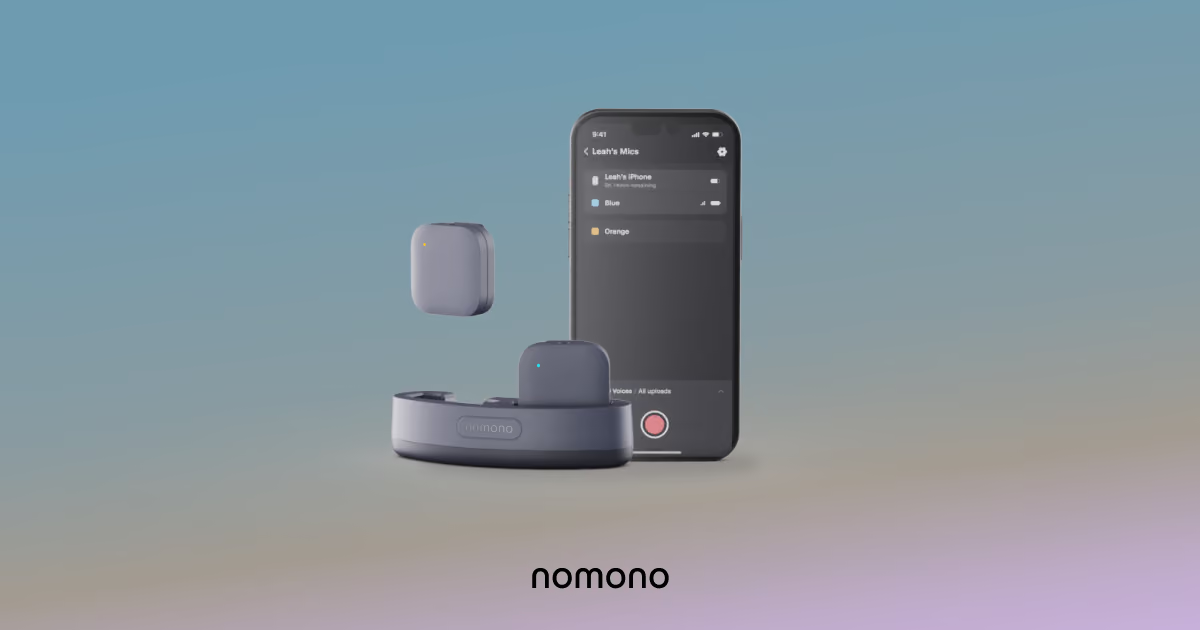
After the first year you can stay on the Free plan or continue Studio Cloud from $29/month (Professional) or $99/month (Premium); the hardware keeps working either way. For a two-person show, the Stellar Kit is the closer match: two wireless mics with 15 hours of battery that record through the Studio app and upload to Studio Cloud, with 360 minutes of AI enhancement a month and unlimited transcriptions. It costs more than a DJI kit, and the difference pays for the editing and transcription layer. Our podcast kit for 2 people guide compares more two-person options.
| Your format | Pick | Why |
|---|---|---|
| Solo vlogger or run-and-gun video | DJI Mic 3 | Camera output, timecode, low cost |
| Tightest budget, two people | DJI Mic 2 | $199 for two wireless mics |
| Two-person interview, audio-first | Nomono Stellar Kit | Two mics plus cloud editing |
| Three or four people at a table | Nomono Sound Capsule | Four mics, one recorder, one case |
| On-location documentary or live event | Nomono Sound Capsule | Spatial room capture, 25 h with case |
| Multi-camera video shoot | DJI Mic 3 | Timecode for lining up cameras |
| Spatial or Dolby Atmos delivery | Nomono Sound Capsule | Only one with an ambisonic array |
Yes, and video crews often do. The Sound Capsule records the four voices and the room, the camera records its own reference audio, and Studio Cloud lines them up afterward. A DJI kit then covers the jobs the Sound Capsule is not built for: a single presenter to camera, a walking shot or a quick street interview. Our guide to the best audio setups for video podcasts covers more combinations.
Record four voices, not two
Sound Capsule records four wireless mics plus the room and syncs to your video in Studio Cloud.
The Sound Capsule records four people wirelessly plus a spatial room track and includes Studio Cloud, at $1,188. The DJI Mic 2 records two people and feeds a camera through its receiver, at $199 at B&H. Guest count and whether the camera is central decide between them.
Yes. The DJI Mic 3 replaces it at $329 list with case, or $259 at B&H. It keeps the camera output and adds timecode. The Mic 2 is still available at $199 at B&H.
Not with one kit. It ships with two transmitters and one receiver, so recording four people means a second kit and lining up two recordings later. The Sound Capsule records four mics on one recorder.
No, and for speech it does not need to. It records 16-bit/48 kHz voice tracks and a 24-bit/48 kHz spatial track. A 16-bit recording captures 96 dB of dynamic range, more than the 40 to 60 dB a spoken recording typically spans, and auto-levelling on every Stellar mic protects against clipping. 16-bit audio explained covers the details.
No. It has no camera output, so audio is recorded separately and synced to video afterward in Studio Cloud, where audio/video sync is free on every plan. If you need audio inside the camera file at the moment of capture, a DJI kit is the better fit.
DJI. A vlog is usually one or two people on camera, cut as video, and the DJI receiver puts audio straight into the camera file. The Sound Capsule is built for multi-person, audio-first recording and spatial capture.
For three or four people recorded wirelessly, the Nomono Sound Capsule. Wired options cost less: the Zoom PodTrak P4next ($149.99 on sale at Sweetwater) takes four XLR mics, and our Sound Capsule vs PodTrak P4 comparison covers that trade-off.
Written by Ruben Åeng, Lead Audio Engineer at Nomono
Audio engineer and Product Manager for spatial audio products at Nomono, with 15 years of experience in film and television sound. Before joining in 2021 he worked as a production sound mixer, dialogue editor and sound designer, with credits including the Oscar-nominated short “Night Ride”.
Enjoy free express shipping to the listed locations within 2–5 business days.
 Austria
 Belgium
 Bulgaria
 Croatia
 Cyprus
 Czech Republic
 Denmark
 Estonia
 Finland
 France
 Germany
 Greece
 Hungary
 Ireland
 Italy
 Latvia
 Lithuania
 Luxembourg
 Malta
 Netherlands
 Norway
 Poland
 Portugal
 Romania
 Slovakia
 Slovenia
 Spain
 Sweden
 United Kingdom
 United States