Comparisons
October 23, 2026


The Zoom PodTrak P4 has been replaced by the PodTrak P4next, a $149.99 (sale) recorder with four wired XLR inputs that needs mics, cables and stands. The Nomono Sound Capsule is a complete four-person wireless kit with spatial capture and Studio Cloud included, at $1,188. Choose Zoom for the lowest price and phone-in guests, Nomono for wireless freedom and cloud workflow.
If you searched for the PodTrak P4, note that Zoom now sells the PodTrak P4next in its place. This comparison uses the P4next, because that is what you can buy new today. It keeps the P4's core recipe: four XLR inputs, four headphone outputs, mix-minus, four sound pads and power from two AA batteries or USB. It records 24-bit/48 kHz to microSD, with up to 70 dB of gain, and has no 32-bit float.
| Spec | Nomono Sound Capsule | Zoom PodTrak P4next |
|---|---|---|
| Price | $1,188 | $179.99 list, $149.99 Sweetwater sale |
| Mics included | 4 Stellar wireless mics | None |
| People | 4, wireless | 4, wired XLR |
| Recording format | 16-bit/48 kHz voice, 24-bit/48 kHz spatial | 24-bit/48 kHz |
| 32-bit float | No | No |
| Gain | Auto-levelling per mic | Manual, up to 70 dB |
| Spatial audio | 8-mic ambisonic array, Dolby Atmos-ready | No |
| Storage | Up to 12 h internal (64 GB) | microSD |
| Headphone outputs | None listed; monitor via Studio app | 4 |
| Mix-minus / sound pads | No / no | Yes / 4 pads |
| Power | Up to 10 h, 25 h with case | 2 AA or USB |
| After recording | Auto-upload to Studio Cloud, USB export | Copy files from microSD |
Zoom built the PodTrak line as a podcast box first. Four XLR inputs with up to 70 dB of gain will drive most dynamic podcast mics. Four headphone outputs let every guest hear the conversation, which helps people keep a steady distance from a mic. Mix-minus lets a phone or computer guest join without hearing their own voice echoed back. Four sound pads fire intros, stings and ad reads live.
Power from two AA batteries or USB is useful in rooms with no free outlet. For a team starting a four-person show on the smallest possible budget, there is nothing cheaper that does all of this.
Independent review: Free Podcast Tools tests the Zoom PodTrak P4next.
Four XLR inputs are four empty sockets. A working four-person rig needs four mics, four cables and four stands. Zoom's own ZDM-1 Podcast Mic Pack ($99.99) bundles a mic, headphones, a tabletop stand, a windscreen and a cable, so four packs plus a P4next on sale come to about $550. A step up to four RØDE PodMics ($86 each street) plus cables, stands and headphones costs more.
| Item | Qty | Price | Subtotal |
|---|---|---|---|
| Zoom PodTrak P4next (Sweetwater sale) | 1 | $149.99 | $149.99 |
| Zoom ZDM-1 Podcast Mic Pack | 4 | $99.99 | $399.96 |
| Total | $549.95 |
The other cost is time. Four wired mics on a table you do not own means running four cables, positioning four stands and keeping guests from tugging on them for the whole session. A wired rig also keeps everyone in place. Guests who stand up, walk around or move between rooms are outside what the P4next is designed for.

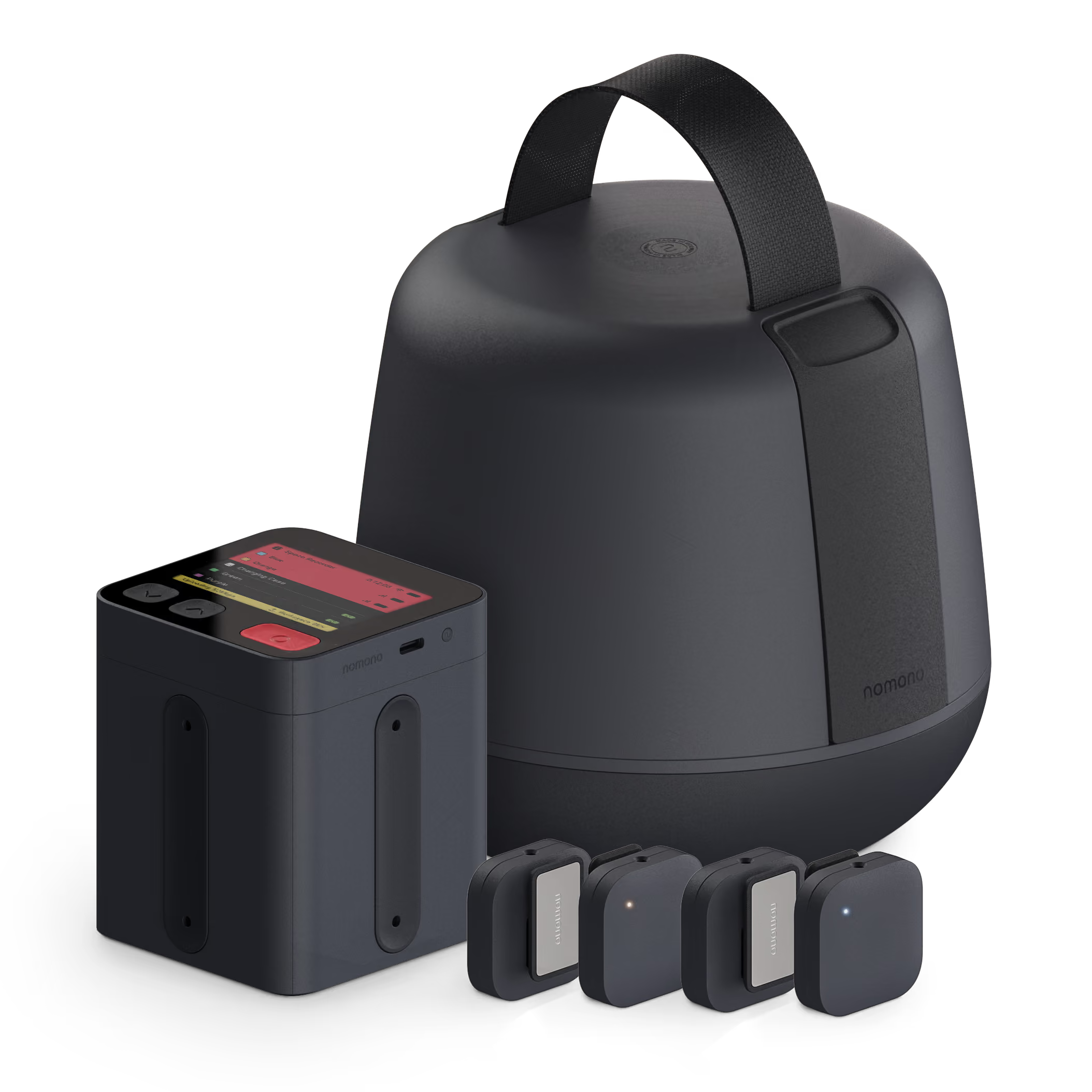
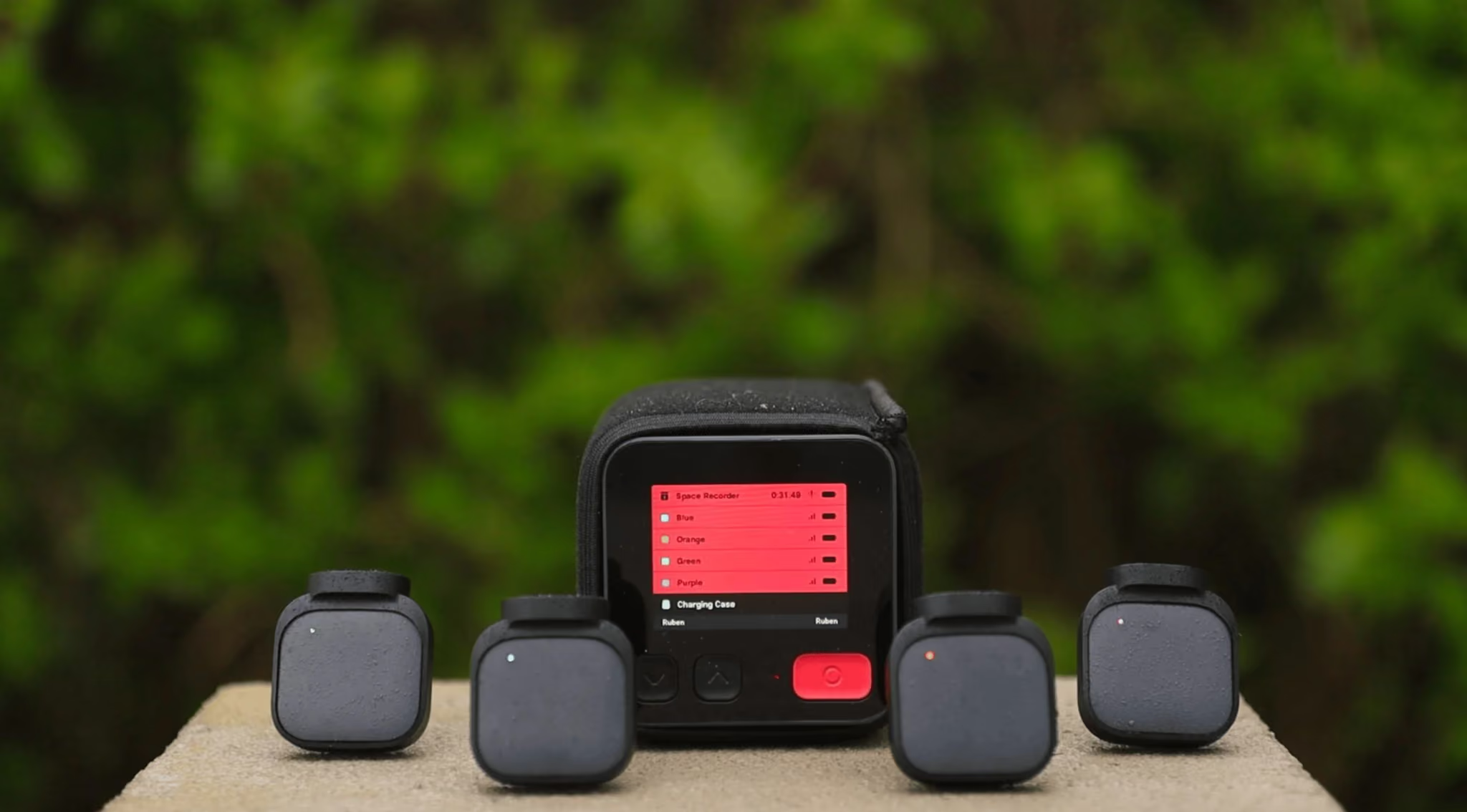
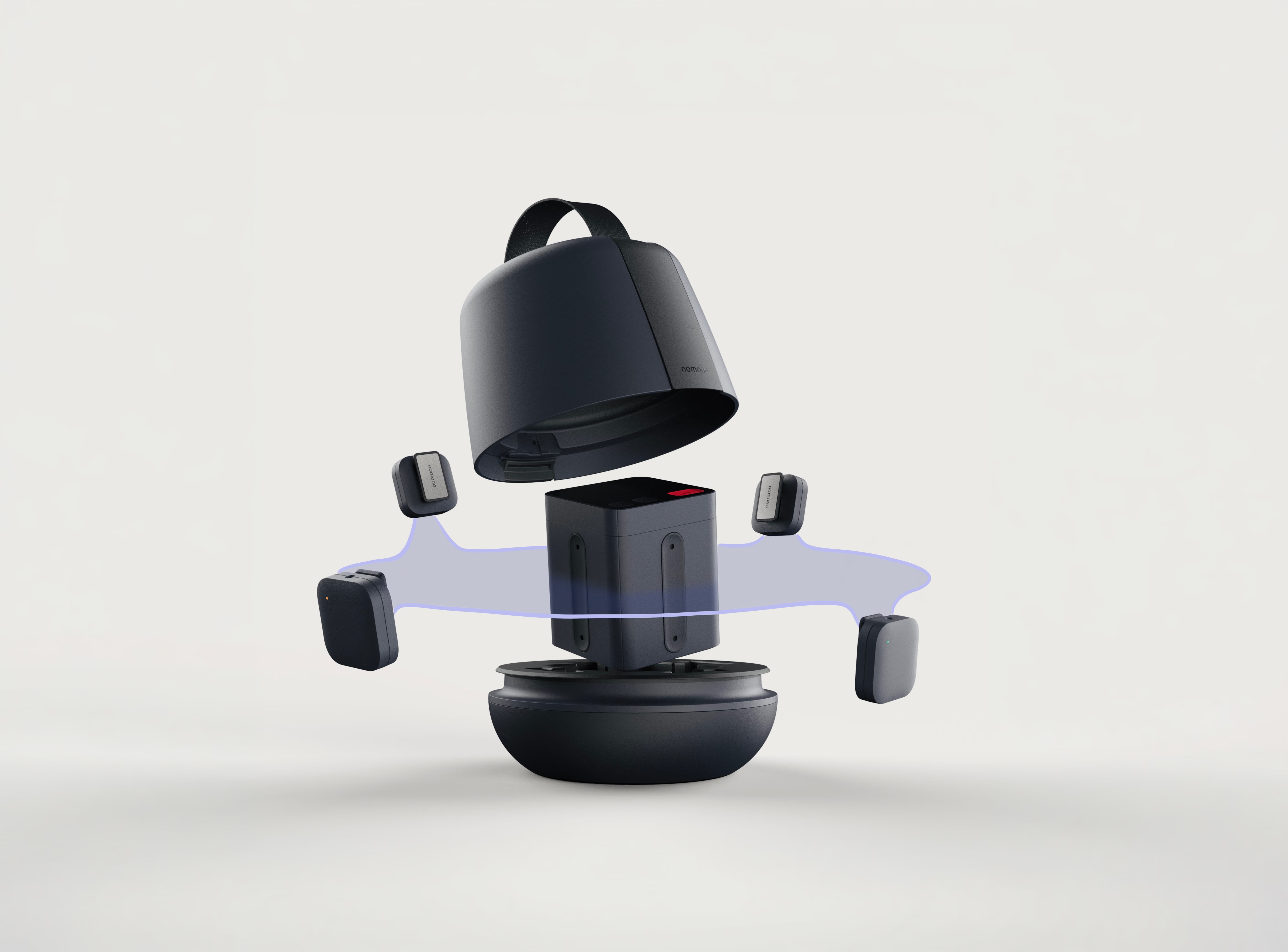
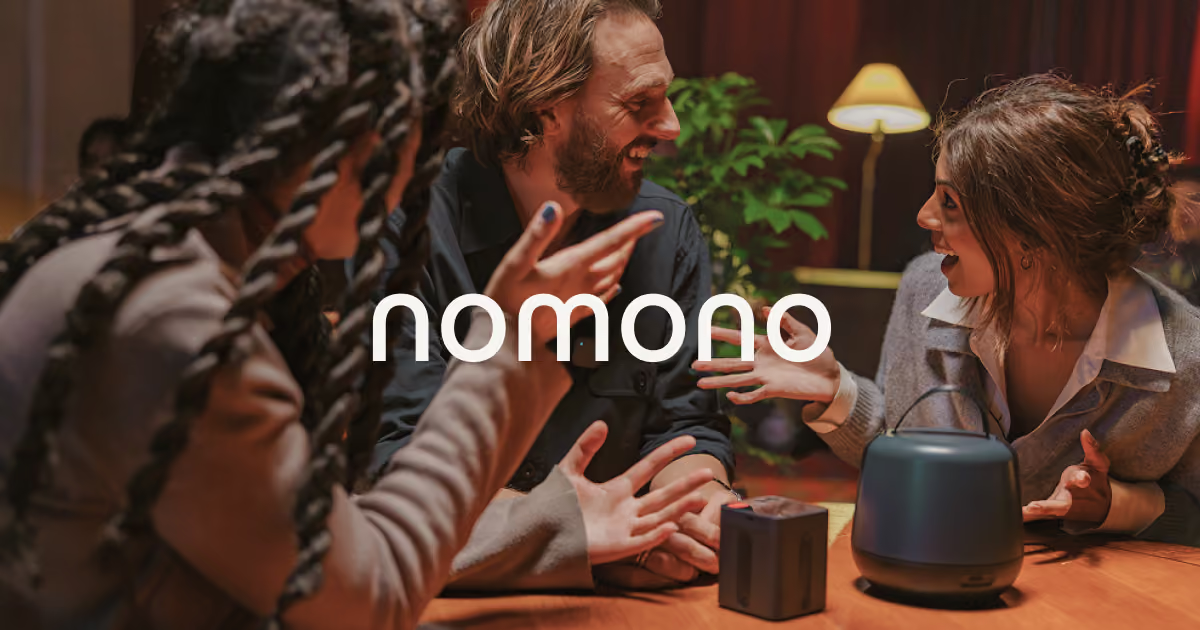
The Nomono Sound Capsule removes setup steps rather than adding options. One case holds the Space Recorder with its 8-mic ambisonic array, four Stellar wireless mics and the charging case, at 2.9 lb (1.3 kg) for the whole kit. Clip one mic on each guest and start recording; the Sound Capsule is ready to record in under 10 seconds. Each voice is recorded as its own 16-bit/48 kHz track, every mic is levelled automatically, and the recorder stores up to 12 hours internally.
Customer story: We Are Makers record 32 podcasts in 35 days with the Sound Capsule.
It records for up to 10 hours, or 25 hours with the charging case, and runs without a phone or laptop. For a team recording in a different building every week, the practical difference is how few things can be forgotten or broken: one case, no cables, no stands. Our guide to recording a podcast outside the studio covers the room preparation that still matters with either system.
Spatial capture is the one thing the P4next has no answer for. The Space Recorder's ambisonic array records the room as a 24-bit/48 kHz spatial track alongside the four voices, and the Sound Capsule is Dolby Atmos-ready. Spatial sound has to be captured at the session; it cannot be rebuilt from four mono tracks later. Our guide to spatial audio for podcasts explains when it is worth it.
This is where the two bills really differ. A P4next session ends with files you copy off a microSD card into whatever editor you already use, and noise removal, levelling, transcription and video sync happen there, often in software you pay for separately.
The Sound Capsule uploads to Studio Cloud automatically over Wi-Fi. The price includes the first year of Studio Cloud Premium: 600 minutes of AI noise removal and audio enhancement a month, 600 GB of storage, two editors, unlimited reviewers, unlimited transcriptions and spatial export. Audio/video sync is free on every plan. You can still export standard audio files to another editor if you prefer. Plan details are on the Studio Cloud pricing page.
Bit depth is the spec people check first, and it does not settle this. Neither product records 32-bit float, so neither gives you the clip-proof safety net of a Zoom H6essential ($329.99) or a RØDE Wireless PRO. What decides the finished sound in a real room is mic placement and level, and the two handle level in opposite ways. Zoom gives you a gain knob per channel and expects you to set it and watch it. Nomono levels each mic automatically. A host running the session alone, with nobody watching meters, will usually find auto-levelling more forgiving.
| Your situation | Better choice | Why |
|---|---|---|
| Four-person show on the smallest budget | Zoom PodTrak P4next | About $550 with four mic packs |
| Different location every week | Nomono Sound Capsule | One 2.9 lb case, no cables or stands |
| Phone or remote callers in a live mix | Zoom PodTrak P4next | Mix-minus and four headphone outs |
| Spatial or Dolby Atmos delivery | Nomono Sound Capsule | Ambisonic array, Atmos-ready |
| No editor or editing budget | Nomono Sound Capsule | Studio Cloud included |
| Guests who move or stand | Nomono Sound Capsule | Wireless mics, nobody tethered |
| Stings and ad reads fired live | Zoom PodTrak P4next | Four sound pads |
| You already own XLR mics | Zoom PodTrak P4next | Sound Capsule has no XLR inputs |
Still deciding how many people you need to record? Our best 4-person podcast setups guide compares wired and wireless options side by side, and podcast setups without a mixing board covers smaller shows.
Record four people without cables
Sound Capsule records four wireless mics plus the room, levels every mic automatically and uploads to Studio Cloud.
Zoom now sells the PodTrak P4next in its place. The P4next keeps four XLR inputs, four headphone outputs, mix-minus and sound pads, and records 24-bit/48 kHz to microSD. It is $179.99 list and was $149.99 on sale at Sweetwater in September 2026.
It depends on what else you would buy. A P4next with four Zoom mic packs comes to about $550, plus whatever you pay for editing and transcription. The Sound Capsule is $1,188, including four wireless mics, spatial capture and a year of Studio Cloud Premium. If you record in one room and already have an editing workflow, the Zoom is the better value.
Yes. It has four XLR inputs and records each as its own track, and each guest gets their own headphone output. You supply the mics, cables and stands.
No. The P4next records 24-bit/48 kHz, so levels need setting before you record. The Sound Capsule records 16-bit/48 kHz voice tracks and levels each mic automatically. If 32-bit float matters to you, look at the Zoom H6essential or Tascam Portacapture X8.
No. Both record standalone. The P4next writes to microSD and you move the files to a computer afterward. The Sound Capsule records internally and uploads to Studio Cloud automatically when it is on Wi-Fi, with USB export as a backup. The Studio app is needed once for initial setup.
No. It works with its four Stellar wireless mics and has no XLR inputs. If your show is built around specific dynamic mics you already own, a wired recorder like the P4next is the better fit.
After the first year you can stay on the Free plan or continue Studio Cloud from $29/month (Professional) or $99/month (Premium), billed monthly or yearly. You get a renewal email 30 days before. The hardware keeps working either way.
Written by Ruben Åeng, Lead Audio Engineer at Nomono
Audio engineer and Product Manager for spatial audio products at Nomono, with 15 years of experience in film and television sound. Before joining in 2021 he worked as a production sound mixer, dialogue editor and sound designer, with credits including the Oscar-nominated short “Night Ride”.
Enjoy free express shipping to the listed locations within 2–5 business days.
 Austria
 Belgium
 Bulgaria
 Croatia
 Cyprus
 Czech Republic
 Denmark
 Estonia
 Finland
 France
 Germany
 Greece
 Hungary
 Ireland
 Italy
 Latvia
 Lithuania
 Luxembourg
 Malta
 Netherlands
 Norway
 Poland
 Portugal
 Romania
 Slovakia
 Slovenia
 Spain
 Sweden
 United Kingdom
 United States