Comparisons
October 27, 2026


The Nomono Sound Capsule records four wireless guests plus a spatial room track and uploads everything to Studio Cloud, at $1,188. The RØDE Wireless PRO records two people with timecode, at $299 list or $260 street with no subscription. Buy by guest count and workflow: four regular voices point to the Sound Capsule, two point to RØDE.
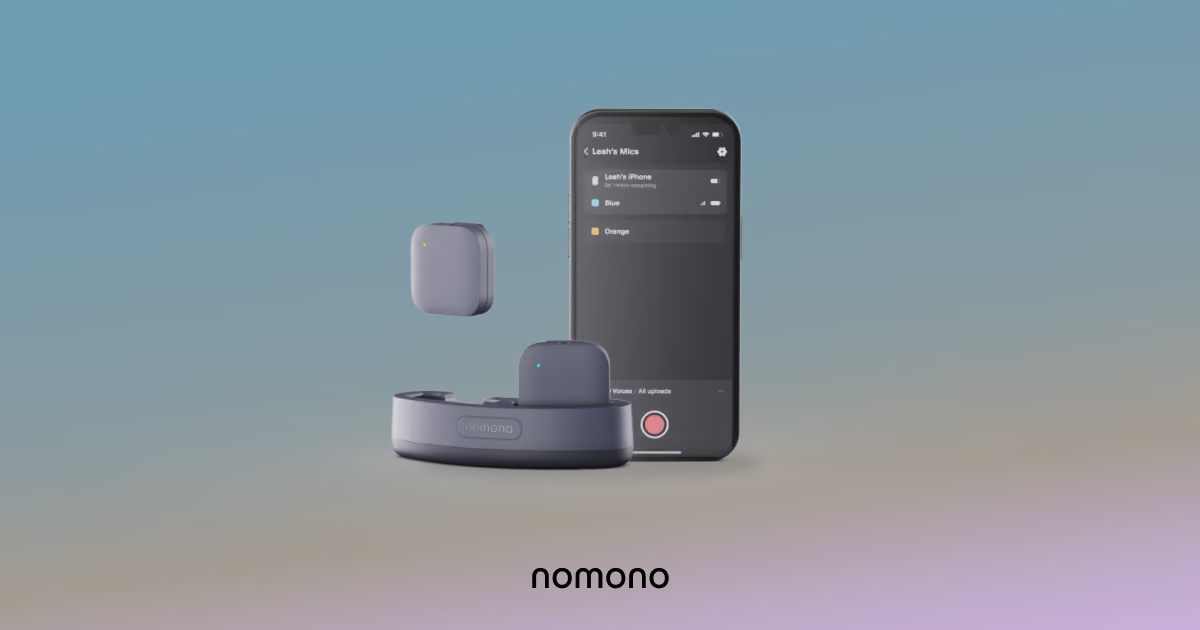
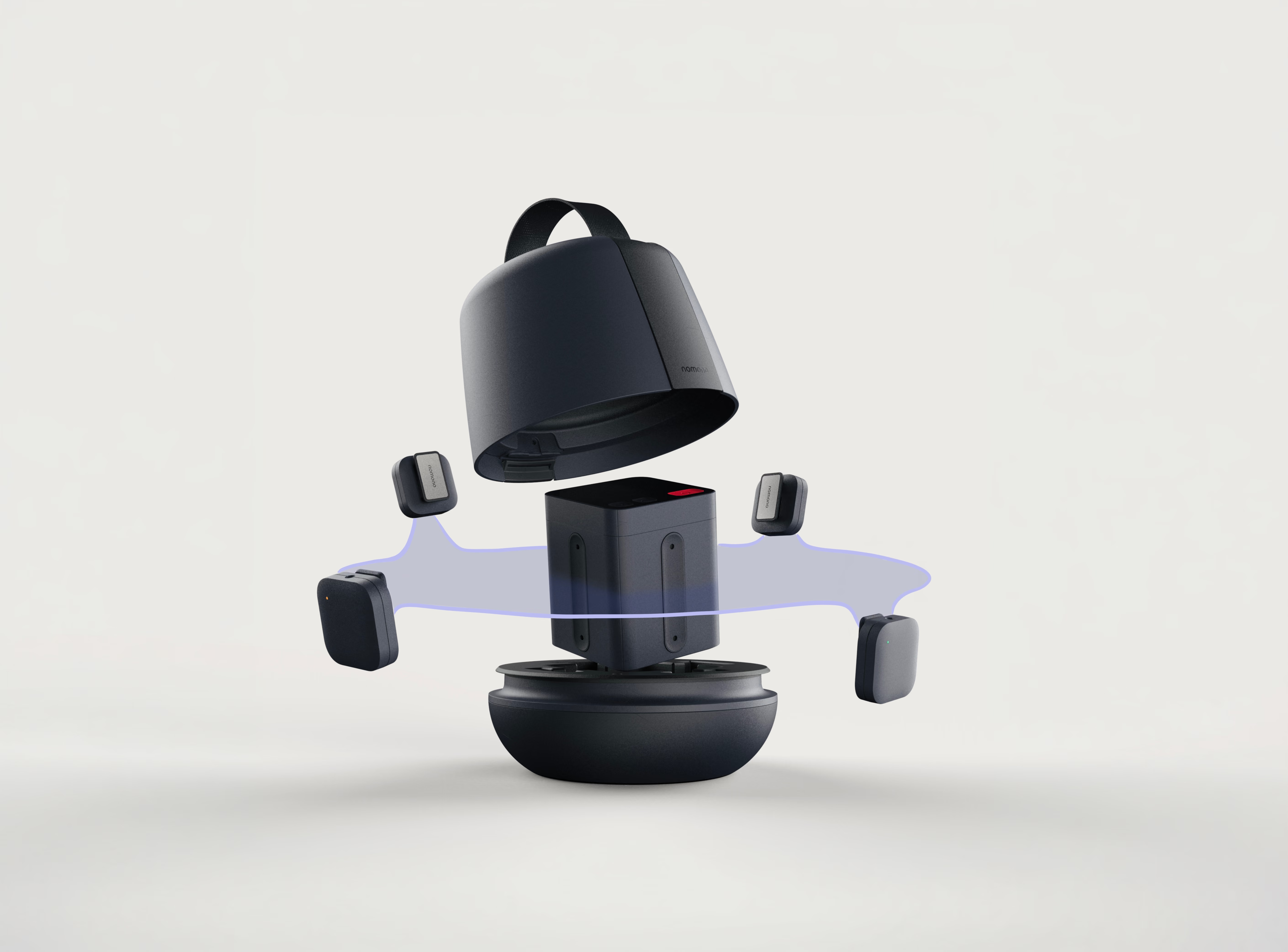
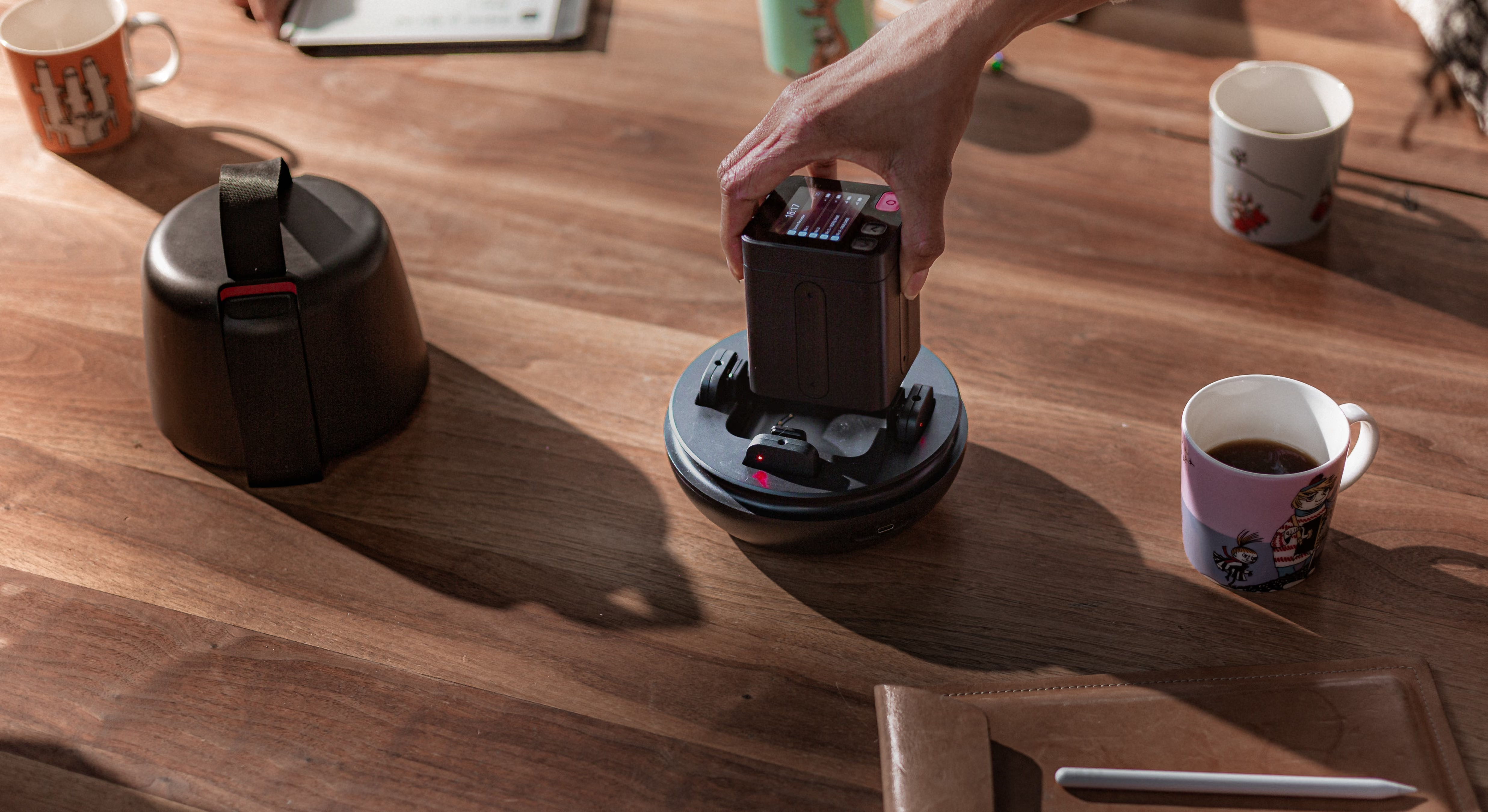
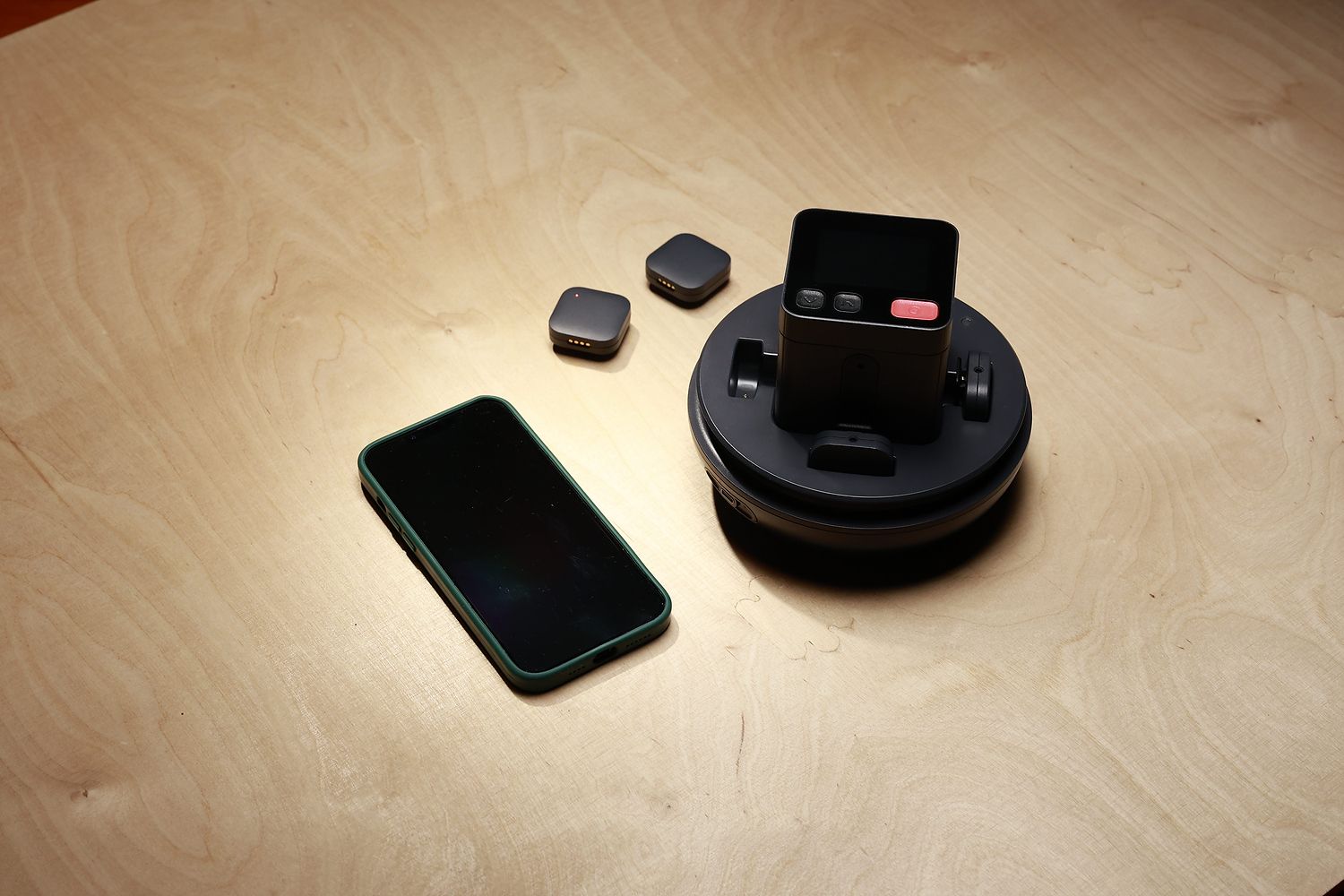
The Nomono Sound Capsule is a portable four-person recording system: the Space Recorder with an 8-mic ambisonic array, four Stellar wireless mics and a charging case that holds it all, at 2.9 lb (1.3 kg). It records each voice as a 16-bit/48 kHz track plus a 24-bit/48 kHz spatial track, stores up to 12 hours internally (64 GB), and runs up to 10 hours, or 25 with the case. It records without a phone or laptop and uploads to Studio Cloud automatically.
The RØDE Wireless PRO is a dual-channel wireless lav system: two transmitters and one receiver, with two RØDE Lavalier II mics and a charging case in the box. Each transmitter has 32 GB of memory, which RØDE rates at more than 40 hours of onboard recording. It also has timecode and GainAssist automatic levelling. There is no cloud editor, transcription or spatial capture.
| Spec | Nomono Sound Capsule | RØDE Wireless PRO |
|---|---|---|
| Price | $1,188 | $299 list, $260 street, one-time |
| People per kit | 4 | 2 |
| Recording format | 16-bit/48 kHz voice, 24-bit spatial | 32-bit float onboard |
| Level handling | Auto-levelling per mic | GainAssist automatic levelling |
| Internal recording | Up to 12 h (64 GB) | 32 GB per transmitter, 40+ h |
| Battery | 10 h, 25 h with case | Charging case included |
| Timecode | No | Yes |
| Spatial capture | 8-mic ambisonic array, Dolby Atmos-ready | No |
| Cloud editing and transcription | First year of Studio Cloud included | No |
| Weight | 2.9 lb, whole kit | Clip-on transmitters and receiver |
Four against two is the line that decides most purchases. The Sound Capsule handles a host and three guests from one recorder, with no second receiver and no cables. Every mic is levelled automatically, so nobody watches meters during the conversation. A Wireless PRO covers a host and one guest very well.
Scaling RØDE to four people means a second Wireless PRO, which takes hardware to $598 list or about $520 street, with two receivers to manage. Each transmitter still records internally, so you get all four files, and timecode makes lining them up faster than matching waveforms by eye. What you do not get is a room track, and the four files arrive as separate downloads rather than one session. Our guide on how to record a 4-person podcast covers the full four-voice workflow.
Multi-camera crews sync by timecode as a matter of course, and a kit that carries it saves real editing time across a shoot. The Sound Capsule has no timecode. Nomono's route is software: audio/video sync in Studio Cloud lines the audio up with your camera files and is free on every plan. Our walkthrough on syncing Nomono audio with your camera shows how. For a documentary crew already running timecode across several cameras, RØDE fits the existing method better.
$260 street buys the Wireless PRO outright, with no monthly bill. The Sound Capsule is $1,188, and that price covers four wireless mics, the recorder and a year of Studio Cloud Premium. A budget-limited show with two regular voices has no reason to spend four times more. If you want RØDE without timecode, the RØDE Wireless GO (Gen 3) is $169.99 street, also with two transmitters.
Independent review: DansTube.TV tests the RØDE Wireless PRO.
You will also see RØDE's 32-bit float recording listed as a must-have. For spoken audio it rarely makes a difference. A conversation typically spans 40 to 60 dB, well inside the 96 dB a 16-bit recording captures, and auto-levelling on every Stellar mic protects loud moments from clipping. 32-bit float was designed for mixing in software, where many tracks are summed together. Our support article explains why 16-bit is enough for spoken audio.
A round-table show records from one recorder, with one case to pack and one session to edit. For teams recording in a different place every week, fewer parts means fewer things forgotten or flat. Our guide to recording audio outdoors covers location technique that applies to both systems.
The ambisonic array records the room as a spatial track alongside the four voices, and the Sound Capsule is Dolby Atmos-ready. Spatial sound has to be captured at the session; it cannot be rebuilt from lav tracks later. Our guide to spatial audio for podcasts explains when it is worth the effort.
Studio Cloud Premium includes 600 minutes of AI noise removal and audio enhancement a month, 600 GB of storage, two editors, unlimited reviewers and unlimited transcriptions. A Wireless PRO owner buys editing and transcription separately. See the Studio Cloud pricing page for plan details.
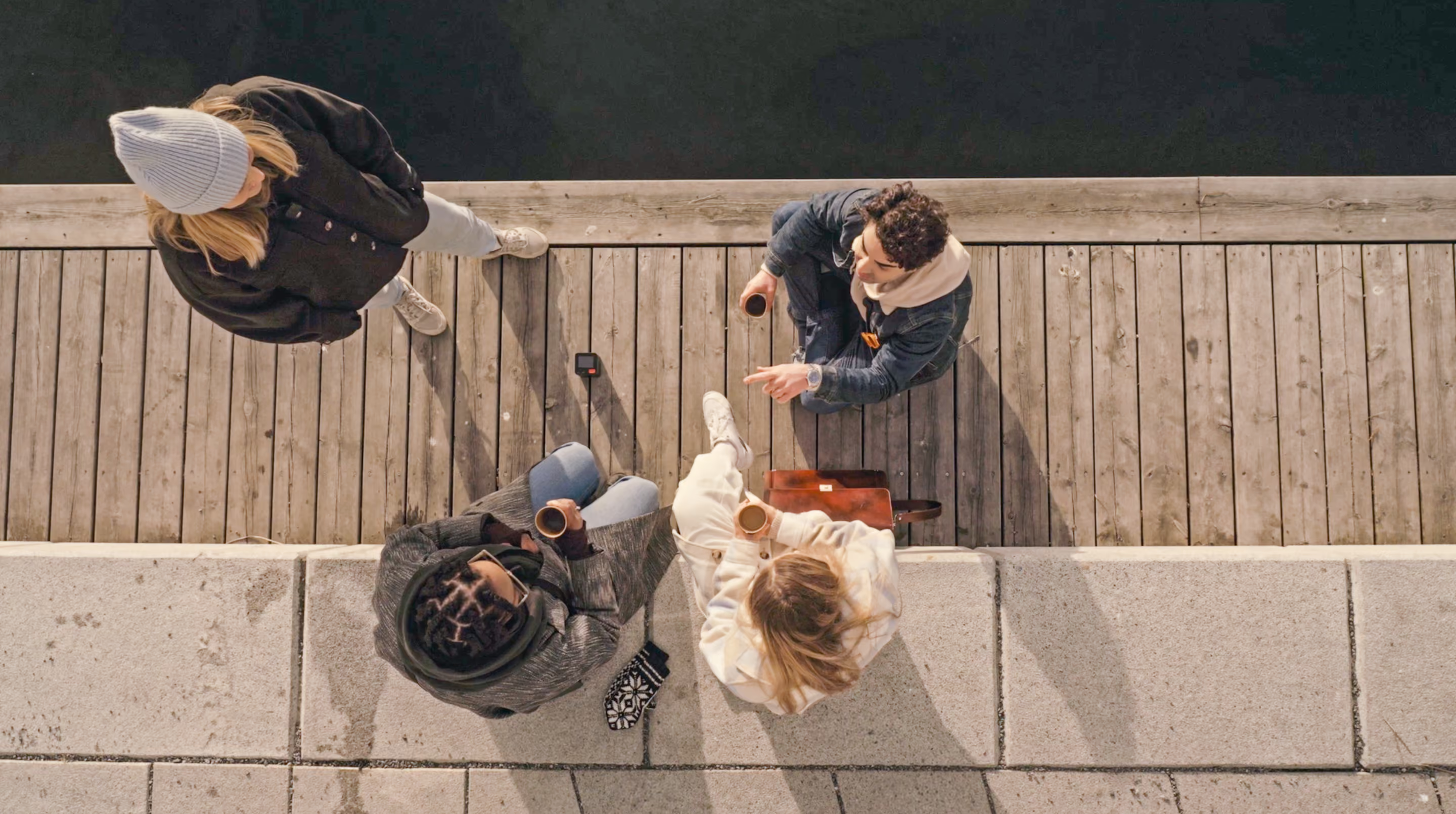
If your show is two people, the fair Nomono comparison is the Stellar Kit, not the Sound Capsule. It has two Stellar wireless mics with 15 hours of battery, clip, magnetic or cold shoe mounting, and records through the Studio app with automatic upload to Studio Cloud. It costs $348, and the price includes the first year of Studio Cloud Professional, with 360 minutes of AI enhancement a month, unlimited transcriptions and audio/video sync. Against the Wireless PRO, it gives up timecode and gains an editing and transcription workflow.
| Your show | Pick | Why |
|---|---|---|
| Host plus three guests at a table | Nomono Sound Capsule | Four mics, one recorder |
| Two-person interview, video-first | RØDE Wireless PRO | Timecode for video |
| Two-person interview, audio-first | Nomono Stellar Kit | Two mics plus Studio Cloud |
| Multi-camera documentary | RØDE Wireless PRO | Timecode fits existing workflow |
| Spatial or Dolby Atmos delivery | Nomono Sound Capsule | Ambisonic array |
| No editor on the team | Nomono Sound Capsule | Studio Cloud included |
| Lowest cost for two people | RØDE Wireless GO (Gen 3) | $169.99 street, two wireless mics |
Comparing camera-first kits more widely? See our Sound Capsule vs DJI Mic 2 comparison and the best audio setups for video podcasts.
Four guests, one kit
Sound Capsule records four wireless mics plus the room and uploads to Studio Cloud for editing, enhancement and transcripts.
Not with one kit. It has two transmitters and one receiver. Four people need two kits, which is $598 list or about $520 street, and four files lined up afterward, which timecode makes easier. The Sound Capsule records four mics from one recorder.
No, and for speech it does not need to. It records 16-bit/48 kHz voice tracks and a 24-bit/48 kHz spatial track. A 16-bit recording captures 96 dB of dynamic range, more than the 40 to 60 dB a spoken recording typically spans, and auto-levelling on every Stellar mic protects against clipping. 16-bit audio explained covers the details.
No. Audio is synced to video in Studio Cloud instead, where audio/video sync is free on every plan. Crews that already sync by timecode will find the Wireless PRO fits their workflow more directly.
$299 list from RØDE, and $260 at B&H and Sweetwater as of late September 2026. There is no subscription. The Sound Capsule is $1,188, including a year of Studio Cloud Premium.
Yes, for two-person shows, especially ones filmed on camera. It adds timecode and GainAssist, and stores more than 40 hours on each transmitter. Its limits for podcasting are the two-voice ceiling and no included editing or transcription.
You can stay on the Free plan or continue Studio Cloud from $29/month (Professional) or $99/month (Premium), billed monthly or yearly. Nomono sends a renewal email 30 days before. The hardware keeps working either way, and the warranty is one year, extended for as long as you stay on a paid plan.
Written by Ruben Åeng, Lead Audio Engineer at Nomono
Audio engineer and Product Manager for spatial audio products at Nomono, with 15 years of experience in film and television sound. Before joining in 2021 he worked as a production sound mixer, dialogue editor and sound designer, with credits including the Oscar-nominated short “Night Ride”.
Enjoy free express shipping to the listed locations within 2–5 business days.
 Austria
 Belgium
 Bulgaria
 Croatia
 Cyprus
 Czech Republic
 Denmark
 Estonia
 Finland
 France
 Germany
 Greece
 Hungary
 Ireland
 Italy
 Latvia
 Lithuania
 Luxembourg
 Malta
 Netherlands
 Norway
 Poland
 Portugal
 Romania
 Slovakia
 Slovenia
 Spain
 Sweden
 United Kingdom
 United States