Podcasting guides
October 19, 2026



To record clean audio outdoors, keep the mic close to each speaker's mouth, block the wind before it reaches the mic, put distance or a solid object between you and traffic, and leave headroom for sudden loud sounds. Wear a mic on each speaker's chest, turn their backs to the wind, record each voice on its own track, and capture 30 seconds of location sound.
Outdoor audio fails for four reasons, and only one of them is background noise. Wind hits the mic directly and produces low-frequency rumble that can overload it. Traffic and machinery raise the noise floor. Hard surfaces such as underpasses and glass storefronts add reflections that make a voice sound boxy. And distance does the rest: every doubling of the gap between mouth and mic drops the voice by about 6 dB while the ambient noise stays where it was.
Wind protection makes a bigger difference outdoors than almost anything else. Thin foam covers are designed for plosives indoors and do little against moving air. Furry windshields, sometimes called dead cats, are built for outdoor use. Fit whatever wind protection your mic system supports, and use people, walls and vehicles as windbreaks.
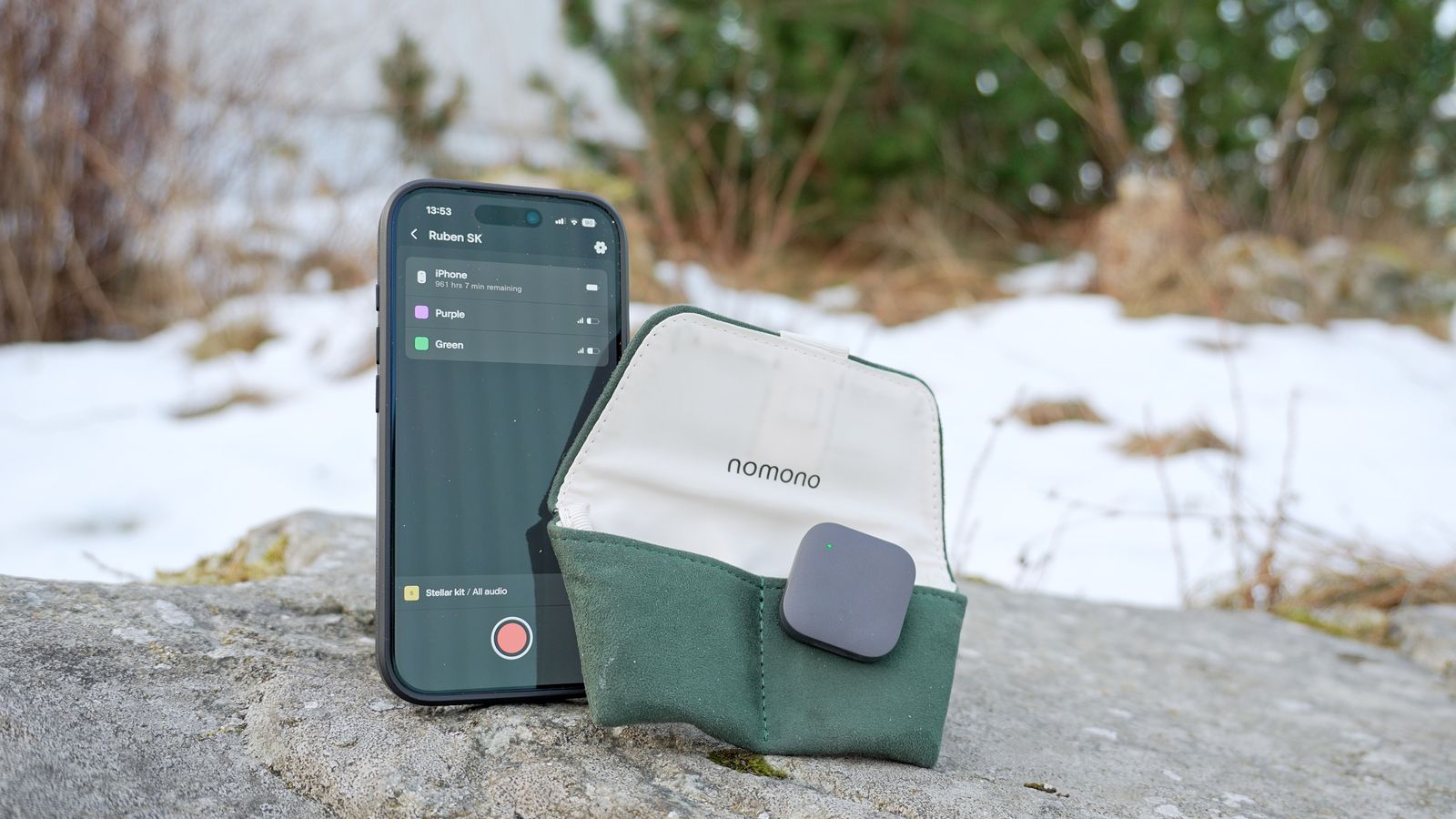
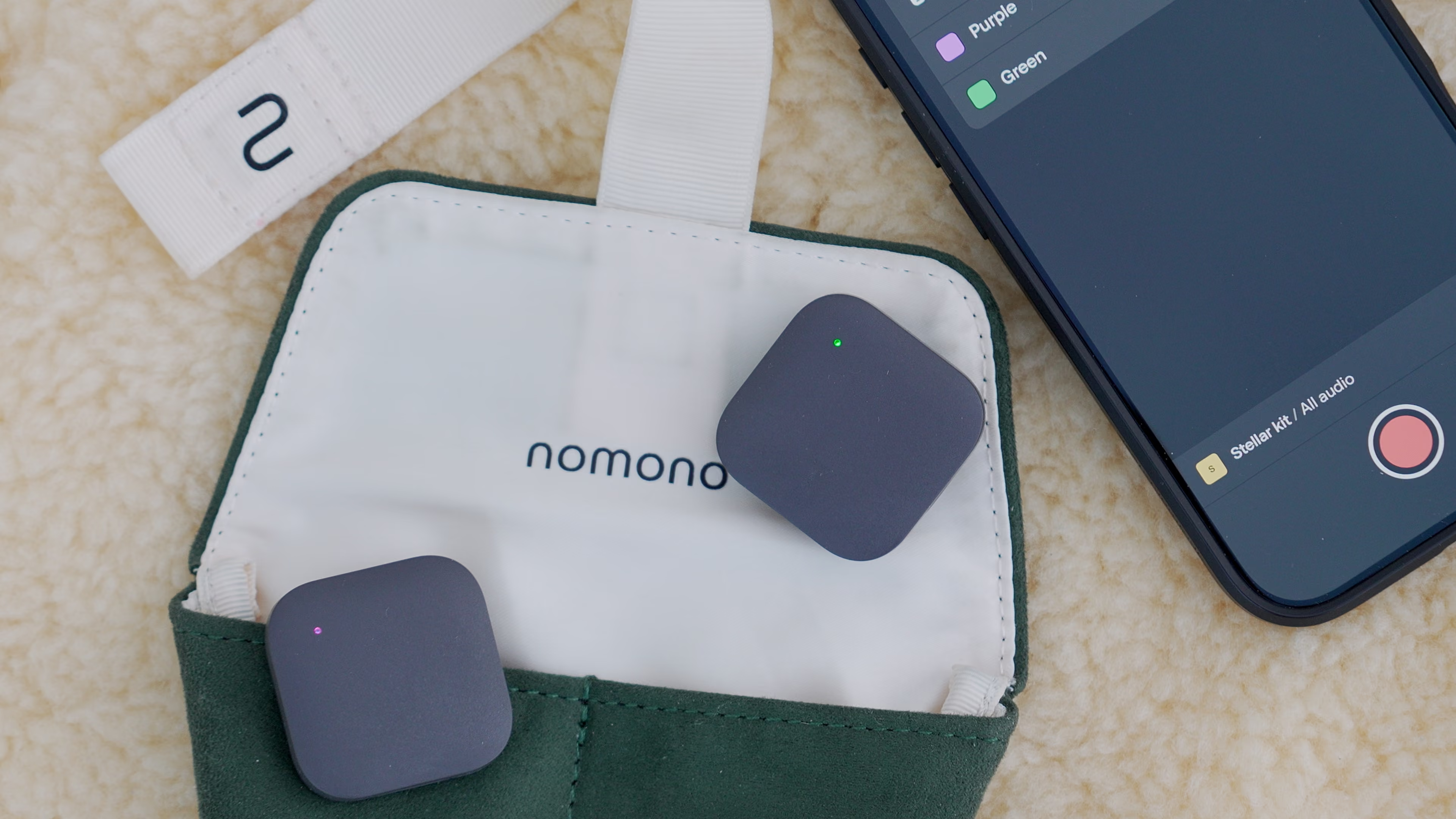
Outdoor speech favors wireless clip-on mics over handheld or desk mics, because a chest-worn mic stays a short, steady distance from the mouth as the speaker moves. Four things cover most field jobs: a mic per speaker, wind protection, a recorder that keeps each speaker on their own track, and closed-back headphones. Open-back headphones let the street leak in, so you cannot judge what the mics hear.
| Setup | Speakers | 32-bit float | Price |
|---|---|---|---|
| Nomono Stellar Kit | 2 | No | $348 |
| Nomono Sound Capsule | 4 | No (16-bit/48 kHz voice) | $1,188 |
| RØDE Wireless GO (Gen 3) | 2 | Yes | $199 list, $169.99 street |
Prices are from our fact sheet, checked September 2026 (street prices at B&H or Sweetwater). RØDE Wireless PRO ($299 list, $260 street) and DJI Mic 3 ($329 list with case, $259 at B&H) also record 32-bit float and add timecode; DJI Mic 3 has replaced the DJI Mic 2. For one host and a guest, the Stellar Kit has two wireless mics with 15 hours of battery. For groups, the Sound Capsule carries four wireless Stellar mics, the Space Recorder and a charging case at 2.9 lb, with up to 10 hours of recording plus 15 more from the case, and it records without a phone or laptop and is ready to record in under 10 seconds.
The wireless kits with 32-bit float have a genuine advantage outdoors: a sudden horn or a burst of laughter is very hard to clip. The Sound Capsule handles levels with auto-levelling on every mic instead. Neither approach does anything about wind on the mic, which is solved mechanically.
Stand at the spot for a minute with headphones on and the recorder running. Bus routes, air conditioning exhausts, school bells and leaf blowers often run on schedules you can work around.
A parked vehicle, a hedge or a building corner helps more with traffic than any plugin. Moving well back from the curb beats any gain adjustment.
Put on whatever wind protection your mics support before the conversation begins. It is easy to forget, and you will only notice in playback.
Clip the mic roughly a hand's width below the chin, away from zippers, drawstrings and necklaces. If there is a cable, secure it so it cannot swing or rub.
A body makes an effective windbreak, and a chest-worn mic sits in its shadow. Rearrange the group so nobody faces into a gust.
On a manual recorder, set gain for laughter and raised voices, not for the opening chat. On the Sound Capsule and Stellar Kit, auto-levelling runs on every mic, so nobody has to adjust levels during the take.
Record the location with nobody speaking. Outdoor backgrounds change constantly, and this clip fills the holes left by edits so the street does not drop out for half a second.
Play back the first minute before the real conversation starts. Wind on a mic, clothing rustle and a dead transmitter are obvious on playback and easy to miss while you are busy.
Each outdoor noise source has a field fix and a post fix, and the field fix is always the bigger of the two.
| Condition | What it does | Fix in the field | Fix in post |
|---|---|---|---|
| Wind | Low rumble; overload on gusts | Wind protection, back to the wind, find shelter | High-pass filter for rumble; overload is hard to fix |
| Traffic | Steady noise plus horns and brakes | Move back from the curb, put mass in between, pause for peaks | Noise reduction on the steady bed; edit single peaks |
| Crowds | Background speech that distracts | Mic each speaker closely, face away from the crowd | Duck or replace the background; words rarely separate |
| Clothing | Rustle and thumps on the voice track | One fabric layer, secure cables, avoid zippers | Manual edits, slow and imperfect |
| Hard surfaces | Boxy, hollow tone | Step away, face open space | Very little helps afterward |

Post-production handles steady background noise well and distortion badly. Traffic beds, air handling and distant machinery respond to noise reduction and to AI audio enhancement in Studio Cloud, which does noise removal and audio enhancement. The Stellar Kit price includes the first year of Studio Cloud Professional, and the Sound Capsule price includes the first year of Studio Cloud Premium. Reflections, overloaded gusts and clearly audible background conversation survive processing in some form, so treat them as problems to solve on location. Our guide on how to remove background noise from a recording covers the cleanup order step by step.
Separate tracks per speaker make cleanup practical. The Sound Capsule records each mic to its own voice track plus a spatial track of the location from the Space Recorder's 8-mic array, so an editor can treat one noisy guest without touching the others. A single stereo mix offers none of those options. If you are filming as well, Audio/Video Sync is free on every Studio Cloud plan.
For more on location work, read how to record a podcast outside the studio, the best portable podcast recording kits and, for groups, how to run a multi-guest panel recording.
Record outdoors without a mixer
The Sound Capsule records four wireless mics to separate tracks, with auto-levelling and up to 25 hours of battery with the case.
Use wind protection designed for outdoor use, keep each speaker's back to the wind and mount mics on the chest, close to the mouth. Shelter behind a wall or vehicle when gusts pick up. A high-pass filter cleans up leftover rumble, but it cannot repair a gust that overloaded the mic.
Wireless clip-on mics suit most outdoor speech, because they stay a short distance from the mouth as people move. The Stellar Kit covers two speakers and the Sound Capsule covers four. A shotgun mic on a boom is the alternative when speakers cannot wear mics, but it needs an operator following the speaker.
Yes, if every speaker has their own close mic with wind protection and each is recorded to a separate track. Outdoor recordings that sound amateur usually share one cause: a single mic too far from everyone. Auto-levelling and AI noise removal afterward help with the rest.
It solves clipping from sudden loud sounds, which is useful outdoors. RØDE Wireless GO (Gen 3), RØDE Wireless PRO and DJI Mic 3 offer it. The Sound Capsule records 16-bit/48 kHz voice tracks with auto-levelling instead. Neither approach stops wind hitting the mic.
Mic both people closely and turn them so the busiest part of the crowd is behind the mics rather than in front. Background speech is the hardest noise to remove, because noise reduction treats voices as signal. Record 30 seconds of crowd sound on its own for the editor.
It fills the silence created by every cut. Outdoor backgrounds shift constantly, so an edit without it leaves an audible hole. Record it at every spot, and again if you move or the traffic changes.
It fixes steady background noise well and distortion, reflections and background speech poorly. A traffic bed or distant machinery usually cleans up; an overloaded gust or an echoing underpass stays in some form. That is why the field checklist matters more than the plugin chain.
Written by Ruben Åeng, Lead Audio Engineer at Nomono
Audio engineer and Product Manager for spatial audio products at Nomono, with 15 years of experience in film and television sound. Before joining in 2021 he worked as a production sound mixer, dialogue editor and sound designer, with credits including the Oscar-nominated short “Night Ride”.
Enjoy free express shipping to the listed locations within 2–5 business days.
 Austria
 Belgium
 Bulgaria
 Croatia
 Cyprus
 Czech Republic
 Denmark
 Estonia
 Finland
 France
 Germany
 Greece
 Hungary
 Ireland
 Italy
 Latvia
 Lithuania
 Luxembourg
 Malta
 Netherlands
 Norway
 Poland
 Portugal
 Romania
 Slovakia
 Slovenia
 Spain
 Sweden
 United Kingdom
 United States