Comparisons
November 25, 2026


The best DJI Mic 2 alternative depends on headcount. For two, three or four people talking around a table, the Nomono Sound Capsule records up to four wireless mics in one kit, with no phone or laptop, and comes with 12 months of Nomono Studio Premium for noise removal and audio enhancement. For a host and one guest, the Nomono Stellar Kit is $348 with 12 months of Nomono Studio Professional included. For two-person multi-camera video work, the DJI Mic 3 (the Mic 2's replacement) and RØDE Wireless PRO add timecode. On a tight budget, the RØDE Wireless GO (Gen 3) is the value pick.
Three reasons come up again and again. The first is that the product has been superseded. DJI now sells the Mic 3, so anyone shopping today is really choosing between the Mic 3, a discounted Mic 2 and everything else. The Mic 2 itself remains a capable two-person kit: DJI lists 32-bit float internal recording, 8 GB of transmitter storage and 6 hours of transmitter operating time (tested without internal backup recording) on its Mic 2 page.
The second is guest count. A standard Mic 2 kit has two transmitters, so a host plus two or three guests means a second kit or a different kind of system. The third is workflow. Clip-on wireless kits hand you audio files and stop there. Noise removal, leveling, transcripts and video sync happen in other software, often on another subscription. Teams that record every week tend to notice that the mics were the cheap part.
We have covered the head-to-head in more depth in Nomono Sound Capsule vs DJI Mic 2 and DJI Mic 2 vs RØDE Wireless PRO. This page looks at the wider field.
Prices below are from manufacturer list prices and US retailers, checked September and October 2026. Street prices move, so check before you buy.
| Product | Price | People per kit | Clip protection | Timecode | Post-production included |
|---|---|---|---|---|---|
| DJI Mic 2 (baseline) | $199 at B&H | 2 | 32-bit float | Not listed | No |
| Nomono Sound Capsule | $1,188 | 2 to 4 | Auto-levelling on every mic, 40-min lossless buffer | No | 12 months of Nomono Studio Premium included |
| Nomono Stellar Kit | $348 | 2 | Auto-levelling on every mic, 40-min lossless buffer | No | 12 months of Nomono Studio Professional included |
| DJI Mic 3 | $329 list, $259 at B&H | 2 (up to 4 per receiver) | 32-bit float | Yes | No |
| RØDE Wireless PRO | $299 list, $260 street | 2 | 32-bit float | Yes | No |
| RØDE Wireless GO (Gen 3) | $199 list, $169.99 street | 2 | 32-bit float | No | No |
| Hollyland Lark Max 2 | $299 Ultimate Combo | 2 | 32-bit float | Yes | No |
| Sennheiser Profile Wireless | $329 at Sweetwater | 2 | 32-bit float (2025 firmware) | Not listed | No |
| DJI Mic Mini | $99 list, $79 at B&H (2 TX) | 2 | Not listed | Not listed | No |
The Nomono Sound Capsule answers the guest-count problem directly. The kit is a Space Recorder with an 8-mic ambisonic array, four Stellar wireless mics and a charging case, 2.9 lb in total. It records up to 10 hours on a charge, plus 15 more from the case, and stores up to 12 hours internally. Every mic is auto-leveled, so nobody rides gain during a conversation. Each Stellar Mic also keeps a 40-minute lossless audio buffer. It records without a phone or laptop, then uploads over Wi-Fi to Nomono Studio automatically for noise removal, audio enhancement, transcripts and one-click audio-video sync.
The Sound Capsule is $1,188, and the price includes 12 months of Nomono Studio Premium, a plan that costs $948 billed yearly on its own: 10 hours a month of AI enhancement, 600 GB of storage, two editors, unlimited reviewers and unlimited transcriptions. A paid plan also keeps the lifetime hardware warranty active. Full details are on the Nomono Studio plans page.

Both approaches protect a take from clipping. The DJI kits use 32-bit float. Nomono uses auto-levelling on every mic, and its 16-bit voice tracks give 96 dB of dynamic range, more than a voice uses from whisper to shout (why 16-bit is enough for voice). Where DJI and RØDE fit better is camera-first video: they offer timecode and a camera-mounted receiver, which the Sound Capsule does not, so a crew building a multi-camera workflow around one will find them a natural fit. For conversations with two, three or four people, the Sound Capsule gives every voice its own mic and track and handles the post-production for you.
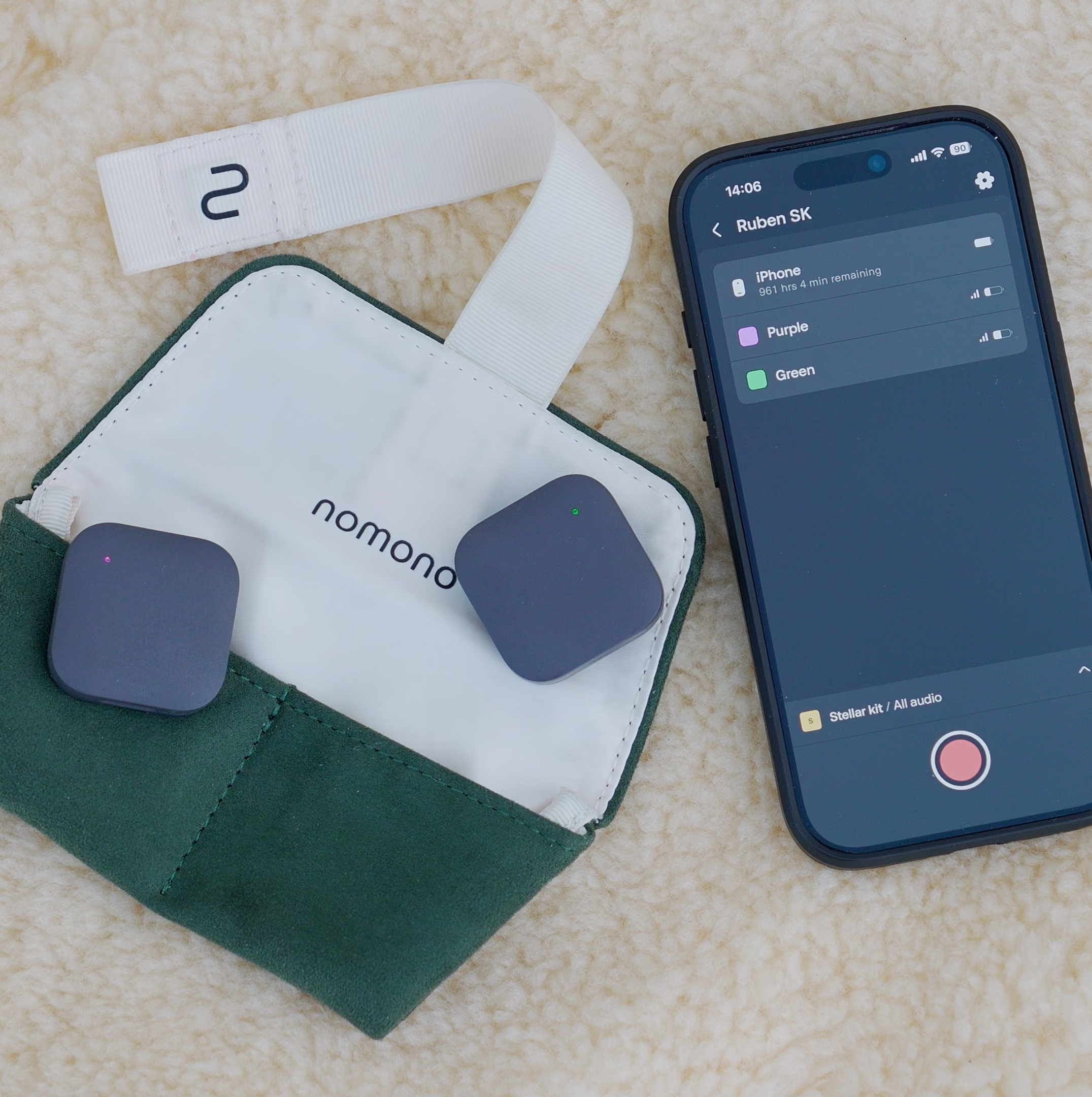
If you only ever record a host and one guest, the Stellar Kit is the closer match to a Mic 2. It has two Stellar mics, a charging dock, a travel sleeve and magnets, with 15 hours of battery and cold shoe, clip or magnetic mounting. It costs $348, and 12 months of Nomono Studio Professional are included, a plan that costs $348 billed yearly on its own, with 6 hours a month of AI enhancement, 400 GB of storage, unlimited transcriptions and one-click audio-video sync. Every mic is auto-levelled and keeps a 40-minute lossless buffer. That is $19 more than the DJI Mic 3's $329 list price, with the cleanup and transcription workflow included.
If you liked the Mic 2, start with its replacement. DJI lists the Mic 3 with switchable 32-bit float or 24-bit internal recording, up to 43 hours of single-file 32-bit float recording, 8 hours of transmitter operating time (measured with noise cancellation and internal recording off) and LTC timecode. The kit is $329 list with the charging case, and $259 at B&H.
The detail that matters for podcasters: DJI states that each Mic 3 receiver can connect to up to four transmitters, and extra transmitters were $84 each on the DJI Store in October 2026. DJI also notes that four-channel output needs extra accessories and only works with certain Sony cameras or via USB output to certain computer software. Check that your setup is supported before you plan a four-person show around it.
Video teams shooting multi-camera interviews should look at the RØDE Wireless PRO. It records 32-bit float on board, with 32 GB per transmitter for over 40 hours, and adds timecode and GainAssist automatic level control. It is $299 list and $260 at B&H and Sweetwater. The kit covers two people, and there is no post-production workflow beyond your own editor.
The RØDE Wireless GO (Gen 3) is the value pick for two-person interviews. It has two transmitters, 32-bit float recording and more than 40 hours of onboard recording, at $199 list and $169.99 at B&H and Sweetwater. It does not support timecode, so it suits audio-first interviews and single-camera shoots better than multi-camera work.
Two more two-person kits round out the field. The Hollyland Lark Max 2, which replaced the original Lark Max, offers 32-bit float and timecode, with the Ultimate Combo at $299. The Sennheiser Profile Wireless is $329 at Sweetwater. It records 24-bit internally, and a May 2025 firmware update added 32-bit float, so it now matches the DJI, RØDE and Hollyland kits on clip protection.
The DJI Mic Mini is $99 list for two transmitters, a receiver and a case ($79 at B&H), or $59 list for one transmitter and a receiver ($45 at B&H). DJI's US store showed it out of stock when we checked. It is a light, low-cost kit for casual video, but it is a step down from the Mic 2 rather than an upgrade.
If everyone sits at the same table in the same room, wireless may not be the right tool at all. The Zoom H6essential ($329.99) records 32-bit float across four XLR/TRS inputs, so four wired mics on one recorder cover a four-person show without gain setting. You will need to buy mics, stands and cables, and setup takes longer than clipping on lavaliers. Our guide to recording a podcast outside the studio covers when wireless is worth it.
| How you record | Best pick | Why | What you give up |
|---|---|---|---|
| 2 to 4 people, different location each week | Nomono Sound Capsule | Four wireless mics, auto-levelling, no phone or laptop, Wi-Fi upload to Nomono Studio | Timecode, camera receiver |
| Host plus one guest, no editor on staff | Nomono Stellar Kit | Two mics plus 12 months of Nomono Studio Professional, $19 over the Mic 3 list price | Timecode, camera receiver |
| Upgrading from a Mic 2 | DJI Mic 3 | Same family, timecode, up to 4 TX per receiver | Post-production workflow |
| Multi-camera video interviews | RØDE Wireless PRO | Timecode and 32-bit float | Third and fourth guests |
| Two people, tight budget | RØDE Wireless GO (Gen 3) | 32-bit float at $169.99 street | Timecode |
| Four people at one table, one room | Zoom H6essential | 4 XLR inputs, 32-bit float | Wireless freedom, setup time |
| Keeping your current kit, need cleanup and editing | Nomono Studio Free | Edits and enhances audio from any source, 2 hours a month of AI enhancement, 75 GB, audio-video sync | More enhancement hours need a paid plan |
To see how the setup choices play out for a full table, read our guide to the best 4-person podcast setups, and use our lavalier placement guide whichever kit you pick.
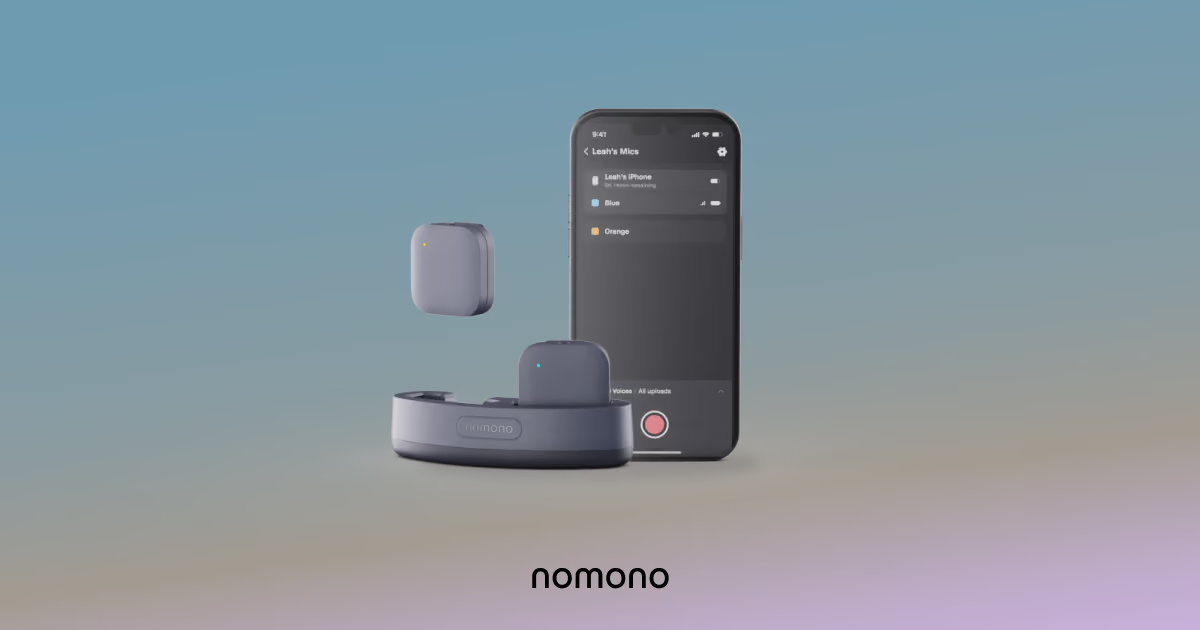
Recording two people? Start with the Stellar Kit
Two wireless Stellar mics plus 12 months of Nomono Studio Professional for noise removal, audio enhancement and transcripts. Recording three or four people? Look at the Sound Capsule.
DJI has replaced the Mic 2 with the DJI Mic 3, though the Mic 2 is still available from retailers, at $199 at B&H when we checked. If you are buying new, compare the Mic 3 at $259 at B&H, which adds timecode and supports up to four transmitters per receiver.
The Nomono Sound Capsule is built for two, three or four people, with four wireless mics, one recorder and 12 months of Nomono Studio Premium in a single kit. The DJI Mic 3 can also take up to four transmitters per receiver, but DJI says four-channel output requires extra accessories and only works with certain Sony cameras or via USB to certain software.
The DJI Mic 3, RØDE Wireless PRO, RØDE Wireless GO (Gen 3) and Hollyland Lark Max 2 all record 32-bit float. The Sennheiser Profile Wireless added 32-bit float in a May 2025 firmware update. Nomono protects against clipping with auto-levelling on every mic, and its 16-bit voice tracks give 96 dB of dynamic range, more than a voice uses from whisper to shout. Read why 16-bit is enough for voice.
The DJI Mic 3, RØDE Wireless PRO and Hollyland Lark Max 2 support timecode. The RØDE Wireless GO (Gen 3) does not. Nomono handles sync in Nomono Studio instead, with one-click audio-video sync on every plan, including Free.
Yes. Both Nomono kits come with 12 months of Nomono Studio, which handles noise removal, audio enhancement, transcription and audio-video sync. The other kits come with setup and file-transfer apps, so cleanup happens in your own editing software. If you keep a DJI kit, Nomono Studio Free edits and enhances audio from any source, with 2 hours a month of AI enhancement.
After 12 months your included plan continues monthly: Nomono Studio Professional at $39 a month, or $29 a month billed yearly, and Nomono Studio Premium at $99 a month, or $79 a month billed yearly. You get an email 30 days before, so you can switch to yearly billing, change plan or move to the Free plan. A paid plan keeps the lifetime hardware warranty active, and the hardware keeps working either way.
The DJI Mic Mini is the cheapest, at $79 at B&H for two transmitters when we checked. For 32-bit float at a low price, the RØDE Wireless GO (Gen 3) is $169.99 street.
Written by Ruben Åeng, Lead Audio Engineer at Nomono
Audio engineer and Product Manager for spatial audio products at Nomono, with 15 years of experience in film and television sound. Before joining in 2021 he worked as a production sound mixer, dialogue editor and sound designer, with credits including the Oscar-nominated short “Night Ride”.
Enjoy free express shipping to the listed locations within 2–5 business days.
 Austria
 Belgium
 Bulgaria
 Croatia
 Cyprus
 Czech Republic
 Denmark
 Estonia
 Finland
 France
 Germany
 Greece
 Hungary
 Ireland
 Italy
 Latvia
 Lithuania
 Luxembourg
 Malta
 Netherlands
 Norway
 Poland
 Portugal
 Romania
 Slovakia
 Slovenia
 Spain
 Sweden
 United Kingdom
 United States