Comparisons
November 27, 2026


Riverside is built for remote guests, and its in-person mode still relies on the mics and devices you bring. For in-person recording, the strongest alternatives are hardware: the Nomono Sound Capsule for two, three or four guests with 12 months of Nomono Studio Premium included, the Stellar Kit for one or two voices, a RØDECaster Pro II for a fixed studio, and Zoom recorders for the lowest cost.
Riverside records each participant locally and uploads the tracks separately, so you get isolated tracks rather than a compressed call recording. That is a real advantage for remote interviews. According to the Riverside pricing page, checked in October 2026, the free plan includes a one-off 2 hours of separate-track recording at 44.1 kHz. Pro is $29 a month or $24 a month billed annually ($288 a year), with a monthly allowance of separate-track recording, 48 kHz audio and in-person multi-cam recording. Grow is $39 a month or $34 billed annually, with a larger allowance.
Three limits show up when everyone is in one room. Separate-track hours are metered monthly, so long panel sessions use up a Pro allowance quickly. Audio tops out at 48 kHz. And the hardware is up to you: isolated tracks for four people in a room still mean four microphones, and the reflections off a bare meeting-room wall end up in the recording whichever plan you pay for. We compared the two approaches in Nomono Studio vs Riverside.
Prices from manufacturer list prices, US retailers and vendor pricing pages, checked September and October 2026.
| Option | What it is | Guests | Price | Clipping protection | Cleanup or editing |
|---|---|---|---|---|---|
| Riverside (reference) | Recording platform, no mics | Depends on your gear | $29/mo Pro, $24/mo yearly | Not listed | Yes, editor |
| Nomono Sound Capsule | Recorder + 4 wireless mics | 2 to 4 | $1,188 | Auto-leveling on every mic | Yes, 12 months of Nomono Studio Premium included |
| Nomono Stellar Kit | 2 wireless mics | 1 or 2 | $348 | Auto-leveling on every mic | Yes, 12 months of Nomono Studio Professional included |
| RØDECaster Pro II | Desktop console | 4 wired XLR | $699 list, $595 Sweetwater | Manual gain | No |
| Zoom PodTrak P4next | Portable 4-input recorder | 4 wired XLR | $179.99 list | Manual gain | No |
| Zoom H6essential | Handheld recorder | 4 wired XLR/TRS | $329.99 | 32-bit float | No |
| Tascam Portacapture X8 | Handheld recorder | 4 wired XLR/TRS | $399 at Sweetwater | 32-bit float | No |
| RØDE Wireless PRO | 2-person wireless kit | 2 | $299 list, $260 street | 32-bit float | No |
| DJI Mic 3 | 2-person wireless kit | 2 (up to 4 TX per receiver) | $329 list, $259 B&H | 32-bit float | No |
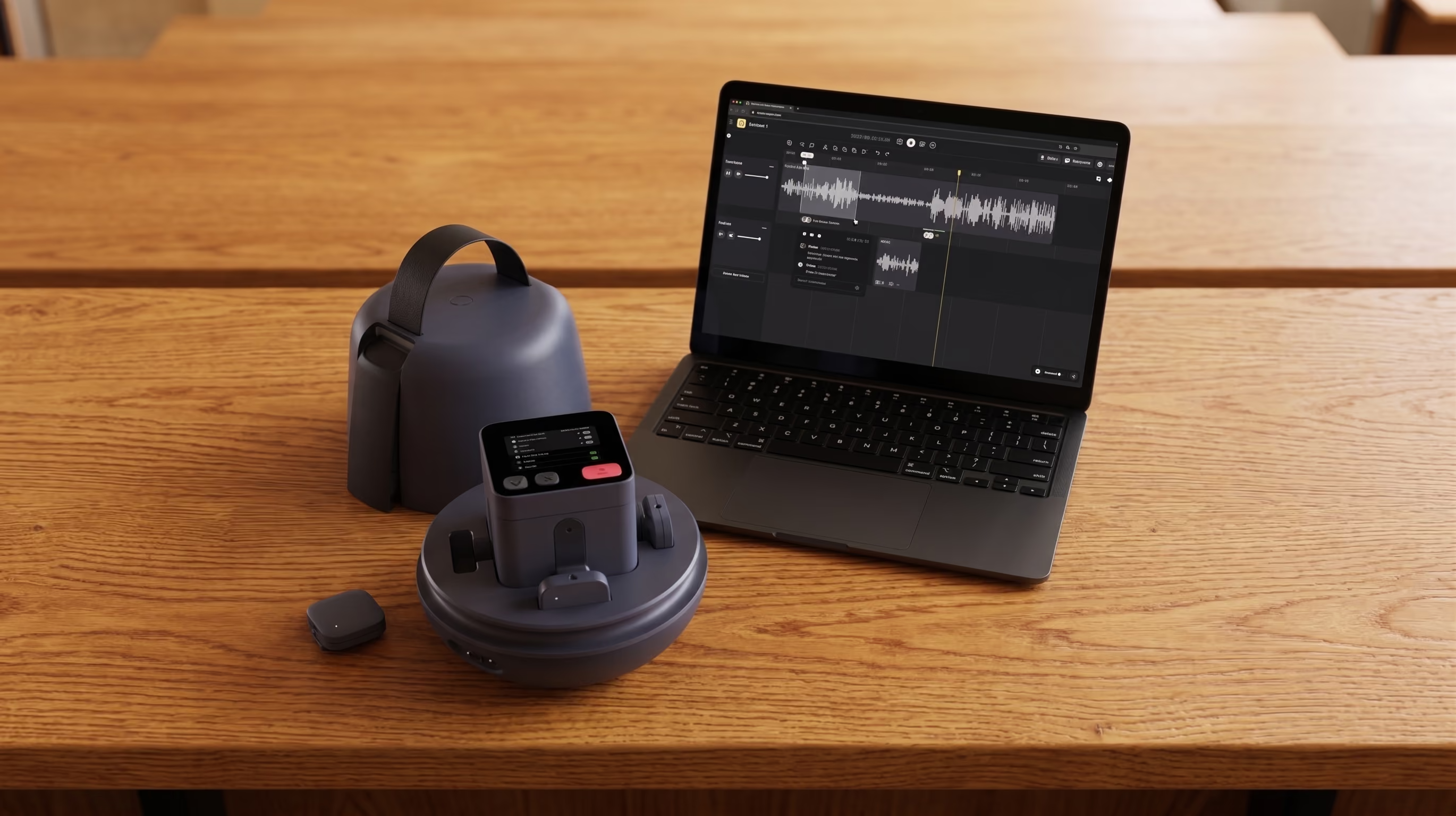
The Nomono Sound Capsule replaces the in-room half of a Riverside session for two, three or four people at a table. The kit is a Space Recorder with an 8-mic ambisonic array, four Stellar wireless mics and a charging case, 2.9 lb in total. It records up to 10 hours on a charge plus 15 more from the case, stores up to 12 hours internally and auto-levels every mic. Each Stellar Mic also keeps a 40-minute lossless buffer. It does not need a phone or laptop to record, it is ready to record in under 10 seconds, and it uploads over Wi-Fi to Nomono Studio automatically for AI noise removal and audio enhancement, transcripts and editing.
The Sound Capsule is $1,188, and the price includes 12 months of Nomono Studio Premium, a plan that costs $948 billed yearly on its own, with 10 hours of AI enhancement a month, 600 GB of storage, two editors, unlimited reviewers and unlimited transcriptions. The Nomono Studio plans page has the full breakdown.
Both approaches protect against clipping: the RØDE Wireless PRO and DJI Mic 3 with 32-bit float, the Sound Capsule with auto-leveling on every mic. Voice tracks are 16-bit/48 kHz, which gives 96 dB of dynamic range, more than a voice uses from a whisper to a shout. Our support article explains why 16-bit is enough for spoken audio. The Sound Capsule is built around its own wireless mics, so there is no XLR input or camera receiver. It records the people in the room; a guest who joins remotely still comes in through Riverside or a similar tool.
Nomono shows how an in-person Sound Capsule recording works.
For one-to-one interviews, compare the Stellar Kit against Riverside Pro. It has two Stellar mics, a charging dock, a travel sleeve and magnets, with 15 hours of battery. It costs $348, and 12 months of Nomono Studio Professional are included, a plan that costs $348 billed yearly on its own, with 6 hours of AI enhancement a month, 400 GB, unlimited transcriptions and audio-video sync. Each mic auto-levels and keeps a 40-minute lossless buffer. The trade is capacity: two people maximum, and no ambisonic recorder. If a third chair is likely within the year, size up rather than buy twice.
When the studio is permanent, a console is the better tool. The RØDECaster Pro II has four combo XLR inputs with 76 dB of gain, APHEX processing, eight SMART pads with bank switching, mix-minus, Bluetooth and two USB-C interfaces, and records 24-bit/48 kHz to microSD, USB or a computer. It is $699 list and $595 at Sweetwater, and a four-person kit with mics, headphones, arms and cables is $2,229.65 at B&H. Physical faders and live processing are hard to beat for a show recorded close to live. It has no battery and no cloud workflow. Our Sound Capsule vs RØDECaster Pro II comparison covers the trade-off.
The PodTrak P4next replaced the original PodTrak P4. At $179.99 list ($149.99 on sale at Sweetwater) it gives you four XLR inputs with 70 dB of gain, four headphone outputs, mix-minus and four sound pads, running on two AA batteries or USB. It records 24-bit/48 kHz to microSD with no 32-bit float. Mics, stands and cables are extra, and wiring up four guests takes longer than clipping on four lavaliers.
Both handheld recorders record 32-bit float across four XLR/TRS inputs, so you do not need to set gain before a take. The Zoom H6essential is $329.99, and the Tascam Portacapture X8 launched at $499 and was $399 at Sweetwater. As with the PodTrak, you supply the microphones.
For two-person interviews shot on camera, these clip-on kits make sense. The RØDE Wireless PRO ($299 list, $260 street) records 32-bit float with over 40 hours per transmitter and adds timecode and GainAssist. The DJI Mic 3 ($329 list, $259 at B&H) records 32-bit float with timecode, and DJI says one receiver can connect up to four transmitters, though four-channel output only works with certain Sony cameras or via USB to certain software. Neither includes cleanup or transcription.
Descript and Alitu come up alongside Riverside, but both are mainly about editing and production rather than in-room capture. Descript starts at $24 a month, or $16 a month billed annually, on Hobbyist. Alitu is a paid subscription. Neither supplies microphones. Nomono Studio Free edits and enhances audio from any source at no cost, with 2 hours of AI enhancement a month, 75 GB of storage and audio-video sync, so it covers occasional cleanup with no hardware needed. Our Nomono Studio vs Descript comparison goes further.
| Your situation | Pick | Why |
|---|---|---|
| 2 to 4 guests, new location each week | Nomono Sound Capsule | Up to four wireless mics, no phone or laptop, cleanup included |
| Host plus one guest, traveling light | Nomono Stellar Kit | Two mics plus 12 months of Nomono Studio Professional |
| Fixed studio, live-to-tape show | RØDECaster Pro II | Faders, pads, mix-minus |
| 4 guests, tight budget, mics owned | Zoom PodTrak P4next | Four inputs, four headphone outs |
| 4 guests, unpredictable levels | Zoom H6essential | 32-bit float on four inputs |
| 2-person interview with multicam | RØDE Wireless PRO | Timecode and 32-bit float |
Keeping Riverside is often the simplest route, because remote and in-room guests are different problems. A common setup: the people in the room record on Nomono hardware, the remote guest joins on Riverside, and the two sets of tracks meet in the edit. Nomono Studio handles one-click audio-video sync for the in-room material, and it is included on every plan, Free too. Budget for Riverside's subscription if you do this every week. On the Nomono side, after the 12 months Nomono Studio Premium is $99/month, or $79/month billed yearly, and Professional is $39/month, or $29/month billed yearly. A paid plan keeps the lifetime hardware warranty active, and you can also move to the Free plan; the hardware keeps working either way.

Our guide to how to record a podcast and our walkthrough of recording a 4-person podcast anywhere cover the room habits that decide how good either source sounds.
Record the room, not just the call
The Sound Capsule records up to four wireless Stellar mics with no phone or laptop and uploads to Nomono Studio for noise removal, audio enhancement and transcripts.
For two, three or four people at a table, the Nomono Sound Capsule supplies the mics, recorder and cloud cleanup that Riverside expects you to bring, for $1,188. On a tight budget with mics you already own, the Zoom PodTrak P4next at $179.99 list covers four wired inputs.
Yes. Riverside lists in-person multi-cam recording on its paid plans, starting with Pro at $29 a month or $24 billed annually. The free plan does not include it. You still need a microphone for each person, and room acoustics are up to you.
According to Riverside's pricing page in October 2026: Free (2 hours one-off), Pro at $29 a month or $24 billed annually, and Grow at $39 a month or $34 billed annually, each with a monthly allowance of separate-track recording. Business pricing is on request.
You need protection against clipping, and there are two ways to get it. The RØDE Wireless PRO, DJI Mic 3, Zoom H6essential and Tascam Portacapture X8 record 32-bit float. The Nomono Sound Capsule auto-levels every mic and records 16-bit voice tracks with 96 dB of dynamic range, more than a voice uses from a whisper to a shout.
Yes. Record the in-room guests on Nomono hardware, bring the remote guest in on Riverside, then line up the tracks in your editor. Nomono Studio handles noise removal, audio enhancement and transcripts for the in-room tracks.
Riverside does not list spatial or ambisonic recording on its pricing page. The Nomono Sound Capsule records a spatial track from its 8-mic ambisonic array and is Dolby Atmos-ready.
A Zoom PodTrak P4next at $179.99 list is the cheapest dedicated four-input podcast recorder here, but you need four microphones, stands and cables on top. Budget the full rig, not just the recorder.
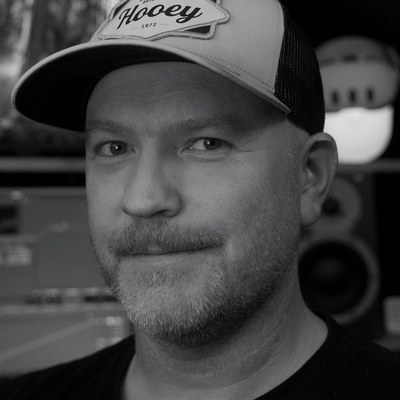
Written by Ruben Åeng, Lead Audio Engineer at Nomono
Audio engineer and Product Manager for spatial audio products at Nomono, with 15 years of experience in film and television sound. Before joining in 2021 he worked as a production sound mixer, dialogue editor and sound designer, with credits including the Oscar-nominated short “Night Ride”.
Enjoy free express shipping to the listed locations within 2–5 business days.
 Austria
 Belgium
 Bulgaria
 Croatia
 Cyprus
 Czech Republic
 Denmark
 Estonia
 Finland
 France
 Germany
 Greece
 Hungary
 Ireland
 Italy
 Latvia
 Lithuania
 Luxembourg
 Malta
 Netherlands
 Norway
 Poland
 Portugal
 Romania
 Slovakia
 Slovenia
 Spain
 Sweden
 United Kingdom
 United States