Comparisons
October 30, 2026


Riverside records remote guests through a browser, capturing each person's audio and video on their own device and uploading separate tracks. Nomono records people in the same room, on wireless mics, with a recorder that needs no laptop, then sends the tracks to Studio Cloud. Choose Riverside when guests are elsewhere and Nomono when they sit with you, anywhere.
Riverside records each participant on their own machine and uploads the files separately, which gives you a clean track per person instead of a compressed call recording. Paid plans record audio at 48 kHz and video up to 4K, and Pro lists in-person multi-cam recording. Higher tiers add 1080p livestreaming and webinars (Riverside pricing, checked Oct 2026). The product exists for the guest three time zones away with a laptop and a decent microphone.
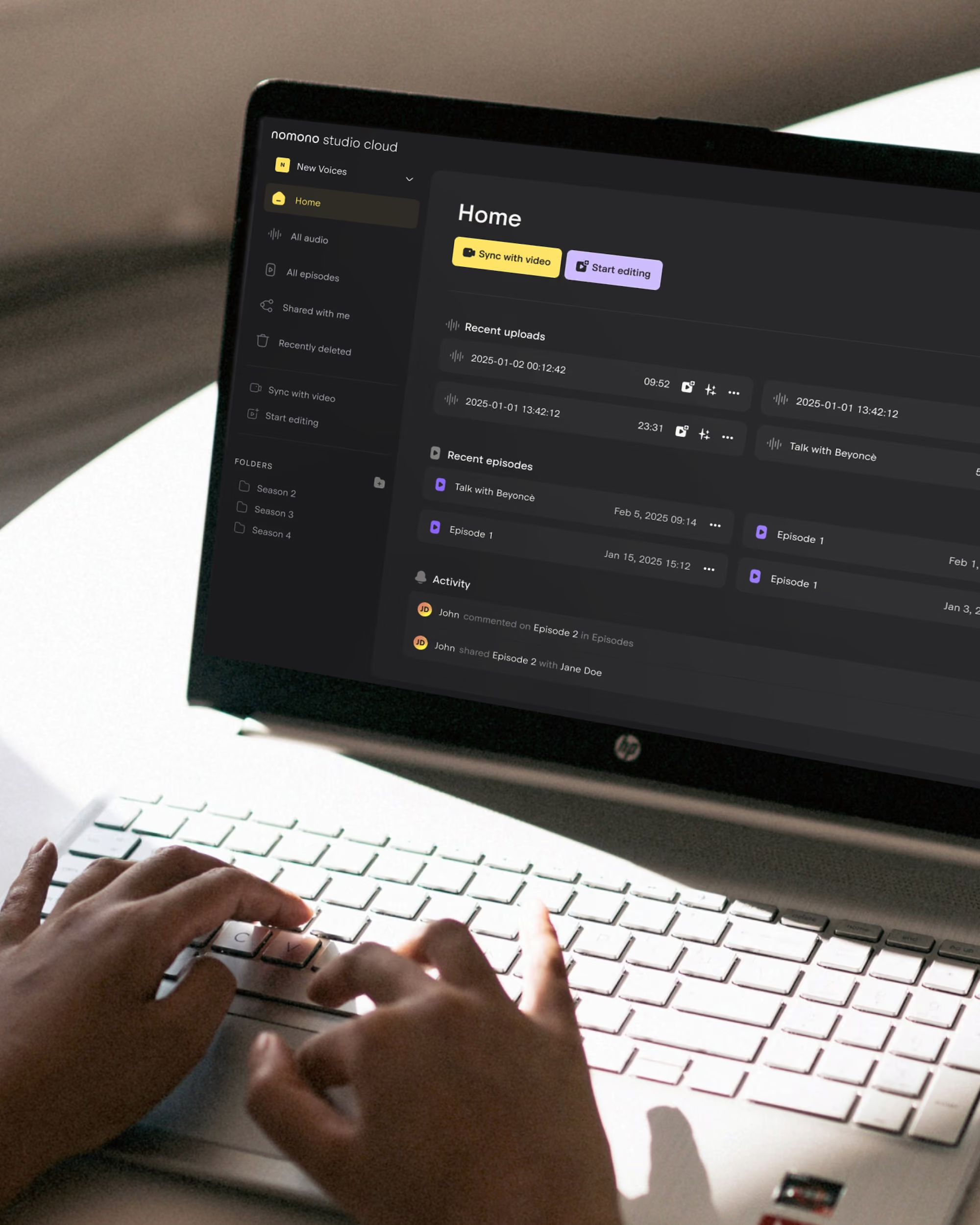
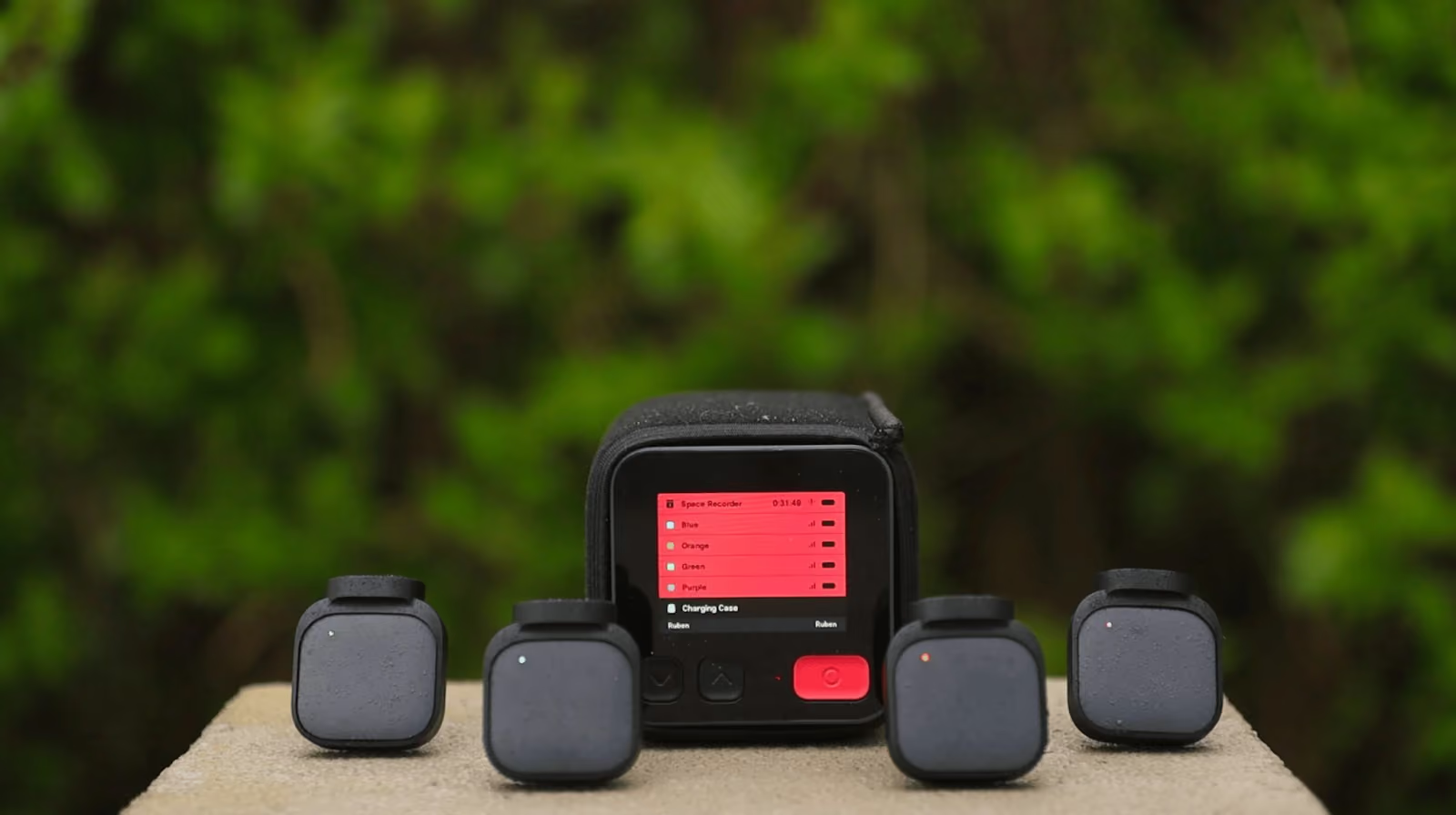
Nomono starts with hardware. The Sound Capsule combines a Space Recorder (8-mic ambisonic array), four Stellar wireless mics and a charging case. It records without a phone or laptop, stores up to 12 hours internally, runs up to 10 hours on battery or 25 with the case, and auto-levels every mic. Sessions upload to Studio Cloud automatically for cloud editing, noise removal and audio enhancement, transcription and audio/video sync. The two-mic Stellar Kit covers hosts with one guest.

| Capability | Nomono (Sound Capsule + Studio Cloud) | Riverside |
|---|---|---|
| Main scenario | Up to 4 people in one room | Remote guests on their own devices |
| Microphones included | 4 Stellar wireless mics + 8-mic array | None |
| Separate tracks | Yes, per mic, recorded on device | Yes, per participant, uploaded |
| Audio spec | Voice 16-bit/48 kHz, spatial 24-bit/48 kHz | 48 kHz on paid plans |
| Video | No camera; Audio/Video Sync for your footage | Up to 4K on paid plans |
| Spatial audio | Ambisonic capture, Dolby Atmos-ready | Not listed |
| Livestreaming | No | Yes, from Grow |
| Recording metered | No, records to device storage | Yes, separate-track hours |
| Entry paid price | $348, hardware included | $29/mo or $24/mo yearly |
Riverside meters two things: separate-track recording hours and separate-track download hours. On a busy show, both can run out before the month does. A weekly interview with 90-minute raw sessions uses most of Pro's 5 hours in a month, which pushes many shows to Grow.
| Plan | Monthly | Billed annually | Separate-track recording | Downloads |
|---|---|---|---|---|
| Free | $0 | $0 | 2 hours, one-off | Not listed |
| Pro | $29/mo | $24/mo | 5 hours/month | 15 hours |
| Grow | $39/mo | $34/mo | 15 hours/month | 20 hours |
| Webinar | $99/mo list | $79/mo | Unlimited | 25 hours |
| Business | Custom | Custom | Unlimited | Unlimited |
Pro and Grow prices are from our September price check; hours, Webinar and Business details were verified on riverside.com/pricing (Oct 2026). Nomono plans are not metered by recording time: the Sound Capsule records to its own storage, and Studio Cloud Premium includes 600 minutes a month of AI enhancement and 600 GB of storage. See Studio Cloud pricing for both plans.
Remote guests are the clearest gap. Riverside gets a contributor in Lisbon onto the same recording as a host in Chicago, with both sides captured locally. Nomono has no remote capture; it records people who are physically present. Video is the second gap: Riverside records up to 4K per participant, and Nomono ships no camera. Livestreaming in 1080p from the Grow plan and webinar hosting from the Webinar plan also sit on Riverside's side, with nothing facing them from Nomono. A show built on interviewing people you will never meet in person should buy Riverside.
Tutorial: Primal Video walks through recording and editing in Riverside.
Room capture is the clearest gap in the other direction. Four people around a table need four microphones and something to record them, which is exactly what a Sound Capsule is. Spatial audio is the second: the Space Recorder captures the room with an 8-mic ambisonic array, and the Sound Capsule is Dolby Atmos-ready. Levels are the third: every Stellar mic auto-levels, so a quiet guest does not need a sound check, and AI audio enhancement handles noise removal afterward. On Riverside, audio quality depends on whatever microphone each remote guest owns.
One honest limit: Nomono does not record 32-bit float. Voice tracks are 16-bit/48 kHz, so it relies on auto-levelling at capture rather than headroom for recovering clipped peaks.
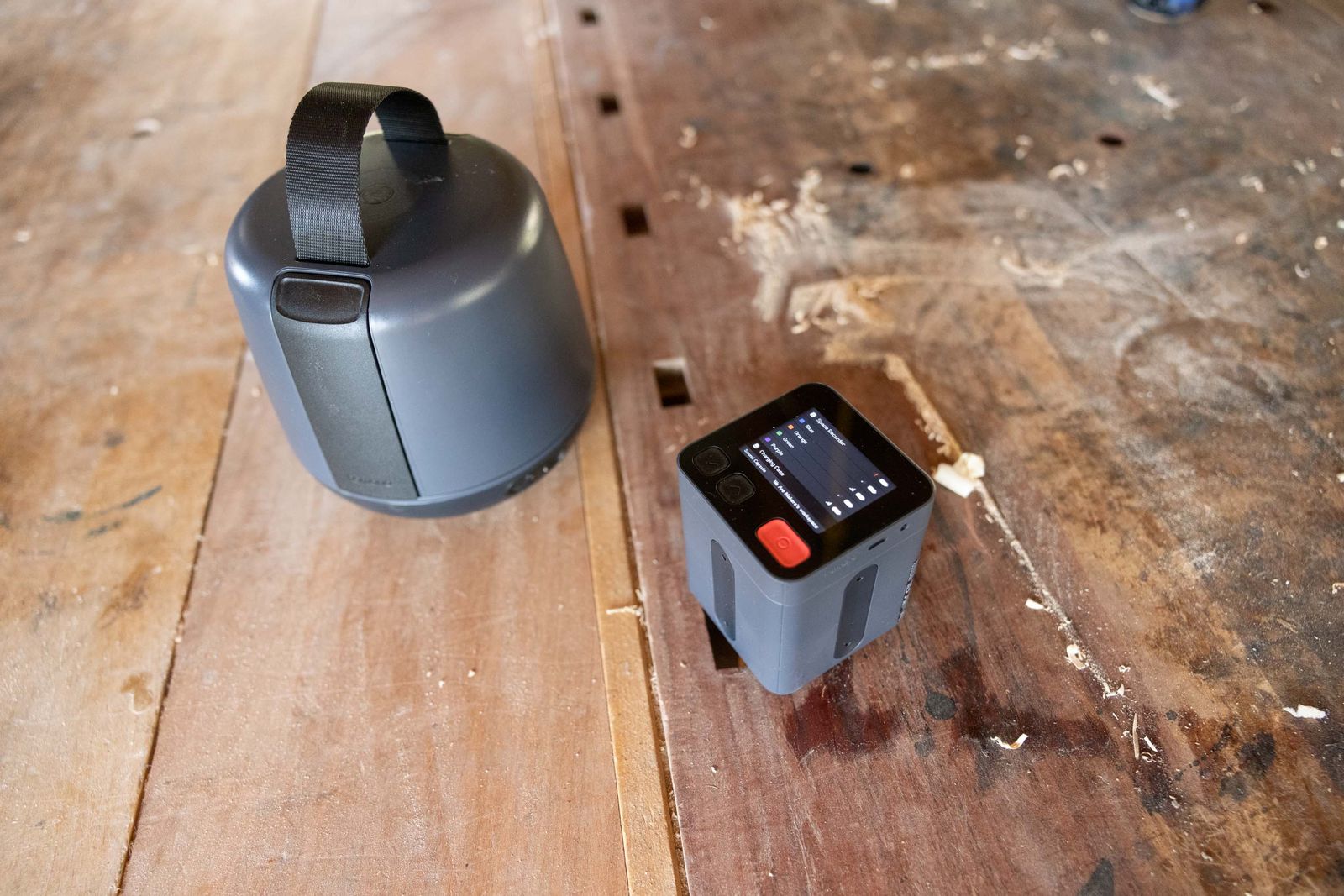
Riverside's Pro plan lists in-person multi-cam recording, and it is worth knowing what that covers. Riverside records the devices and microphones you point at it; it does not supply microphones or fix a room. Four people sharing one laptop mic in a conference room produce one distant, roomy track on any software. A Sound Capsule answers the same scenario with four wireless mics and a recorder in one case. Read how to record a podcast outside the studio before booking the room.
Plenty of shows need both, and the products do not conflict. A common pattern is an in-person flagship episode recorded on a Sound Capsule at a client site or conference, plus weekly remote interviews in Riverside. Editing then splits by session, or you export the Nomono tracks over USB and edit everything in one tool. Teams that shoot video on location should look at audio and video sync, free on every Studio Cloud plan. If you edit by transcript, our Nomono Studio Cloud vs Descript comparison covers that workflow.
| Your situation | Buy | Why |
|---|---|---|
| Weekly show with guests in other cities | Riverside | Local capture per participant, video included |
| Four-person panel on location | Sound Capsule + Premium | 4 wireless mics, room capture, no laptop |
| Host plus one in-room guest | Stellar Kit + Professional | 2 wireless mics, $348 |
| Show that livestreams while recording | Riverside Grow | 1080p livestreaming |
| Immersive or Dolby Atmos delivery | Sound Capsule + Premium | Ambisonic capture, Atmos-ready |
| Mix of in-person and remote episodes | Both | Each covers what the other cannot |
For the wider picture on capture, see our guide to how to record a podcast.
Recording in the same room?
The Sound Capsule records four wireless mics and the room, with no laptop, and sends it all to Studio Cloud.
Only for in-person recording. Riverside captures remote participants on their own devices, while Nomono records up to four people in one room on wireless mics. Shows that interview guests remotely still need Riverside or a similar tool.
Riverside's Pro plan lists in-person multi-cam recording. It records the devices and microphones you connect, and supplies neither, so four people still need four microphones. The Sound Capsule ships those mics and the recorder in one case.
Pro is $29/mo, or $24/mo billed annually, and Grow is $39/mo, or $34/mo billed annually. Webinar is $99/mo list, or $79/mo billed annually, and Business is custom priced. A free tier includes a one-off 2 hours of separate-track recording.
The two-mic Stellar Kit is $348 and includes the first year of Studio Cloud Professional. The Sound Capsule is $1,188 and includes the first year of Studio Cloud Premium. After the first year you can stay on the Free plan or continue Studio Cloud from $29/month (Professional) or $99/month (Premium); the hardware keeps working either way. Riverside is software-only.
Yes. Each participant is recorded locally and uploaded as a separate track. Separate-track recording is capped at 5 hours a month on Pro and 15 on Grow, and unlimited on Webinar and Business.
Riverside's pricing page lists no spatial or ambisonic recording. The Nomono Space Recorder captures the room with an 8-mic ambisonic array, and Studio Cloud Premium includes spatial export and ambisonics download.
No. Nomono records audio only, and Studio Cloud's Audio/Video Sync, free on every plan, lines up Nomono audio with footage from your own cameras. Riverside records up to 4K video per participant on paid plans.
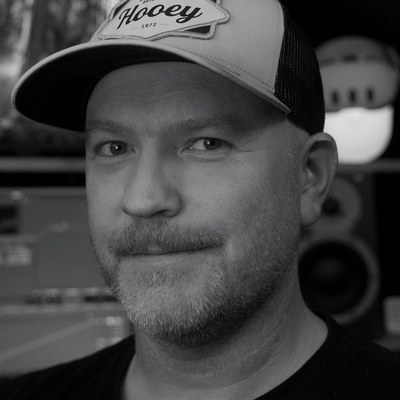
Written by Ruben Åeng, Lead Audio Engineer at Nomono
Audio engineer and Product Manager for spatial audio products at Nomono, with 15 years of experience in film and television sound. Before joining in 2021 he worked as a production sound mixer, dialogue editor and sound designer, with credits including the Oscar-nominated short “Night Ride”.
Enjoy free express shipping to the listed locations within 2–5 business days.
 Austria
 Belgium
 Bulgaria
 Croatia
 Cyprus
 Czech Republic
 Denmark
 Estonia
 Finland
 France
 Germany
 Greece
 Hungary
 Ireland
 Italy
 Latvia
 Lithuania
 Luxembourg
 Malta
 Netherlands
 Norway
 Poland
 Portugal
 Romania
 Slovakia
 Slovenia
 Spain
 Sweden
 United Kingdom
 United States