Comparisons
November 17, 2026



Buying beats renting once your booked studio hours cost more than the equipment. Divide the equipment price by the studio's hourly rate: at an example rate of $100 an hour, the Nomono Sound Capsule ($1,188) breaks even after 12 hours, and the Stellar Kit ($348) after 4. Renting still wins for occasional recordings.
Podcast studios bill by the hour, usually with a minimum booking, and the hourly rate is only part of the bill. Rates vary a lot by city, room size, whether video is rigged and whether an engineer is included, and many rooms don't list prices online. We don't quote a national average here. Instead, the tables below use example rates from $50 to $150 an hour so you can find the row closest to your local quotes.
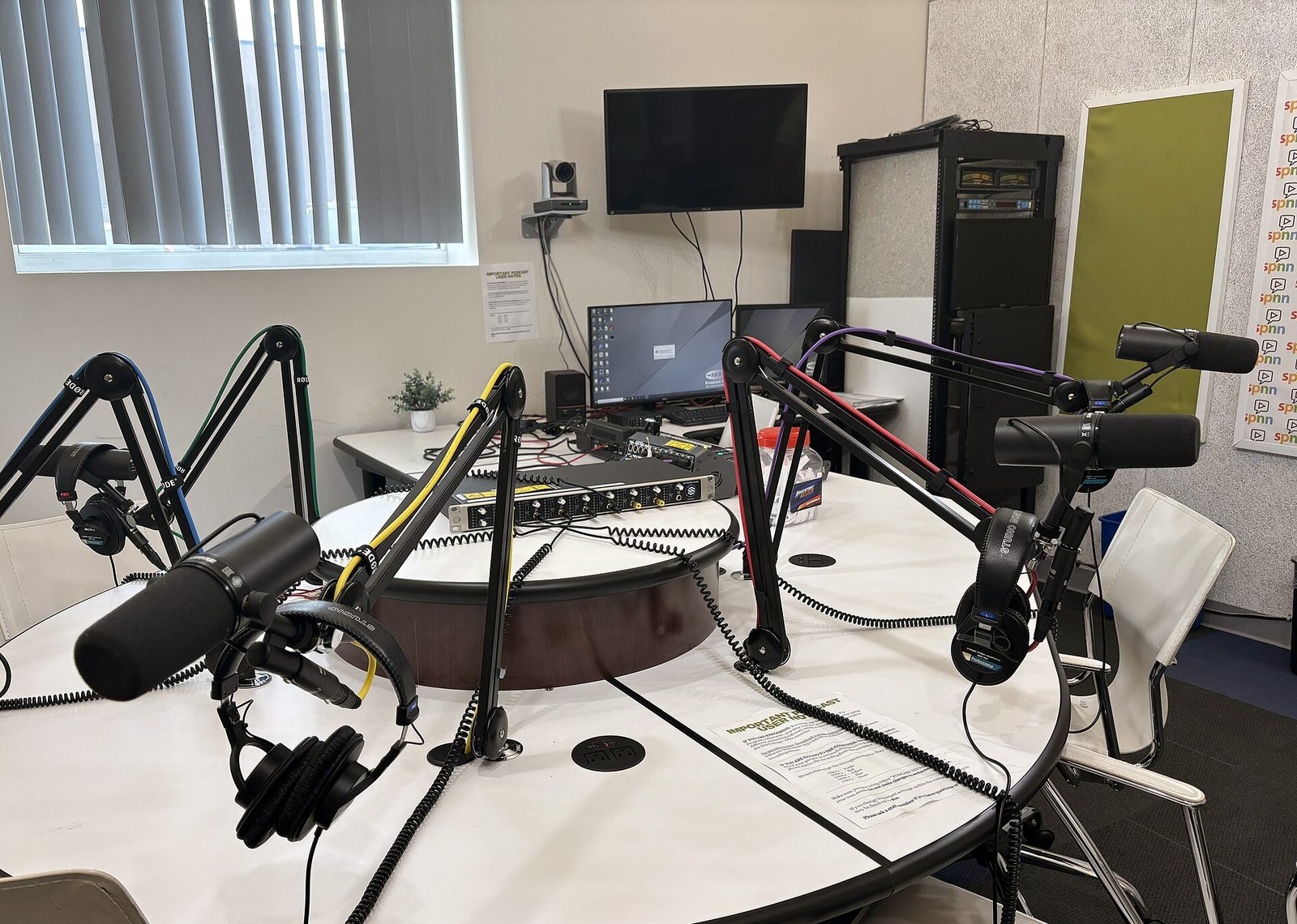
Minimum bookings matter more than the headline rate. A 35-minute episode that needs setup, a sound check, a restart and a wrap easily becomes a two-hour block. Run your own cadence against that: a weekly show booking two hours at $100 an hour is $200 an episode, or $9,600 for 48 episodes a year, before travel or editing.
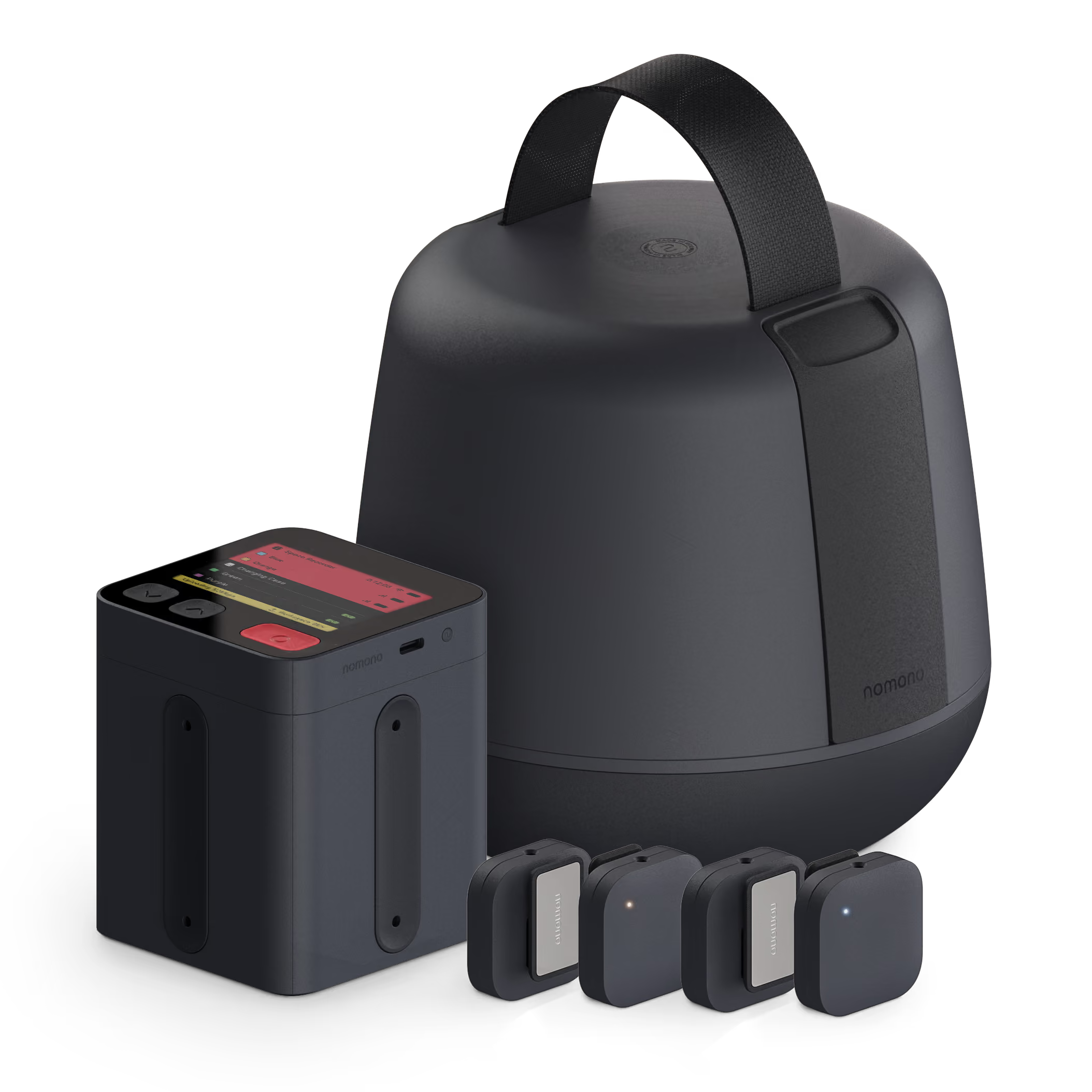
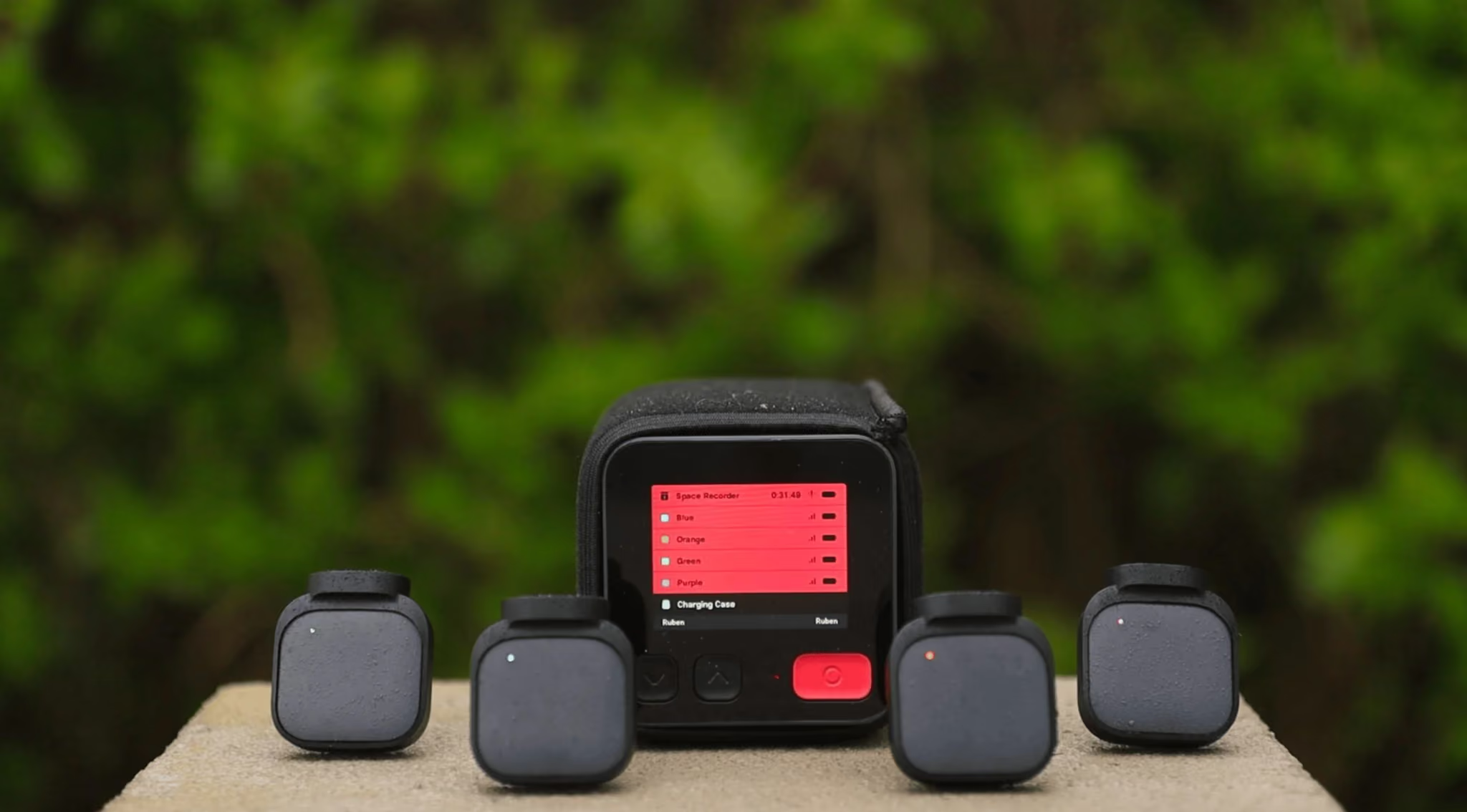
Nomono prices hardware and cloud together. The Sound Capsule is $1,188: a Space Recorder with an 8-mic ambisonic array, four wireless Stellar Mics and a charging case, with 12 months of Nomono Studio Premium included, a plan that costs $948 billed yearly on its own. It records two, three or four people with no phone or laptop, and uploads every session over Wi-Fi to Nomono Studio. The two-mic Stellar Kit is $348 with 12 months of Nomono Studio Professional included, a plan worth $348 billed yearly on its own.

Premium includes 600 minutes a month of AI audio enhancement, 600 GB of storage, two editors, unlimited reviewers, unlimited transcriptions and spatial capture and export; Professional includes 360 minutes, 400 GB, one editor and unlimited transcriptions. One-click audio-video sync is included on every plan. A rented room usually hands you raw files. After the first 12 months you can move to the Free plan or continue Nomono Studio Professional at $39/month, or $29/month billed yearly, or Premium at $99/month, or $79/month billed yearly. The hardware keeps working either way, and a paid plan keeps the lifetime hardware warranty active.
This table divides each Nomono price by the cost of a one-hour booking and rounds up, because studios don't sell fractions of an hour.
| Example studio rate | Sessions to match Stellar Kit ($348) | Sessions to match Sound Capsule ($1,188) |
|---|---|---|
| $50/hour | 7 | 24 |
| $75/hour | 5 | 16 |
| $100/hour | 4 | 12 |
| $125/hour | 3 | 10 |
| $150/hour | 3 | 8 |
Two hours is a more realistic unit for a multi-guest episode once you count setup and a retake. Doubling the booking roughly halves the number of episodes to break even.
| Example studio rate | Cost per episode (2 hours) | Episodes to match Sound Capsule ($1,188) |
|---|---|---|
| $50/hour | $100 | 12 |
| $75/hour | $150 | 8 |
| $100/hour | $200 | 6 |
| $125/hour | $250 | 5 |
| $150/hour | $300 | 4 |
Year one flatters renting, because the equipment cost lands all at once. Over three years the columns separate. This example assumes a $100 studio hour and a two-hour booking, so $200 per episode.
| Cadence | Episodes in 3 years | Rental at $200/episode | Nomono: Premium year one, then Free | Nomono: Premium all 3 years (billed yearly after year one) |
|---|---|---|---|---|
| Weekly (48 a year) | 144 | $28,800 | $1,188 | $3,084 |
| Twice a month (24 a year) | 72 | $14,400 | $1,188 | $3,084 |
| Monthly (12 a year) | 36 | $7,200 | $1,188 | $3,084 |
| Quarterly (4 a year) | 12 | $2,400 | $1,188 | $3,084 |
A weekly show spends about nine times the three-year Premium bill on room hire alone. Even a quarterly show pays $2,400 in rent over three years, double the Sound Capsule with Nomono Studio Free after year one. Only if you record that rarely and keep Premium for all three years ($3,084 billed yearly) does renting come out ahead.
Rental invoices are rarely the whole number. Ask about each of these before you compare:
Owning asks very little in return. You charge the kit before sessions (10 hours of recording per charge, up to 25 hours with the case) and pick a room that isn't all glass and hard walls. Storage looks after itself: sessions upload over Wi-Fi to Nomono Studio. Our guide to recording outside the studio covers room choice, the skill a rented booth used to provide.

A rented studio sells things hardware can't ship: an acoustically treated room, a person running the session, and often cameras and lighting already rigged. A treated room is a real advantage for music, large panels and any show where the sound of the space is part of the product. An engineer matters if the host would rather think about questions than levels.
For speech, the Sound Capsule protects every voice on its own. Each Stellar Mic levels itself automatically and keeps a 40-minute lossless buffer, so a loud laugh or a dropped connection doesn't cost you the take. Voice tracks are 16-bit, which gives 96 dB of dynamic range, more than a voice uses from whisper to shout (why Nomono records voice in 16-bit), and the spatial track is 24-bit/48 kHz. If you would rather build a wired setup, a Zoom PodTrak P4next is $179.99 list ($149.99 at Sweetwater on sale, Sep 2026) before mics, cables and stands, and our DIY portable podcast kit comparison prices complete four-person builds.
| Your situation | Recommendation | Why |
|---|---|---|
| A handful of recordings a year | Rent, then edit in Nomono Studio Free | You may not reach break-even; Free edits and enhances the studio's files, with 2 h of AI enhancement a month |
| Weekly or twice-monthly show, 2 to 4 people | Sound Capsule | Break-even inside the first season, 12 months of Nomono Studio Premium included |
| Solo host or two-person interview | Stellar Kit | $348 with 12 months of Nomono Studio Professional, 3 to 7 example sessions |
| On location, at events or guests' offices | Sound Capsule | 2.9 lb, no phone or laptop, up to 25 h with the case |
| Music, live panels or a full video set | Rent | Acoustics, lighting and an operator |
| Studio flagship plus field interviews | Both | Own the portable kit, book the room when needed |
You need three inputs: the studio's hourly rate, the minimum booking in hours, and the equipment price. Multiply rate by booking to get cost per episode, divide the equipment price by that, and round up. Worked example at $90 an hour with a two-hour minimum: $180 per episode, and $1,188 divided by $180 is 6.6, so 7 episodes. A show recording every two weeks clears that in about three months. Add operator fees and travel and the number drops further.
For the wider equipment budget, see our podcast equipment cost guide and what a 4-person podcast studio costs.
Own the kit, skip the booking
The Sound Capsule records two to four people anywhere, with 12 months of Nomono Studio Premium included.
Buying is cheaper once your booked hours cost more than the equipment. At example rates of $50 to $150 an hour, the Sound Capsule ($1,188) breaks even after 8 to 24 one-hour bookings and the Stellar Kit ($348) after 3 to 7. For a few recordings a year, renting stays cheaper.
It depends heavily on your city, the room, video and whether an engineer is included, and many studios don't list prices online. Ask local studios for the hourly rate, minimum booking, engineer fee and overtime rate, then use the formula above.
Divide $1,188 by your cost per session. At $100 for a one-hour booking that is 12 sessions; with a two-hour minimum at $100 an hour, it is 6 episodes.
You can move to the Free plan or continue a paid Nomono Studio plan: Premium is $99/month, or $79/month billed yearly, and Professional is $39/month, or $29/month billed yearly. The hardware keeps working without a subscription, and Nomono emails you 30 days before renewal.
Yes. The hardware is yours and works without a subscription. The warranty is one year, extended for life while you stay on a paid plan.
A treated room gives acoustics no microphone fully replaces, which matters for music and large panels. For speech, clip-on Stellar Mics sit close to each speaker, so the room contributes less. Room choice still matters, so avoid bare, echoey spaces.
Rarely. Editing, mixing and transcription are usually a separate service. Nomono Studio Premium, 12 months included with the Sound Capsule, covers editing, AI enhancement, unlimited transcriptions and audio-video sync. Even Nomono Studio Free edits and enhances recordings from any source.
Written by Ruben Åeng, Lead Audio Engineer at Nomono
Audio engineer and Product Manager for spatial audio products at Nomono, with 15 years of experience in film and television sound. Before joining in 2021 he worked as a production sound mixer, dialogue editor and sound designer, with credits including the Oscar-nominated short “Night Ride”.
Enjoy free express shipping to the listed locations within 2–5 business days.
 Austria
 Belgium
 Bulgaria
 Croatia
 Cyprus
 Czech Republic
 Denmark
 Estonia
 Finland
 France
 Germany
 Greece
 Hungary
 Ireland
 Italy
 Latvia
 Lithuania
 Luxembourg
 Malta
 Netherlands
 Norway
 Poland
 Portugal
 Romania
 Slovakia
 Slovenia
 Spain
 Sweden
 United Kingdom
 United States