Podcasting guides
October 13, 2026


Equipment for a fixed 4-person podcast studio costs about $550 for a budget Zoom PodTrak P4next build and $1,700 to $2,230 for a RØDECaster Pro II desk, before the room, acoustic treatment and editing software. A portable 4-person kit costs about $340 to $520 for two wireless mic sets, or $1,188 for the Nomono Sound Capsule.
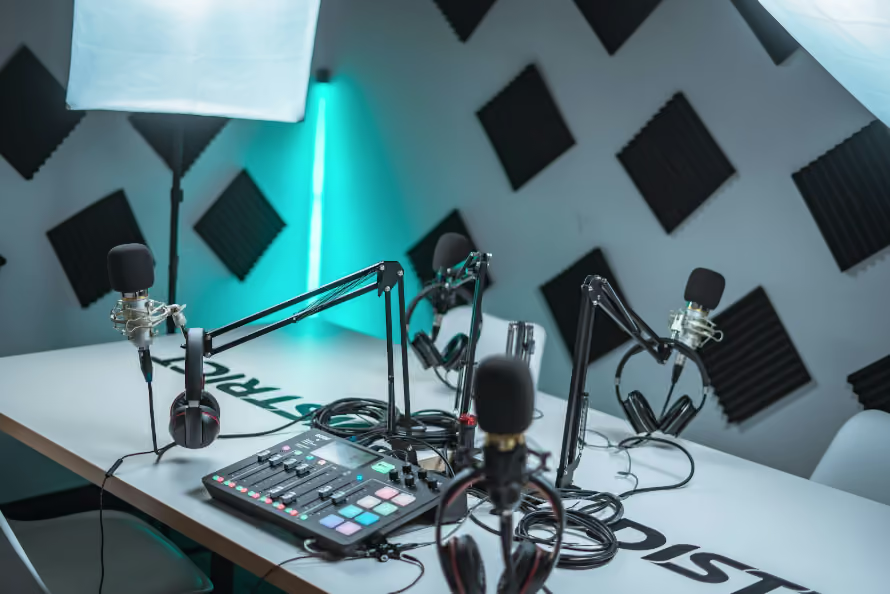
Building a studio means fixing the recording position in one room: a console or recorder on a desk, four mics on arms, headphones, cables, treatment on hard surfaces, and a room you pay for whether or not you record that week. Buying a portable kit means the recording position travels with you: wireless or clip-on mics, a recorder, a case, and a workflow that copes with rooms you did not choose.
Cost comparisons go wrong in two places. The room gets left out of the build column, and editing gets left out of both. The tables below include editing for every option and flag the room separately.
All prices are US list or street prices checked in late September 2026 at Sweetwater, B&H or the maker. They move, so check before you buy.
| Line item | Budget desk | DIY RØDE desk | Ready RØDE kit |
|---|---|---|---|
| Console or recorder | Zoom PodTrak P4next, $149.99 sale | RØDECaster Pro II, $595 | RØDECaster Pro II 4-person kit |
| Four mics | 4 Zoom ZDM-1 packs, $399.96 | 4 RØDE PodMic, $344 | Included (4 PodMic) |
| Mic stands or arms | Included in ZDM-1 | 4 RØDE PSA1+, $516 | Included (4 PSA1+) |
| Headphones | Included in ZDM-1 | 4 ATH-M20x, $236 | Included (4 NTH-100) |
| Cables | Included in ZDM-1 | Extra | Included |
| Hardware subtotal | $549.95 | $1,691 + cables | $2,229.65 at B&H |
| Editing, year one | Descript Creator, $288 | Descript Creator, $288 | Descript Creator, $288 |
| Room and treatment | Your local quote | Your local quote | Your local quote |
| Year one, before room | About $838 | About $1,979 | About $2,518 |
Space is the biggest variable in a fixed studio and the only one with no national price. A spare office in a building you already lease costs nothing extra. A dedicated rented and treated room can cost more each year than all the hardware above. Price your own room, with treatment and furniture, and add it to the year one figure.
Physical faders, sound pads and live processing are the reason to buy a console. The RØDECaster Pro II has four combo XLR inputs with 76 dB of gain, APHEX processing, 64 SMART pads, mix-minus and Bluetooth for phone guests, so a host can bring a caller into the room and adjust levels live. It has no battery and needs an outlet or a 30 W+ USB-C power bank. Live and call-in formats need that hardware. Shows that are edited afterwards mostly do not, which is why the budget PodTrak P4next build holds up so well.
| Line item | 2 x RØDE Wireless GO (Gen 3) | 2 x RØDE Wireless PRO | Nomono Sound Capsule |
|---|---|---|---|
| Four mics | $339.98 street | $520 street | 4 Stellar mics, included |
| Recorder | Onboard recording in each transmitter | 32-bit float recording in each transmitter | Space Recorder, included |
| Case and charging | 2 kit cases | 2 kit cases | 1 charging case, included |
| Editing, year one | Descript Creator, $288 | Descript Creator, $288 | First year of Studio Cloud included |
| Year one total | About $628 | About $808 | $1,188 |
| 32-bit float | Yes | Yes | No |
| Timecode | No | Yes | No |
| Spatial capture | No | No | Yes |
The wireless mic sets are the cheapest way to put four people on wireless mics, and both record 32-bit float. The catch is that each kit covers two people, so you manage four transmitters across two kits and line up their files in the edit. Wireless PRO's timecode makes that easier.
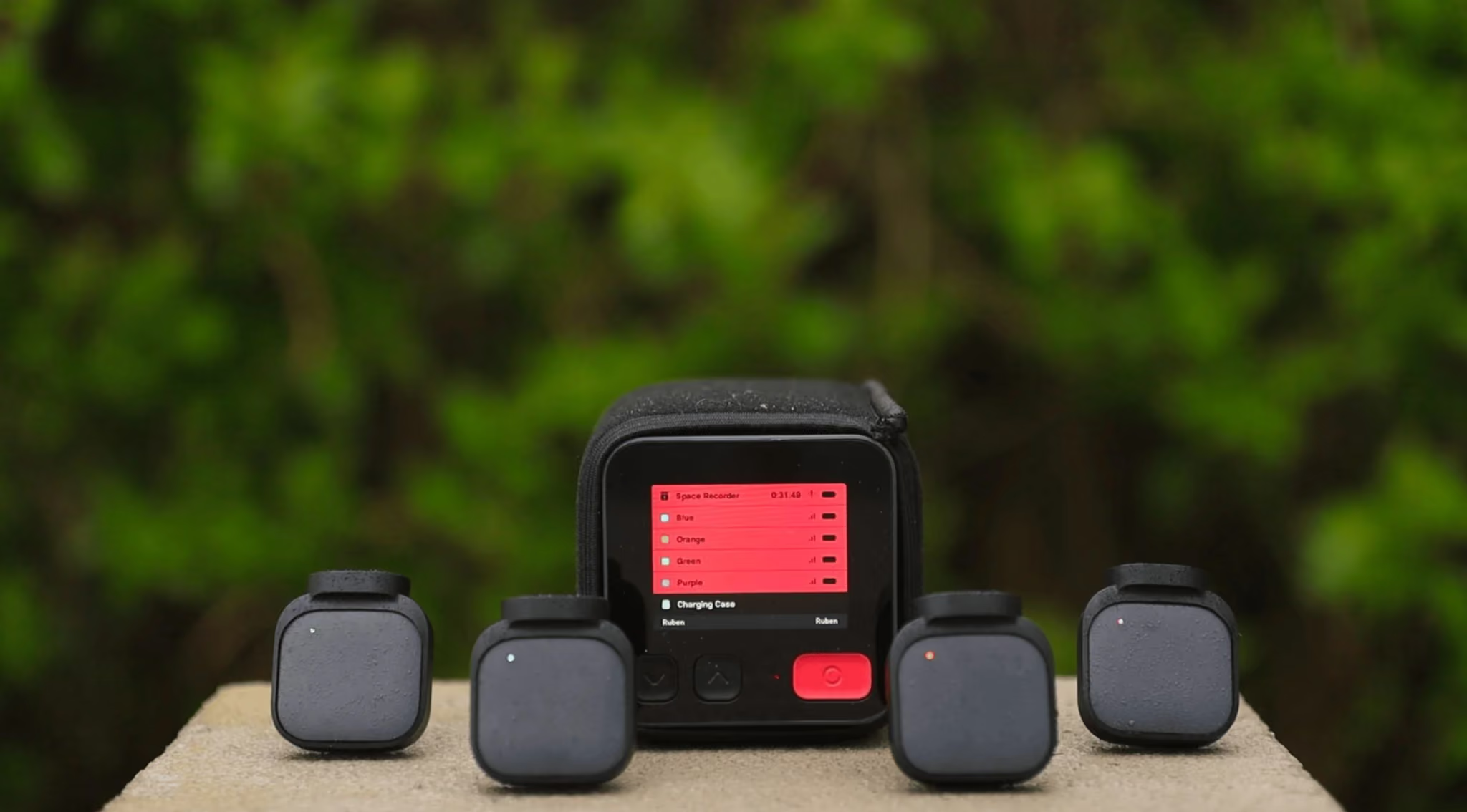
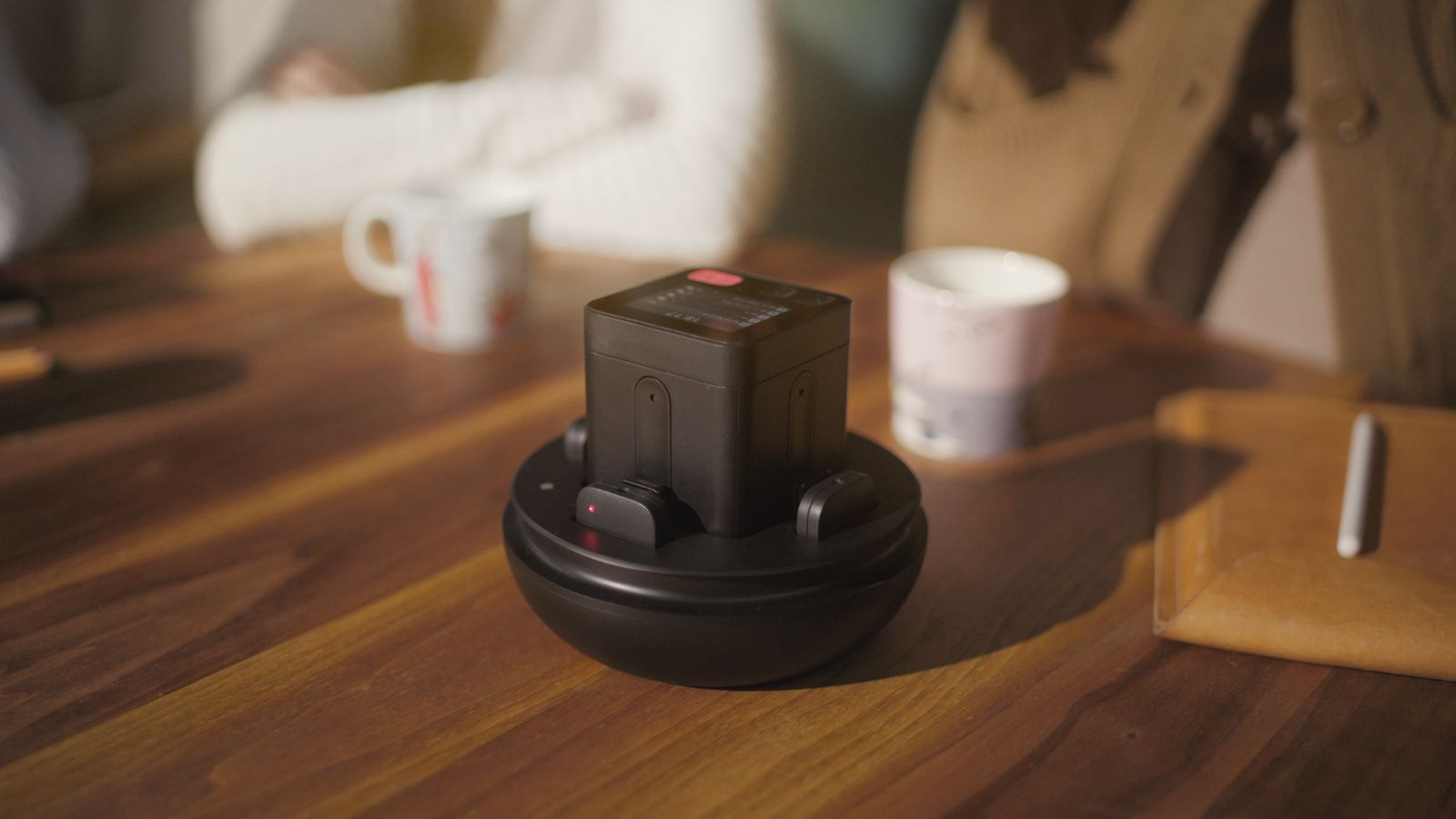
The Sound Capsule puts all four mics and the recorder in one 2.9 lb (1.3 kg) case. It records each voice at 16-bit/48 kHz with automatic levelling on every mic, adds a 24-bit/48 kHz spatial track from its 8-mic ambisonic array, and uploads to Studio Cloud automatically. The trade-off is no 32-bit float. Our best portable podcast recording kits guide compares more options.
Ongoing cost separates these options more than the purchase price. A hardware build stops spending on equipment after year one but keeps paying for editing. The Sound Capsule price includes the first year of Studio Cloud Premium. After the first year you can stay on the Free plan or continue Studio Cloud from $29/month (Professional) or $99/month (Premium); the hardware keeps working either way. The figures below exclude the room, which flatters the build columns.
| Option | Year one | Years 2 and 3, each | 3-year total |
|---|---|---|---|
| Budget desk (P4next) + Descript | $838 | $288 | $1,414 |
| DIY RØDE desk + Descript | $1,979 | $288 | $2,555 |
| Ready RØDE kit + Descript | $2,518 | $288 | $3,094 |
| 2 x Wireless GO (Gen 3) + Descript | $628 | $288 | $1,204 |
| 2 x Wireless PRO + Descript | $808 | $288 | $1,384 |
| Sound Capsule, Premium kept | $1,188 | $1,188 | $3,564 |
| Sound Capsule, Free plan after year one | $1,188 | $0 | $1,188 |
On equipment and software alone, the budget builds win over three years. Add a rented, treated room and a fixed studio usually becomes the most expensive option, because rent recurs and a case does not. Teams that already own a quiet room and record there every week get the lowest three-year number by building. For the full Nomono plan breakdown, see how much the Nomono Sound Capsule costs or the Studio pricing page.
Setup time repeats every session. A desk build is set up once and left standing, so after the first session it costs almost nothing to start recording. A portable rig is rebuilt in each new room: clip on mics, check levels, find power, listen to the room. The Sound Capsule is ready to record in under 10 seconds and removes two of those steps with automatic levelling on every mic and up to 25 hours of recording with the case, so you rarely need an outlet.

Lost takes are the other hidden cost. A wired desk with set levels rarely surprises you; location recording does. That is why 32-bit float is popular on location, and why the Sound Capsule relies on automatic levelling and AI noise removal and audio enhancement instead. Our guide to recording a podcast outside the studio covers the room problems that gear alone does not fix.
| Your situation | Buy this | Year one |
|---|---|---|
| Four regular hosts, one quiet room you control | Budget desk: P4next + 4 ZDM-1 | About $838 with editing |
| Live call-in show with phone guests and pads | RØDECaster Pro II desk | About $1,979 to $2,518 |
| Four guests in a different place most weeks | Nomono Sound Capsule | $1,188 with editing |
| Video-first crew that needs timecode | 2 x RØDE Wireless PRO | About $808 with editing |
| Solo host or one-on-one interviews | Nomono Stellar Kit | $348 |
| Spatial or Dolby Atmos-ready recordings | Nomono Sound Capsule | $1,188 |
For a scenario-by-scenario comparison of the gear itself, see the best 4-person podcast setups, and for smaller teams our podcast equipment cost guide covers solo and two-person budgets. The two-person Stellar Kit is $348, with a year of Studio Cloud Professional included.
One case instead of a studio
The Sound Capsule records four people anywhere and includes a year of Studio Cloud Premium for editing, AI enhancement and transcripts.
Equipment costs about $550 for a Zoom PodTrak P4next with four ZDM-1 mic packs, about $1,691 plus cables for a DIY RØDECaster Pro II desk, or $2,229.65 for B&H's ready RØDE 4-person kit. Add editing software, such as Descript Creator at $288 a year, and your own quote for the room and treatment.
On equipment alone, not always: the budget desk build is about $550. Once you count a rented room, a portable kit is usually cheaper. Two RØDE Wireless GO (Gen 3) kits are $339.98, and the Nomono Sound Capsule is $1,188, including a year of editing software.
$1,188. That includes the Space Recorder, four Stellar wireless mics, the charging case and the first year of Studio Cloud Premium with 600 minutes a month of AI enhancement, 600 GB of storage and unlimited transcriptions.
Less than with desk mics. Clip-on mics sit close to each speaker, so they pick up less of the room. Still choose the softest room available, switch off noisy air conditioning during takes, and clean up what remains in editing.
Yes. It has four XLR inputs, four headphone outputs, mix-minus and 70 dB of gain, and runs on two AA batteries or USB. It records 24-bit/48 kHz to microSD, with no 32-bit float. It replaced the original PodTrak P4.
No. It records voice tracks at 16-bit/48 kHz and the spatial track at 24-bit/48 kHz, with automatic levelling on every mic. RØDE Wireless GO (Gen 3) and Wireless PRO both record 32-bit float.
Yes, if it runs on battery. A wireless kit or the Sound Capsule works the same on a desk as in a conference room. The PodTrak P4next also runs on AA batteries. A RØDECaster Pro II needs an outlet or a USB-C power bank, so it is less practical on location.
Written by Ruben Åeng, Lead Audio Engineer at Nomono
Audio engineer and Product Manager for spatial audio products at Nomono, with 15 years of experience in film and television sound. Before joining in 2021 he worked as a production sound mixer, dialogue editor and sound designer, with credits including the Oscar-nominated short “Night Ride”.
Enjoy free express shipping to the listed locations within 2–5 business days.
 Austria
 Belgium
 Bulgaria
 Croatia
 Cyprus
 Czech Republic
.svg) Denmark
Denmark Estonia
 Finland
 France
 Germany
 Greece
 Hungary
 Ireland
 Italy
Italy Latvia
 Lithuania
 Luxembourg
 Malta
Malta Netherlands
 Norway
 Poland
 Portugal
 Romania
 Slovakia
 Slovenia
 Spain
Spain Sweden
 United Kingdom
 United States
.avif)