Podcasting guides
October 9, 2026



Ask a researcher to explain their latest paper over coffee and you usually get a better version than the abstract. It is shorter and clearer, and it includes the part that surprised them. A lot of podcasting in higher education comes down to capturing that version, whether the listener is a funder, a first-year student or a colleague in another department.
Podcast projects at universities and colleges also have a habit of fading by mid-semester. A lecturer records a few good episodes, teaching load picks up, and the series stops because nobody else knows how to run it. This guide covers the three uses that hold up best, research communication, teaching and student assessment, with practical detail you can use this semester and advice on keeping it going after the first few weeks.
For classroom ideas aimed at schools, see our complete guide to podcasting in education.
Listening has reached a new high. In Edison Research's Infinite Dial 2026, 58% of Americans aged 12 and over, about 167 million people, said they had consumed a podcast in the last month.
Assessment is under pressure. HEPI surveyed 1,054 UK undergraduates for its Student Generative AI Survey 2026. 94% said they use generative AI to help with assessed work, and 65% said assessment has changed significantly as a result. Formats where students explain their thinking out loud are getting more attention for that reason.
Accessibility rules are firming up. The US Department of Justice moved the ADA Title II compliance date for larger public entities from April 24, 2026 to April 26, 2027. Population is counted at state level, so that covers nearly all public universities, and the standard is WCAG 2.1 Level AA. Any audio a department publishes needs an accurate transcript.
Most research papers are read by specialists. A 25-minute conversation about the same work can reach funders, prospective PhD students and journalists who would never open the journal.
Stanford Graduate School of Business launched If/Then to give professors a platform for discussing their research. Columbia's Center for Teaching and Learning runs Dead Ideas in Teaching and Learning, where each episode challenges one assumption about how higher education works.
One researcher and one host is enough. A structure that works for most disciplines:
At teaching-focused colleges, the same structure works for faculty spotlights, program showcases and alumni stories. Swap "what you found" for "what students go on to do", and the episode becomes something admissions and advising teams can share.
Send the questions to the researcher a few days ahead, but do not script the answers. Conversations sound better when people know the shape but not the words.
Titles matter more than most academics expect. A question a listener already has works better than the paper's title: "Why do some rivers flood and others do not?" will find more listeners than "Hydrological variability in upland catchments".
Try this: before you press record, ask the researcher to explain the project to you in two minutes. The words they reach for then are usually the ones to build the episode around.
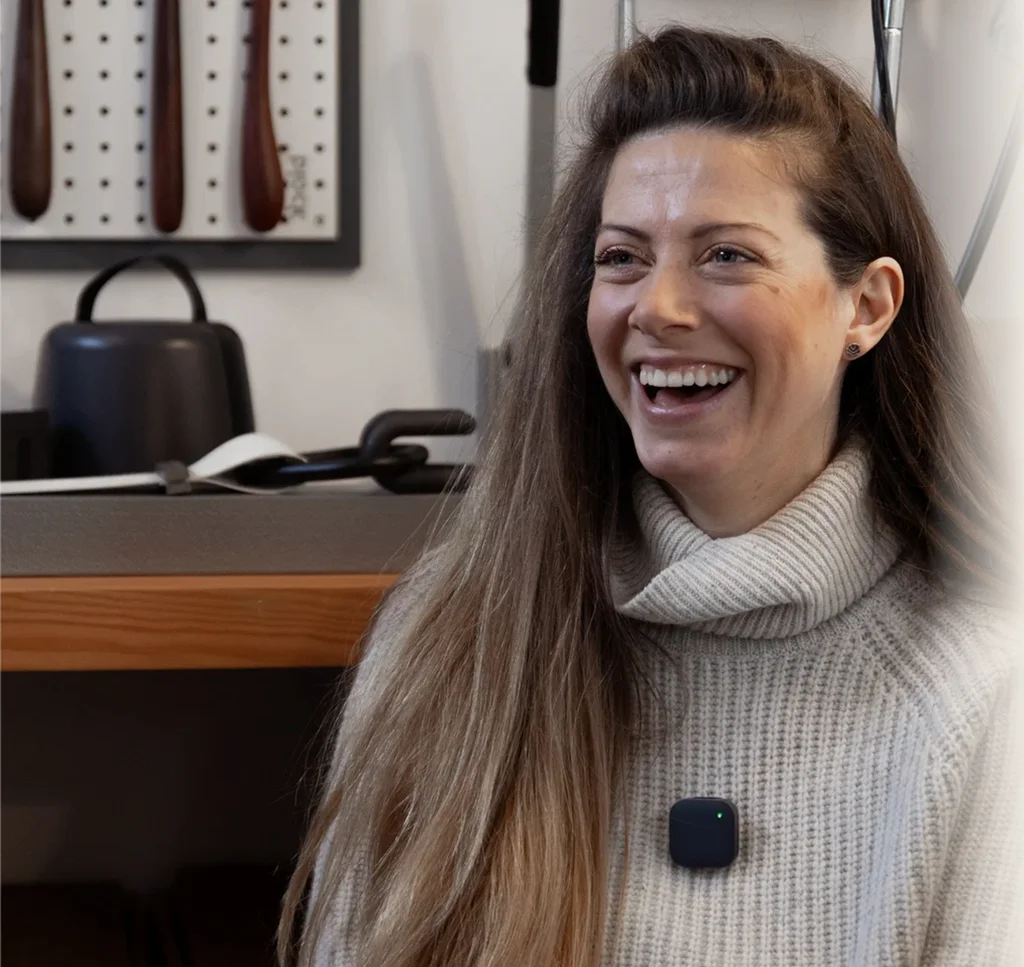
There is no need to book a studio. A few habits make an ordinary room work:
Plan for reuse from the start. A checked transcript can become a web article, and two or three short clips can go out on the department's social channels. UK departments can also use episodes and their reach as supporting evidence in impact narratives.
Ownership matters as much as format. Faculty should not be the ones chasing edits and publishing dates. A comms or engagement team that already runs a content calendar is the natural home for a research series.
Most institutions already record lectures. These formats add something lecture capture does not:
To make this concrete: for a second-year statistics module, a companion episode might be two lecturers arguing for fifteen minutes about whether p = 0.05 deserves its reputation, released the day before the seminar on significance testing.
Keep companion episodes short and consistent. Releasing them on the same day each week, a day or two before the related seminar, gives students a reason to listen before they arrive.
If an episode would work just as well as a PDF, write the PDF instead. Audio is worth the effort when tone, disagreement or a guest's voice matters to the content.
There is a growing body of published work on podcasts as assessment. At the University of Bristol, a biological sciences program replaced an individual written essay with podcasts that students produced in pairs. Surveys in 2020 and 2021 showed that students preferred the podcast to the essay. They found it more enjoyable, more authentic and more creative, and said it built their confidence as communicators. The study was published in Assessment & Evaluation in Higher Education.
Some versions look quite different. At the University of Colorado Colorado Springs, history students replaced a traditional essay with an audio game show and tested each other on decades of American history.
AI can write a podcast script in seconds, so the assignment has to be built around what it cannot easily produce. The strongest designs include an unscripted segment, where partners question each other or respond to a prompt they have not seen in advance. Asking for the raw recording alongside the finished edit lets you hear how students worked through the material before they tidied it up. A short written reflection on what they cut, and why, is quick to mark and adds another layer of evidence.
Grade the ideas rather than the production, so that nobody loses marks for audio that is not broadcast-ready.
Try this: with permission, play one strong and one weaker episode from a previous cohort before students start. It sets expectations faster than any written guidance.
Adapt this to your module:
In pairs, record a 12 to 15 minute episode that explains [topic] to a first-year student in another discipline. Use at least three sources from the reading list. The final three minutes must be unscripted: each of you asks the other one question you have not shared in advance. Submit the finished episode, the unedited recording, and a 300-word reflection on what you cut and why.
| Criterion | What strong work looks like |
|---|---|
| Understanding | Explains the concept accurately and in their own words, including in the unscripted segment |
| Use of evidence | Cites and interprets sources rather than listing them |
| Structure | Has a clear question, a logical progression and a conclusion a listener could repeat |
| Dialogue | Partners build on, challenge and clarify each other's points |
| Reflection | Explains editorial choices and what they would change next time |
When projects stall, the cause is usually practical rather than pedagogical.
Equipment kept in one lecturer's office stops being used when that person leaves or moves on. Programs that last treat recording kit as a shared resource, and it usually ends up in one of two places.
The library or makerspace. At the University of Liverpool, the Maker Space on the ground floor of the Sydney Jones Library is open to staff and students, and its podcasting equipment, including a Nomono Sound Capsule, is booked online like the 3D printers and VR headsets. Many university and college libraries run podcast kits the same way: a booking calendar, a short acceptable-use agreement, and a one-page guide in the case.
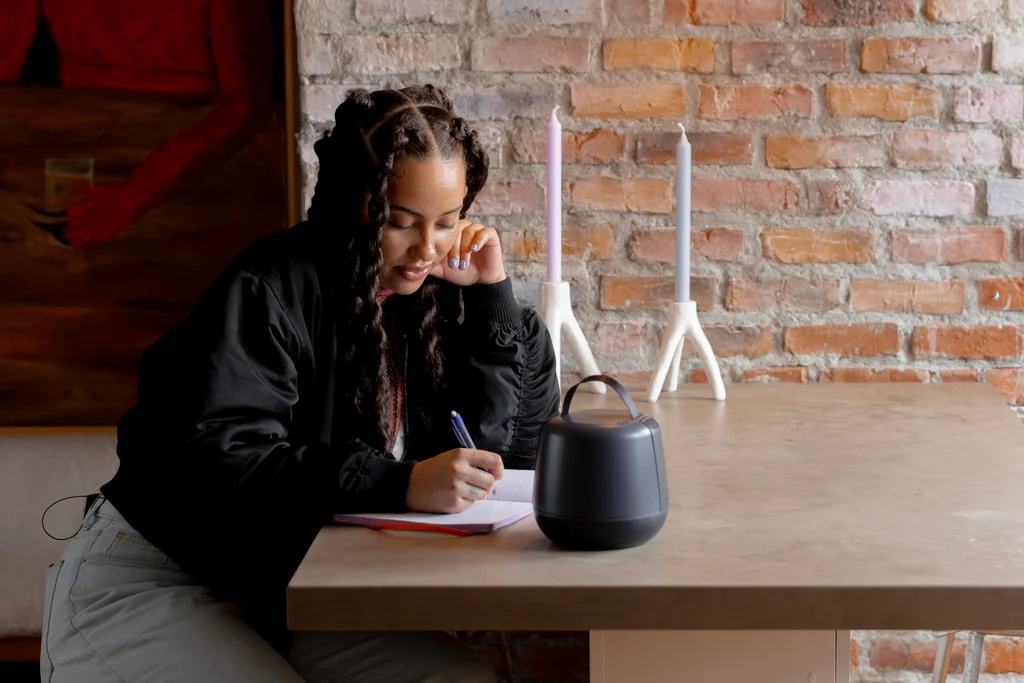
The AV or media services team. At other institutions, particularly colleges spread across several campuses, the audio-visual team owns the kit and lends it out alongside cameras and projectors. One team keeps the equipment charged, updated and accounted for, wherever it is used.
Either way, the principle is the same. The kit needs one owner, a simple way to book it, and instructions a first-time user can follow alone.
Most departments do not have a sound technician, so the setup has to work for someone who has never adjusted a gain knob. Every extra cable, interface or memory card is another chance for a session to be cancelled. If a colleague cannot set it up alone after one walkthrough, simplify it.
Recordings spread across personal laptops are hard to find and hard to protect. Agree on one shared location, name files consistently, for example by date, series and episode, and store the transcript next to the audio. Check automatic transcripts before publishing, since names and technical terms are where they usually go wrong.
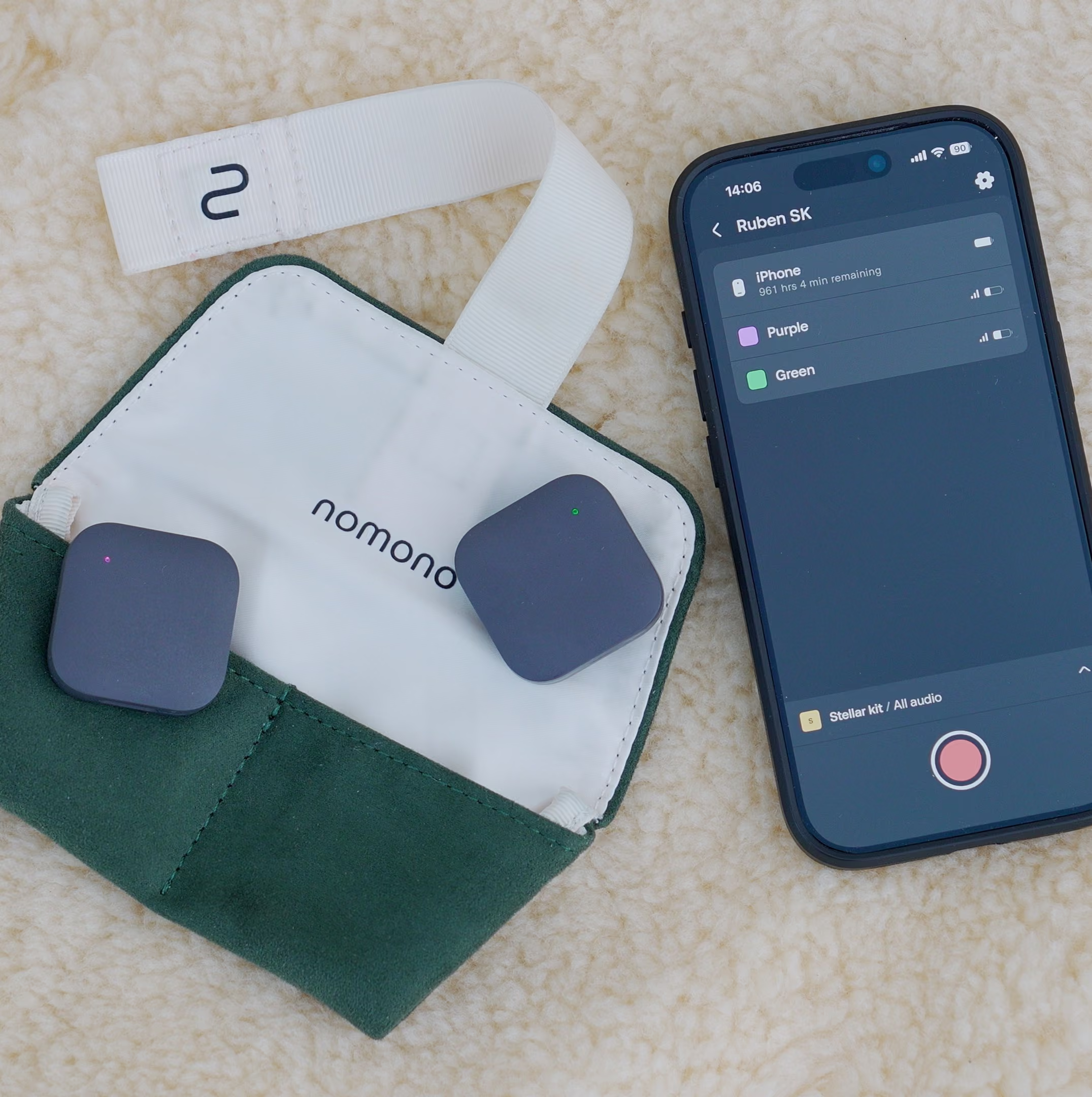
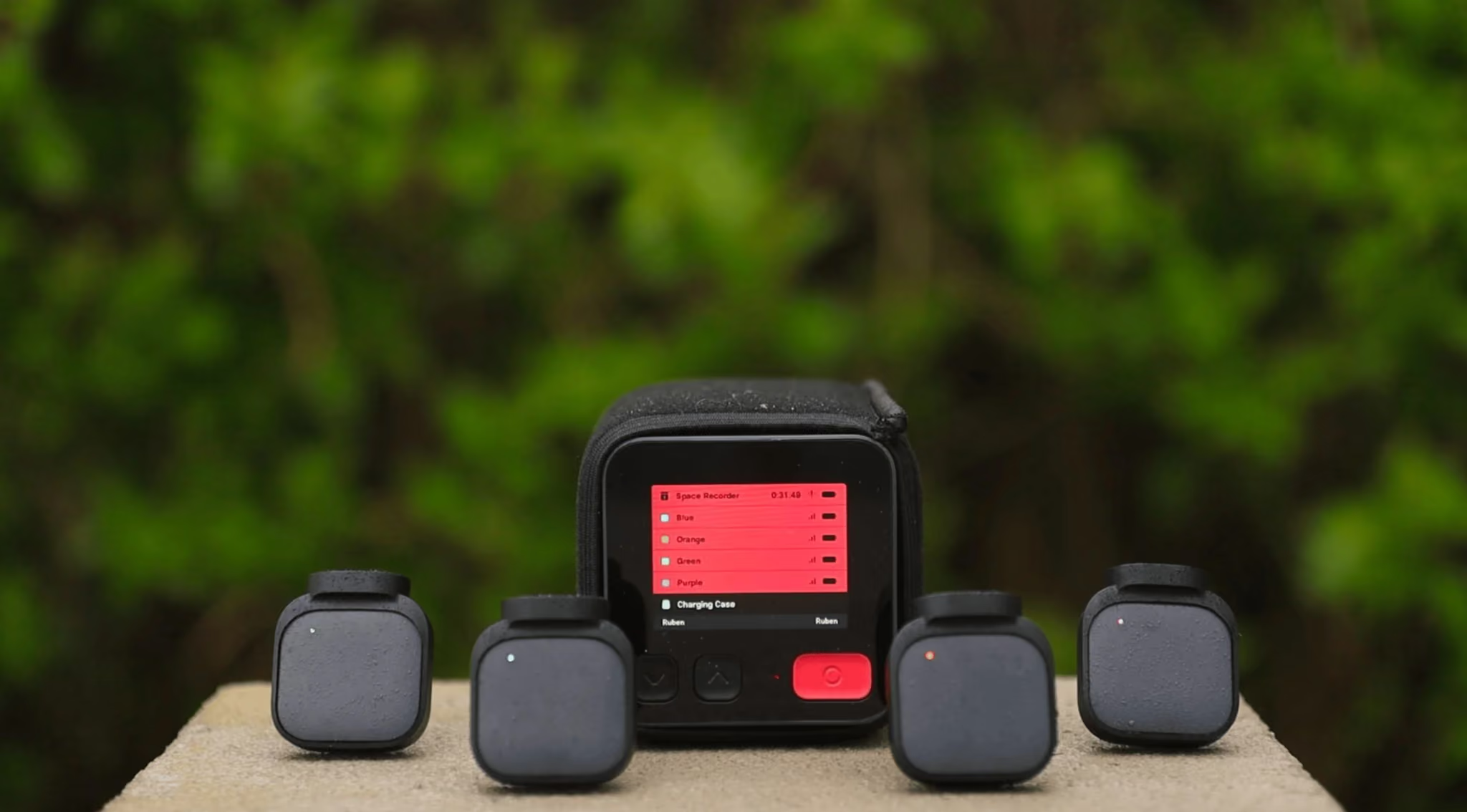
Nomono makes the Sound Capsule, a portable recording kit with up to four wireless microphones, one-button recording and automatic transcription in Studio Cloud. It is used by departments at universities and colleges including Lancaster, Exeter, Liverpool, Texas A&M, Arkansas and Indiana Wesleyan.
"All recordings have come out brilliantly, and more are in the pipeline. The sound quality is always superb – hard to believe it is done on remote mics and not always in a studio."
– Paul Turner, Content Manager, Research & Engagement, Lancaster University Management School
Setting up podcasting in your department?
See how universities and colleges use the Sound Capsule for research, teaching and shared library kits.
Enjoy free express shipping to the listed locations within 2–5 business days.
 Austria
 Belgium
 Bulgaria
 Croatia
 Cyprus
 Czech Republic
.svg) Denmark
Denmark Estonia
 Finland
 France
 Germany
 Greece
 Hungary
 Ireland
 Italy
Italy Latvia
 Lithuania
 Luxembourg
 Malta
Malta Netherlands
 Norway
 Poland
 Portugal
 Romania
 Slovakia
 Slovenia
 Spain
Spain Sweden
 United Kingdom
 United States