Podcasting guides
October 20, 2026



To start a business podcast, define the business goal it serves, pick a format your team can sustain, choose equipment that records reliably in real rooms, and lock a repeatable workflow from recording through publishing. Most teams launch in four to six weeks. A Nomono Sound Capsule setup covers four speakers for $99 per month.
A business podcast is a long-form audio series created to support a specific business goal rather than to entertain a general audience. Companies use podcasts for thought leadership, brand building, customer education, recruitment, partner relationships, and internal communication. The defining feature is that the show has a job inside the business, and that job needs to be agreed before the first episode is recorded.
The strongest company shows work as a distribution layer for expertise the business already holds. Leadership insight, subject-matter knowledge, customer conversations, and industry commentary already exist inside your organization. A podcast turns that material into a recurring, ownable channel, and each episode feeds clips, quotes, and articles across your website, newsletter, and social accounts. Shows that launch without a defined role tend to lose momentum within a quarter, because nobody can defend the production time when priorities shift.
Business podcasts work because the audience is already there. Edison Research's The Infinite Dial 2026 found that 167 million Americans, 58 percent of the population aged 12 and over, listen to podcasts monthly, an all-time high. Companies that reach those listeners are not media businesses. McKinsey runs Inside the Strategy Room to put its partners' thinking in front of executives. Shopify runs Shopify Masters, where entrepreneurs who built stores on the platform tell their own stories, so the product is promoted without a single pitch. Duolingo publishes short-form episodes partially in the learner's target language, which makes the show itself a use of the product. Each company treats the podcast the same way: a distribution channel for expertise it already has, aimed at an audience that listens while commuting, exercising, or working.
Goal setting is the first decision, and it shapes every choice that follows. A podcast built for demand generation targets a narrow buyer audience and invites prospects and customers as guests. A recruitment show targets candidates and features your own people. An internal show skips public distribution entirely. Each of those goals implies a different audience, a different guest list, and a different definition of success.
Write the goal down as one sentence a CFO would accept, for example: "This show exists to build relationships with 40 target accounts per year by hosting their executives as guests." A sentence like that tells you who the audience is, what an episode should contain, and what to measure. Vague goals such as "build brand awareness" give you nothing to steer by and nothing to report on, which is how shows end up canceled at episode twelve.
Named examples make the goal sentence easier to write, because each common goal type already has a company doing it well. A thought-leadership goal looks like McKinsey's Inside the Strategy Room: senior people on record, positioning the firm as the authority buyers consult first. A product-led goal looks like Shopify Masters: customer stories that sell the platform indirectly, episode after episode. An education goal looks like the Duolingo Podcast, where the content and the product are the same thing. And a brand-affinity goal looks like Inside Trader Joe's, which uses employee and product stories to deepen loyalty among people who already shop there. Pick the example closest to your goal, then write your own version of its sentence with your company, your audience, and your number.
Format determines workload, so choose the one your team can repeat every two weeks, not the one that sounds most ambitious. The three common structures trade off control against effort in different ways.
Interview formats suit most B2B teams best, because the guest list itself becomes a commercial asset. A conversation with a prospect's VP is worth something even if the episode underperforms. Whatever you pick, match episode length and cadence to the format: a weekly 20-minute interview show is sustainable for a two-person team, while a fortnightly 45-minute panel usually is not.
Starting a business podcast costs between roughly $300 and $1,200 in year one for most teams, depending on how many people you record and where. The table below uses vendor list prices from August 2026, in US dollars.
| Tier | Who it fits | Core kit | Upfront cost | Ongoing cost |
|---|---|---|---|---|
| Starter | Solo host or single-guest remote show, recorded at a desk | Shure MV7+ USB/XLR microphone ($299), recorded direct to a computer | About $300 | Podcast hosting fee only |
| Professional team | 2-4 speakers, recording in offices, meeting rooms, and on location | Nomono Sound Capsule (4 wireless lav mics plus Space Recorder) with Studio Cloud editing, on the Premium plan | $1,188 (hardware plus 12 months of Studio Cloud Premium) | $99/month after year one |
| Enterprise studio | Dedicated room, in-house production, video plus audio | RODECaster Pro II console ($595) with four wired XLR microphones and a treated room, plus a Sound Capsule subscription for field episodes | $595 plus microphones and room treatment | $1,188 in year one for the mobile kit, then $99/month |
Budget lines beyond equipment stay small at first. Podcast hosting, artwork, and music are minor costs next to the real expense, which is your team's time. Pricing details for the Nomono plans, including the Professional tier at $348 for the first year, built around the two-mic Stellar Kit, are on the Studio Cloud pricing page.
Equipment for a business podcast has to pass three tests: it captures each voice clearly and consistently, it works in the rooms you actually have, and it handles more than one speaker without a rat's nest of cables. Studio-grade gear that only performs in a treated room fails the second test for most companies, because episodes get recorded in glass-walled meeting rooms, at events, and in guests' offices.
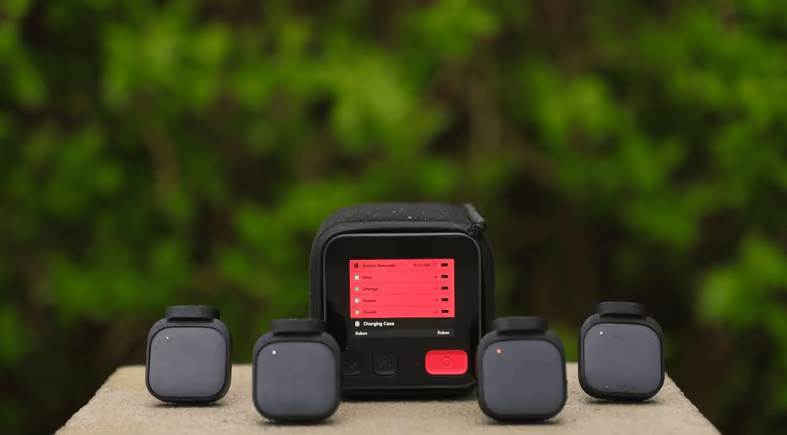
Match the hardware to your speaker count. A single host is well served by a $299 Shure MV7+ over USB. Two-person kits built for video, such as the Rode Wireless Pro ($399) or DJI Mic 2 ($349), record 32-bit float audio to a camera or phone but leave you assembling files afterward. A four-person conversation needs either a console like the $595 RODECaster Pro II with wired XLR mics at a fixed desk, or a wireless system built for the job. The Sound Capsule takes the wireless route: four Stellar lav mics record each speaker to a separate track, the Space Recorder captures the room through an ambisonic mic array, and the whole 2.9-pound kit uploads to the cloud when you get back to Wi-Fi. Among the systems listed above, only Nomono includes spatial capture and a cloud editing workflow in the box. Our podcast equipment buyer's guide compares the options in more depth.
An office recording workflow succeeds when it removes decisions, so treat setup as a checklist rather than an improvisation. Book the same room, at the same time, on a recurring calendar hold. Pick the quietest space available, favor soft furnishings over glass and concrete, and keep each microphone close to its speaker. Per-speaker tracks are the single biggest quality lever, because they let you fix one person's audio without touching everyone else's.
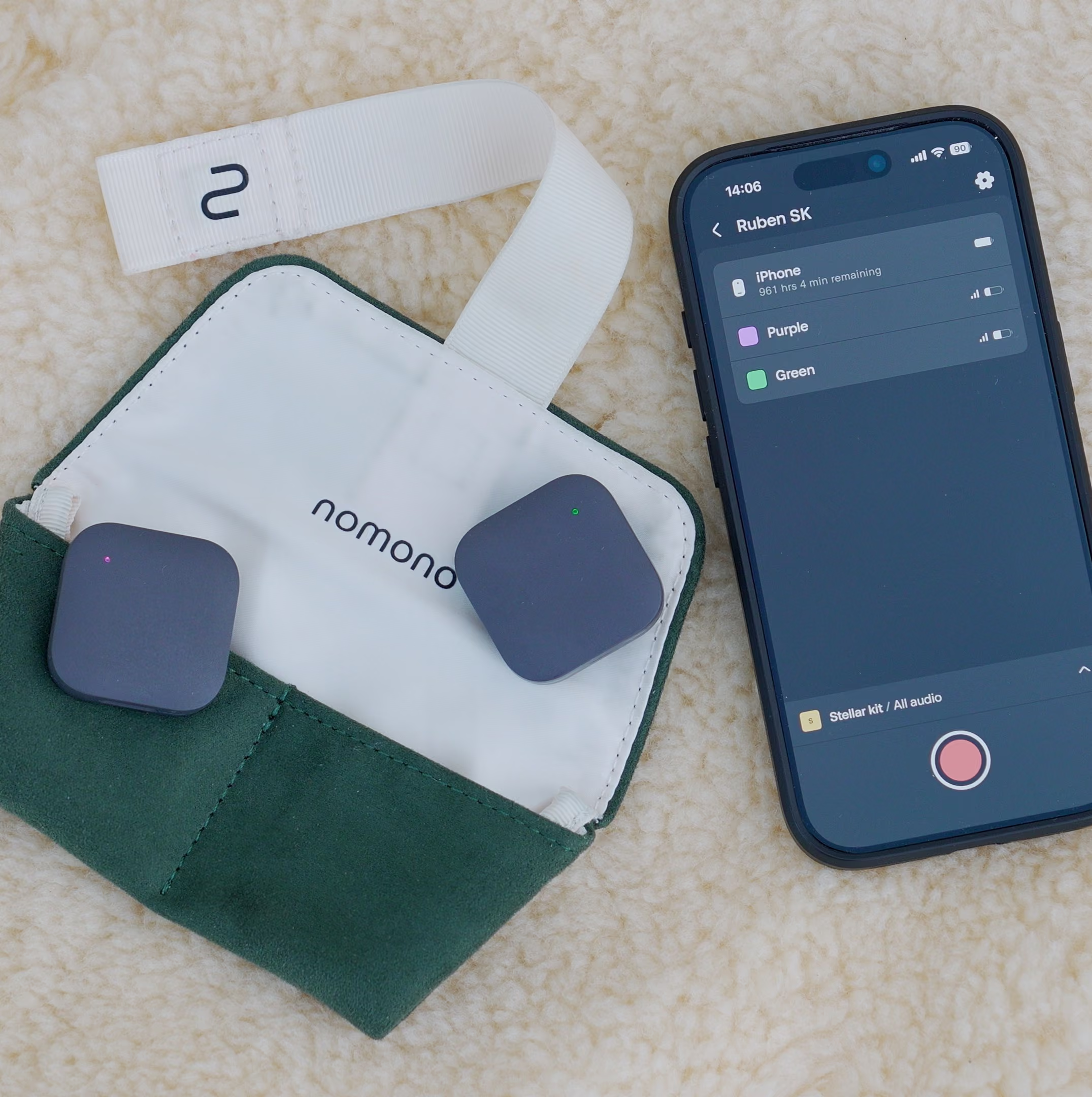
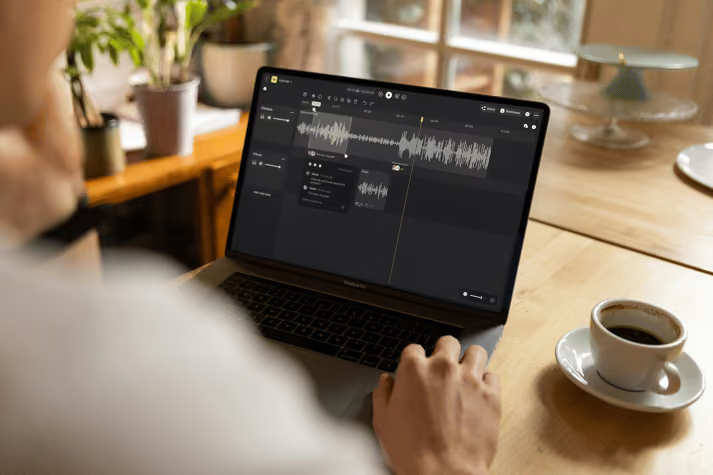
Record locally rather than relying on a video call. Conference platforms compress voices and drop packets, and a recording you cannot re-take is not the place to discover that. With a Sound Capsule the sequence is short: place the Space Recorder on the table, clip a Stellar mic to each speaker, press record. Each voice lands on its own mono WAV alongside a four-track ambisonic room recording, and everything syncs automatically in Studio Cloud for enhancement and editing. Guidance on getting the capture right is in our guide to recording a podcast.
On-location recording is where business podcasts differentiate themselves, and it is also where fragile setups fall apart. Episodes recorded at trade shows, customer sites, and industry events carry an energy and a credibility that a beige meeting room cannot match. The production requirements are strict, though: the kit has to travel in a carry-on, set up in minutes, run on batteries, and cope with background noise you cannot control.
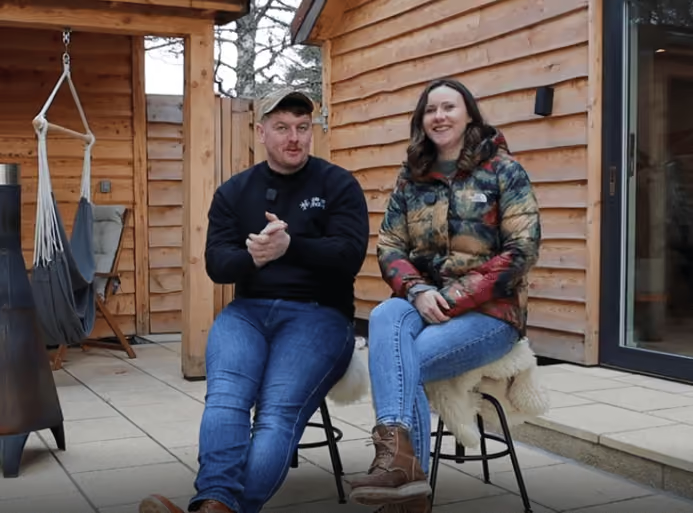
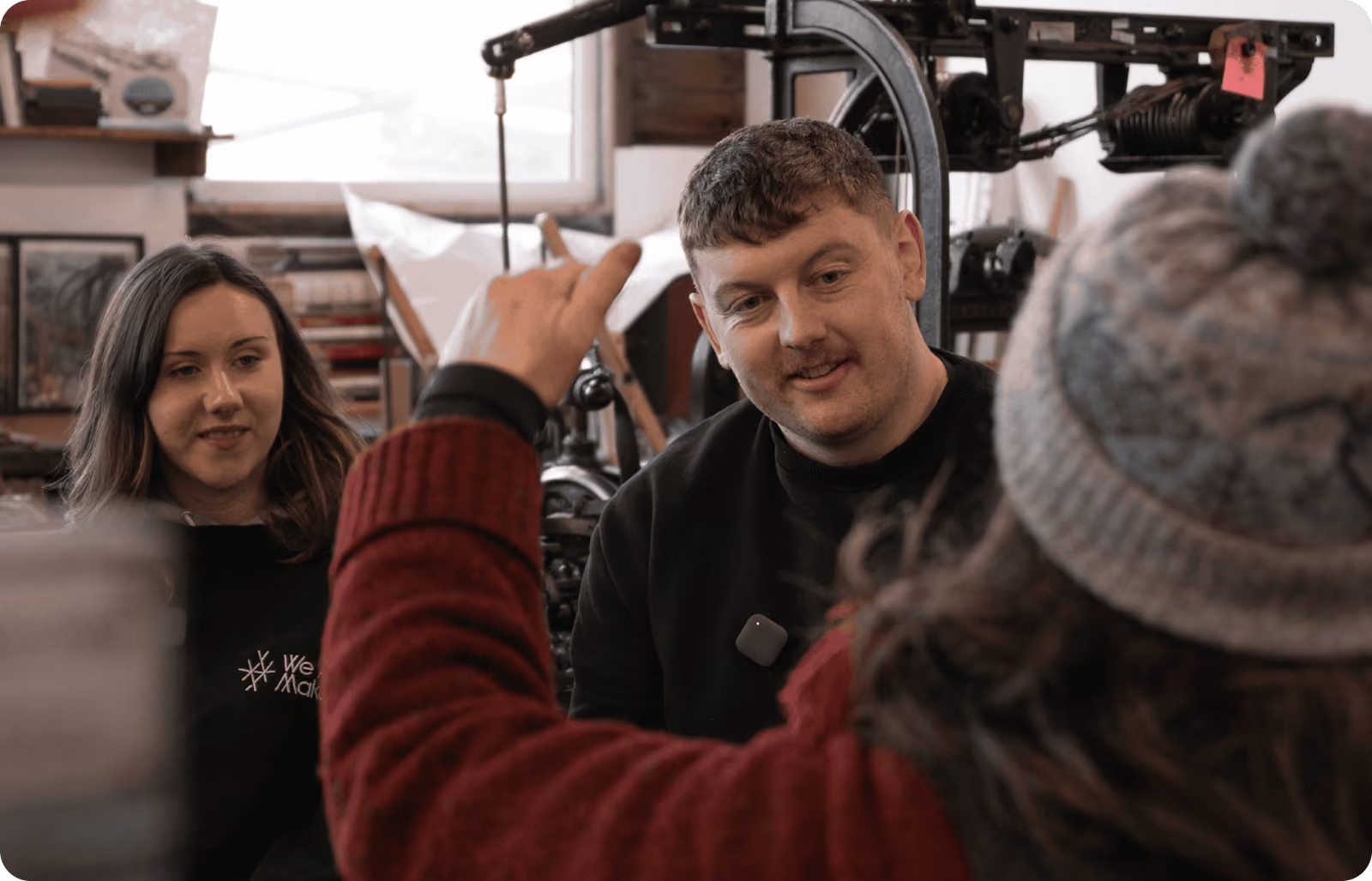
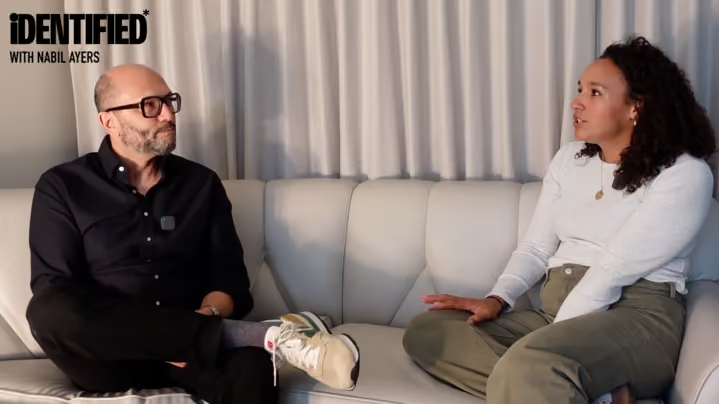
Real shows prove the model works. Identified with Nabil Ayers records interviews with a Sound Capsule across changing venues because the kit behaves the same in each one. TimeTable London records in a different pub each episode and keeps the ambience as part of the storytelling. The Founder Walk with Kate records conversations while walking outdoors, then reuses the material across channels. Wireless lav mics that stay close to each mouth, combined with speech enhancement applied afterward in the cloud, keep voices intelligible even in a noisy room. Our field guide to recording a podcast outside the studio covers venue selection, mic placement, and backup practice, and if you shoot video alongside audio, see how to sync Nomono audio with your camera.
Editing is where most business podcasts die, because the work lands on one person and every episode waits in their queue. The failure pattern repeats across companies: files scattered between laptops and drives, feedback arriving by email days late, and an editor re-exporting the same episode four times. A show that sounds good but takes ten hours to process will not survive contact with a busy quarter.
Fix the workflow before it breaks. Keep every episode's files in one shared place, run enhancement automatically rather than by hand, and give reviewers a link instead of an attachment. Studio Cloud handles that chain in the cloud: recordings upload from the kit, speech enhancement cleans noise and levels voices, stakeholders comment in the browser, and the finished episode exports for any host, with spatial export available for shows that want spatial audio. Aim for a hard ceiling of two hours of post-production per episode. Cutting filler matters less than shipping on schedule, a point our piece on podcast editing and audio quality makes in detail.
Publishing is the mechanical part: upload the finished episode to a podcast host, which generates an RSS feed that Apple Podcasts, Spotify, and YouTube Music pull from automatically. Write episode titles for search, in the language a buyer would use, rather than as inside jokes. Publish on a fixed weekday, because consistency trains both listeners and recommendation algorithms.
Promotion is where the business case gets made, and reuse is the multiplier. Treat every episode as a content package, not a single release. One 30-minute interview yields several short clips for LinkedIn, pull quotes for the newsletter, a written article for the blog, and talking points the sales team can send to the guest's account. Guests promote episodes they appear in, which puts your brand in front of their audience at no cost. Teams that plan reuse before recording get four to five assets per episode; teams that plan it afterward usually get one.
ROI measurement starts from the goal you wrote down, because downloads alone rarely tell the full story for a company show. A niche B2B podcast with 200 of the right listeners can outperform a general show with 20,000. Measure against the job the show was hired to do.
Report on a quarterly cycle and give the show at least two quarters before judging it. Audio audiences compound slowly, and audio quality itself affects the curve, a link we document in why audio quality impacts podcast growth and monetization.
Four failure patterns account for most abandoned company shows, and all four are avoidable at the planning stage. Treating the podcast as spare-time work is the most common: production slips whenever the owner gets busy, the feed goes quiet, and the audience leaves. Launching without a defined business role is the second, because a show nobody can justify is the first thing cut. Workflow friction is the third, showing up as scattered files, slow review cycles, and editing debt that grows with every episode. The fourth is an expectation gap, where the team privately hopes for thousands of downloads, sees dozens in month one, and quietly gives up before the compounding starts. Weekly recording routines, like the one Money For Change runs from the Triodos Bank headquarters, exist precisely to defeat these patterns: fixed slot, fast turnaround, no dependence on anyone's spare time.
Start a business podcast by defining the business goal it serves, choosing a format your team can sustain, buying equipment that records reliably in your real rooms, and locking a repeatable workflow from recording through publishing. Plan the first five episodes before launch, record two before publishing anything, and commit to a fixed cadence for at least one quarter before evaluating results.
Expect roughly $300 to $1,200 in year one. A solo host needs little more than a $299 Shure MV7+ microphone. A team recording four speakers in offices and on location can run a Nomono Sound Capsule with cloud editing for $1,188 in year one, hardware included, then $99 per month. A fixed studio built on a $595 RODECaster Pro II plus XLR microphones sits at the higher end. Prices are August 2026 vendor list prices.
Four to six weeks is realistic for most teams. Agreeing the goal and format takes a week, equipment arrives and gets tested in another, and recording the first batch of episodes fills the rest. Recording is the fastest step; editing and multi-person review are what stretch timelines. Companies that pre-record three episodes before launch protect their cadence against the inevitable busy month.
No. A quiet meeting room with soft furnishings and close microphones produces broadcast-ready results, and modern speech enhancement cleans up room noise afterward. Portable systems like the Sound Capsule are built for untreated spaces: wireless lav mics stay close to each voice, and cloud processing handles the rest. Shows such as TimeTable London record in pubs by choice and keep the ambience.
Weekly or every two weeks, and the honest answer is whichever of those your team can hold for a year. Cadence consistency matters more than frequency, because both listeners and platform algorithms reward predictability. A fortnightly show that never misses beats a weekly show that skips months. Seasonal formats, such as two ten-episode runs per year, also work well for teams with cyclical workloads.
Yes, if the workflow is designed for it. A two-person team can sustain a fortnightly interview show at roughly four to six hours per episode: one hour of guest prep, one hour of recording, up to two hours of editing in a cloud tool, and the rest on publishing and promotion. Automated enhancement and browser-based review are what make that budget hold without a dedicated producer.
Record guests in person where the relationship justifies it, and remotely where it does not. For in-person episodes at a guest's office or an event, a battery-powered wireless kit sets up in minutes and travels as carry-on. For remote guests, use a tool that records each participant locally rather than capturing the compressed video-call audio, then bring the tracks together in your editing workflow.
Audio-first is the lower-friction start, and video can be added once the show has proven its role. Audio production forgives imperfect rooms, needs no lighting or set, and suits guests who would decline a camera. Video roughly doubles production effort but feeds YouTube and LinkedIn clips. Many teams split the difference: audio-first workflow, plus a simple camera whose footage syncs to the podcast audio in post.
Yes, though mostly indirectly. Podcasts influence pipeline through guest relationships, brand familiarity that shortens sales cycles, and repurposed content that feeds every other channel. Interview shows generate the most direct commercial value, because inviting a target account's executive opens a warm relationship regardless of listener numbers. Track influence through UTM-tagged links, self-reported attribution, and CRM notes rather than expecting form fills from show notes.
Judge the show against the one-sentence goal you set at launch, on a quarterly cycle, after at least two quarters of consistent publishing. Relationship-driven shows count target-account guests and influenced deals. Demand-driven shows track attributed pipeline. Audience-driven shows watch completion rates and subscriber growth. Independent listener reviews, like those collected on the Nomono reviews page for equipment, are the same class of signal for your show: qualitative proof that the right people value it.
Enjoy free express shipping to the listed locations within 2–5 business days.
 Austria
 Belgium
 Bulgaria
 Croatia
 Cyprus
 Czech Republic
.svg) Denmark
Denmark Estonia
 Finland
 France
 Germany
 Greece
 Hungary
 Ireland
 Italy
Italy Latvia
 Lithuania
 Luxembourg
 Malta
Malta Netherlands
 Norway
 Poland
 Portugal
 Romania
 Slovakia
 Slovenia
 Spain
Spain Sweden
 United Kingdom
 United States