Comparisons
October 30, 2026


The Nomono Sound Capsule and the Shure MV7+ do different jobs. The MV7+ is a $299 USB-C and XLR dynamic mic for one host at a desk. The Sound Capsule is a four-person wireless recording system with Studio Cloud, at $1,188. If you record alone, the fairer comparison is the MV7+ against Nomono's two-mic Stellar Kit.
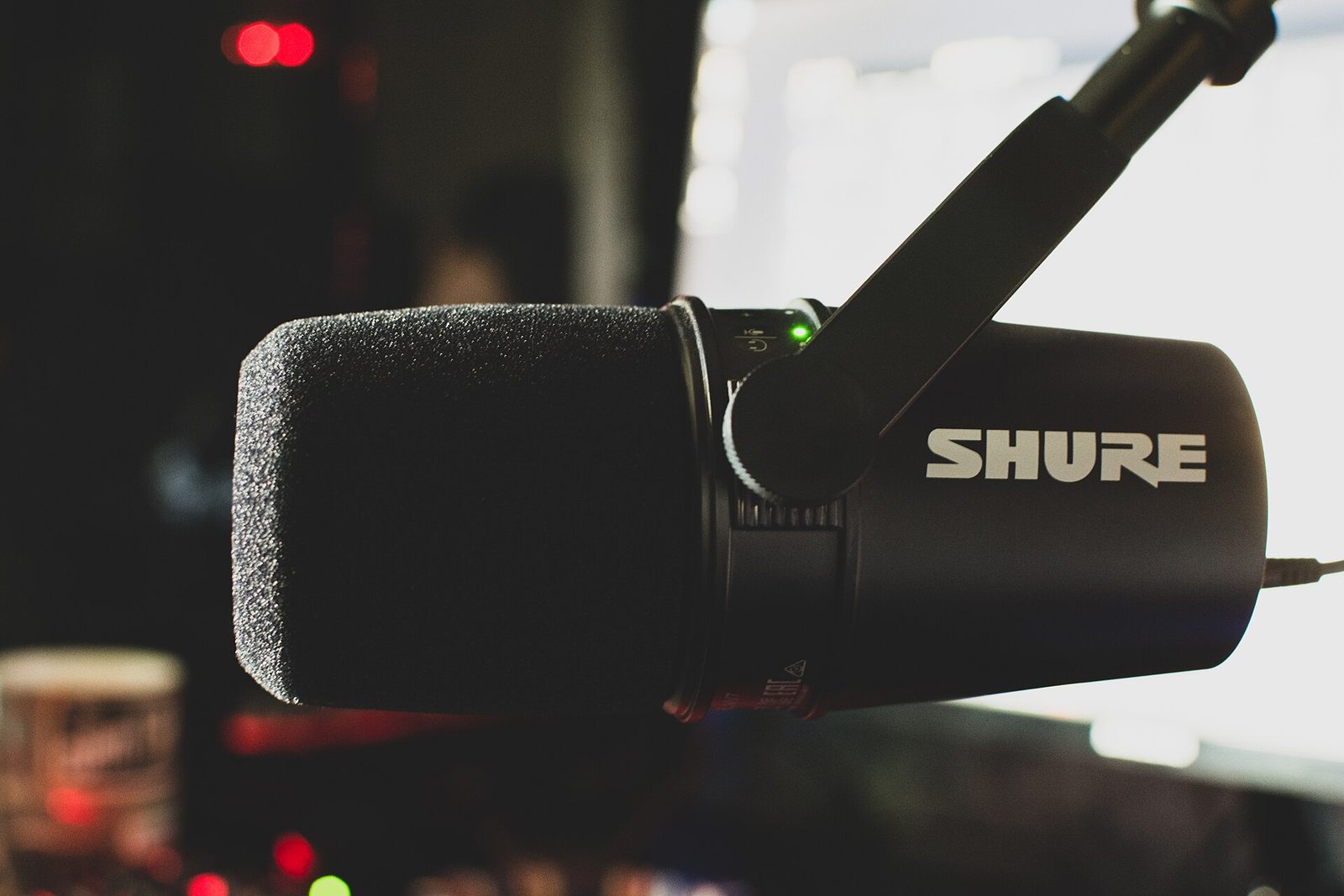
The MV7+ is a dynamic podcast microphone with hybrid USB-C and XLR outputs, so it plugs straight into a laptop or phone, or into a mixer later. Shure lists Voice Isolation Technology, an improved Auto Level Mode that adjusts gain with distance, a real-time denoiser, a Digital Popper Stopper for plosives, onboard reverb and a multi-color LED touch panel with tap-to-mute. The MOTIV Mix desktop app adds multitrack recording and routing (Shure announcement). It is a microphone, not a recorder, so it needs a computer, phone or XLR recorder for every session.
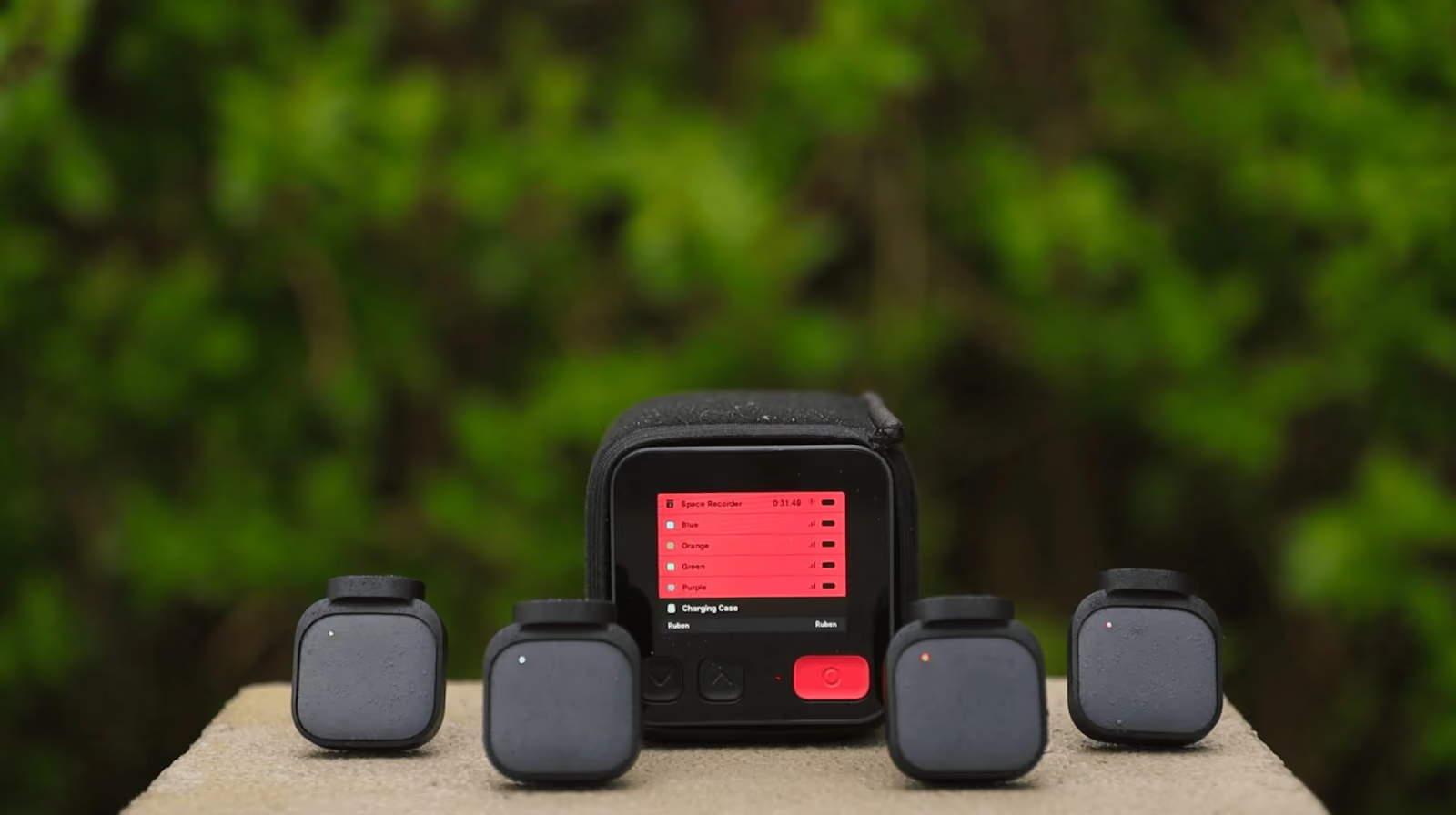
The Sound Capsule pairs a Space Recorder, which has an 8-mic ambisonic array, with four Stellar wireless mics and a charging case, 2.9 lb in total. It records without a phone or laptop, holds up to 12 hours internally (64 GB), and runs up to 10 hours, or 25 with the case. Voice tracks are 16-bit/48 kHz, the spatial track is 24-bit/48 kHz, and every mic auto-levels. Recordings upload to Studio Cloud automatically, and USB export is there when you want local files. The Sound Capsule is Dolby Atmos-ready.
| Spec | Nomono Sound Capsule | Shure MV7+ |
|---|---|---|
| Category | 4-person wireless system + cloud | USB-C/XLR dynamic mic |
| People recorded | 4, each on its own track | 1 per mic |
| Price | $1,188 | $299 list, $319 with stand |
| Records on its own | Yes, up to 12 h on device | No, needs a computer, phone or recorder |
| Battery | 10 h, 25 h with case | None; powered by what it plugs into |
| 32-bit float | No | No |
| Level control | Auto-levelling per mic | Auto Level Mode |
| Noise handling | AI enhancement in Studio Cloud | Real-time denoiser on the mic |
| Spatial audio | Ambisonic capture, Atmos-ready | No |
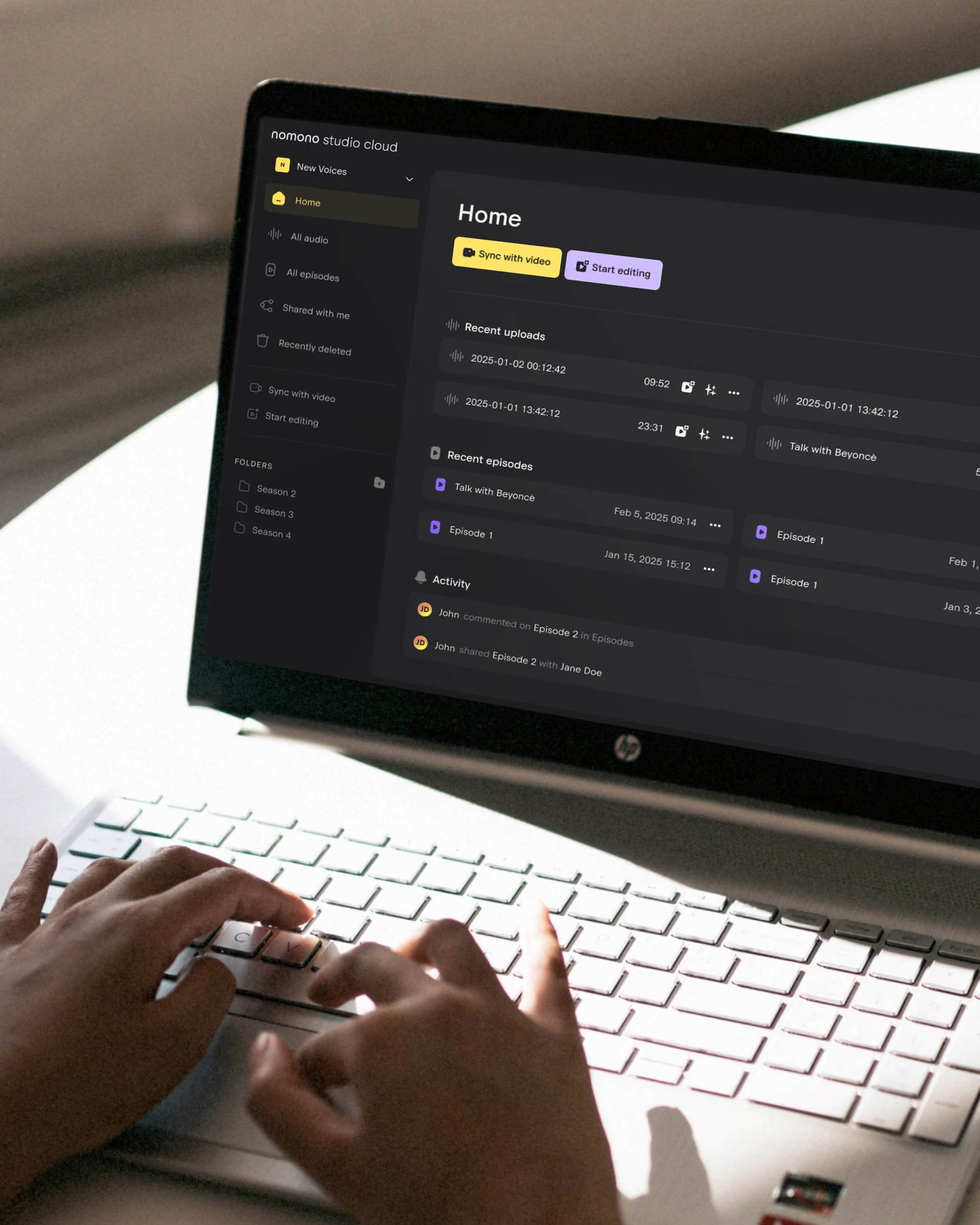
| Cloud workflow | First year of Studio Cloud included | No; MOTIV Mix desktop app |
Pick the MV7+ when the show lives at one desk. A solo host gets a broadcast-style dynamic sound, close-mic rejection of a noisy room and no preamp decisions. Auto Level Mode handles the host who leans in and out, and the denoiser and Digital Popper Stopper clean fan noise and plosives as you record, so the file is usable straight away. The XLR output means the mic survives a later move to a console such as the RØDECaster Pro II; our Sound Capsule vs RØDECaster Pro II comparison covers that kind of desk setup. The catch: every extra person needs another mic, another input and another cable.
Independent review: Podcastage tests the Shure MV7+ over USB and XLR.
Pick the Sound Capsule when the recording happens somewhere other than your desk and more than one person speaks. Four wireless mics mean four separate tracks, so crosstalk edits cleanly and one loud guest never buries the table. Setup is the practical difference: clip the mics, start the recorder, and talk. The Sound Capsule is ready to record in under 10 seconds. No cables across a hotel carpet, no interface, no wall power. The ambisonic array captures the room at the same time, which makes a spatial mix possible later without a reshoot. In Studio Cloud, AI audio enhancement handles noise removal and audio enhancement, with unlimited transcription on Premium. For location work, that removes more effort than a better microphone would.
Nomono shows how the Sound Capsule records a group with one button.
If you host alone or run one-to-one interviews, the Nomono product built for that job is the Stellar Kit: two Stellar mics, a charging dock, a travel sleeve and magnets, with 15 hours of battery and cold shoe, clip or magnetic mounting. It costs $348, and the price includes the first year of Studio Cloud Professional (360 AI enhancement minutes a month, 400 GB, unlimited transcription). The MV7+ wins on dynamic-mic voice character, real-time processing and price. The Stellar Kit wins as soon as a guest sits on a sofa or the interview happens where you cannot run a cable. Our podcast kit for 2 people guide goes deeper on that setup.
| Scenario | Shure MV7+ route | Nomono route |
|---|---|---|
| Solo host at a desk | $299, or $319 with stand | Stellar Kit, $348 |
| Host + one in-person guest | 2 mics ($598) + 2-input interface | Stellar Kit covers both |
| Four people at a table | 4 mics ($1,196) + 4-input recorder | Sound Capsule, $1,188 |
| Editing and transcription | Bought separately | Included in both plans |
A four-input recorder such as the Zoom PodTrak P4next ($179.99 list) takes a four-MV7+ rig to about $1,376 before stands and cables. Below four people, the arithmetic flips and the MV7+ is the cheaper path. Wired mics have no ongoing fee. After the first year you can stay on the Free plan or continue Studio Cloud from $29/month (Professional) or $99/month (Premium); the Nomono hardware keeps working either way. Plan details are on Studio Cloud pricing.
Real-time processing is the MV7+ advantage no Nomono product matches: its denoiser cleans the signal as it records, while Nomono's enhancement runs in the cloud after the session. A close dynamic mic also rejects a bad room better than a mic clipped to a shirt, which matters in an untreated home office. Entry cost is lower too, at $299 against $348. Anyone whose show will never leave one room should weigh that against wireless capture they may never use. If you are building a desk setup without a mixer, see the best podcast setups without a mixing board.
| Your situation | Pick | Why |
|---|---|---|
| Solo host, fixed desk, tight budget | Shure MV7+ | $299, onboard processing |
| Solo host who records on the move | Stellar Kit | Wireless, cloud included |
| Two-person interviews in varied places | Stellar Kit | Two wireless tracks, no cables |
| Three or four guests on location | Sound Capsule | 4 wireless tracks, no laptop |
| Fixed studio round table | Console + MV7+ mics | Live processing and faders |
| Spatial or Dolby Atmos delivery | Sound Capsule | Ambisonic array records the room |
Recording more than one voice?
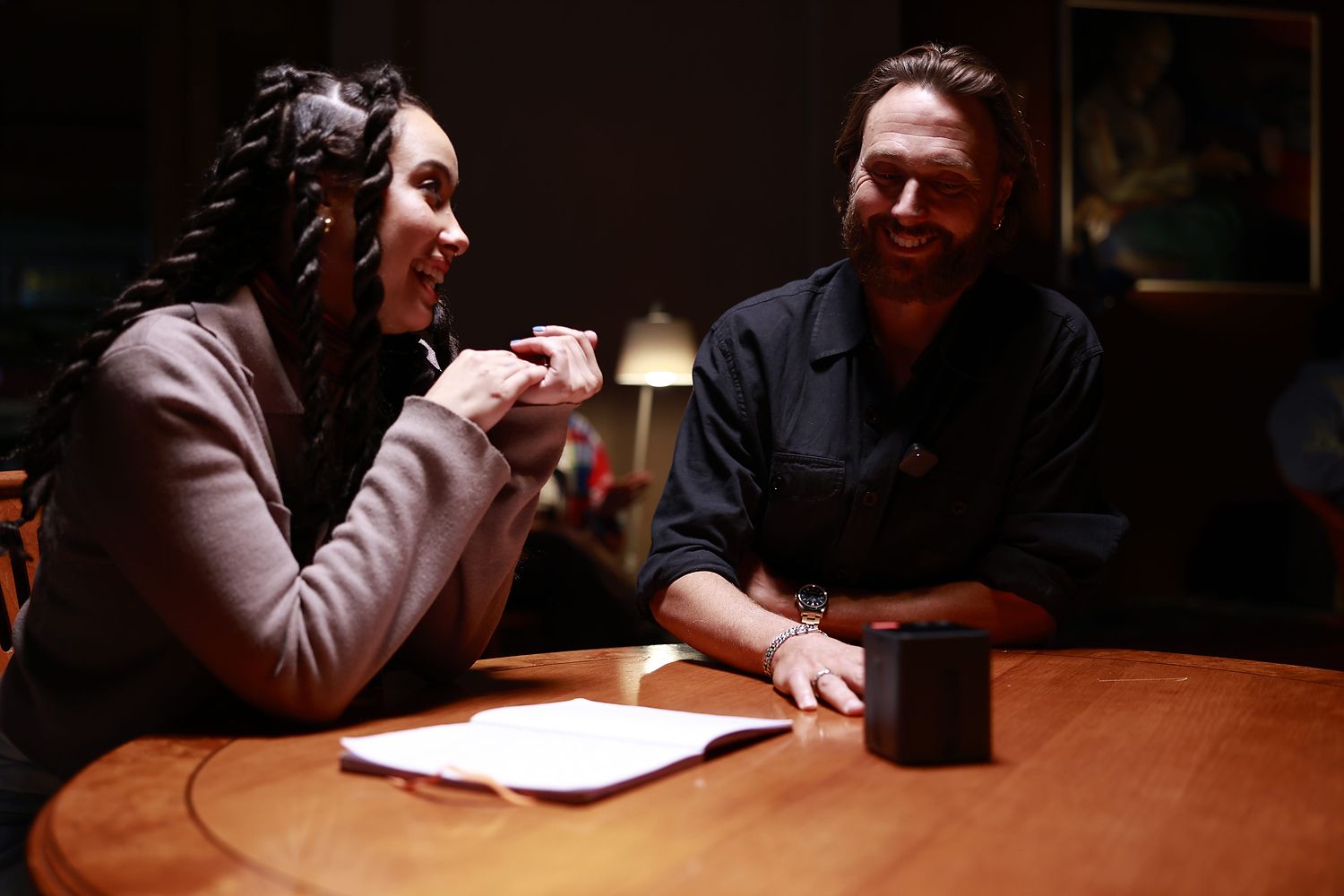
The Sound Capsule records four wireless mics and the room, then sends everything to Studio Cloud.
They suit different jobs. The MV7+ is the better choice for one host at a desk, at $299 with onboard processing. The Sound Capsule is the better choice for two to four people away from a studio, with four wireless tracks, room capture and a year of Studio Cloud Premium.
The Stellar Kit is the closer match on price and job. It costs $348 and includes two wireless mics and Studio Cloud Professional. You trade dynamic-mic character for wireless freedom and a second speaker.
One MV7+ records one person. Several people need one mic each plus an interface, recorder or console with enough inputs. Four MV7+ mics alone cost $1,196 at list price.
No. Voice tracks are 16-bit/48 kHz and the spatial track is 24-bit/48 kHz. Nomono relies on auto-levelling on every mic instead. If 32-bit float is a must, look at wireless kits such as the RØDE Wireless PRO or DJI Mic 3, which record it.
No. It connects over USB-C to a computer or phone. The XLR output lets you run it into a mixer, interface or recorder later.
It is possible but awkward, because the mic needs a laptop, phone or XLR recorder for every session, plus stands and cables. A wireless system that records on its own, like the Sound Capsule, suits location work better.
Usually not. Three of the four mics would sit unused. Solo hosts in one place are better served by the MV7+, or by the Stellar Kit if they want wireless capture and cloud editing.
Written by Ruben Åeng, Lead Audio Engineer at Nomono
Audio engineer and Product Manager for spatial audio products at Nomono, with 15 years of experience in film and television sound. Before joining in 2021 he worked as a production sound mixer, dialogue editor and sound designer, with credits including the Oscar-nominated short “Night Ride”.
Enjoy free express shipping to the listed locations within 2–5 business days.
 Austria
 Belgium
 Bulgaria
 Croatia
 Cyprus
 Czech Republic
 Denmark
 Estonia
 Finland
 France
 Germany
 Greece
 Hungary
 Ireland
 Italy
 Latvia
 Lithuania
 Luxembourg
 Malta
 Netherlands
 Norway
 Poland
 Portugal
 Romania
 Slovakia
 Slovenia
 Spain
 Sweden
 United Kingdom
 United States